




• What is the pH of deionized water, and why does it change?When deionized water is freshly prepared, its pH is close to neutral, approximately 7, meaning the concentrations of hydrogen and hydroxide ions are basically equal. However, due to its high purity, deionized water readily absorbs carbon dioxide from the air. When carbon dioxide dissolves into the water, it forms trace amounts of carbonic acid, which slightly lowers the water's pH level—typically to around 6.5.This pH change, while usually minor, can impact experiments that are sensitive to acids and bases. Therefore, the usage environment and storage method of deionized water are extremely crucial. In operations that require strict pH control, it is best to confirm the water quality before use to avoid experimental errors caused by improper storage. This also highlights why deionized water should be protected from prolonged exposure to air.

    https://www.molewater.com/a-guide-to-deionized-water-production-applications-and-lab-systems

    What is the pH of deionized water, and why does it change?When deionized water is freshly prepared, its pH is close to neutral, approximately 7, meaning the concentrations of hydrogen and hydroxide ions are basically equal. However, due to its high purity, deionized water readily absorbs carbon dioxide from the air. When carbon dioxide dissolves into the water, it forms trace amounts of carbonic acid, which slightly lowers the water's pH level—typically to around 6.5.This pH change, while usually minor, can impact experiments that are sensitive to acids and bases. Therefore, the usage environment and storage method of deionized water are extremely crucial. In operations that require strict pH control, it is best to confirm the water quality before use to avoid experimental errors caused by improper storage. This also highlights why deionized water should be protected from prolonged exposure to air.https://www.molewater.com/a-guide-to-deionized-water-production-applications-and-lab-systems
    WWW.MOLEWATER.COM
    A Guide to Deionized Water: Production, Applications, and Lab Systems - Molewater
    Deionized water is a kind of high-purity water obtained by removing dissolved ionic impurities from water. These dissolved ions include minerals and salts such as calcium, magnesium, sodium, chlorine and sulfate.
    0 Comments 0 Shares 272 Views 0 Reviews
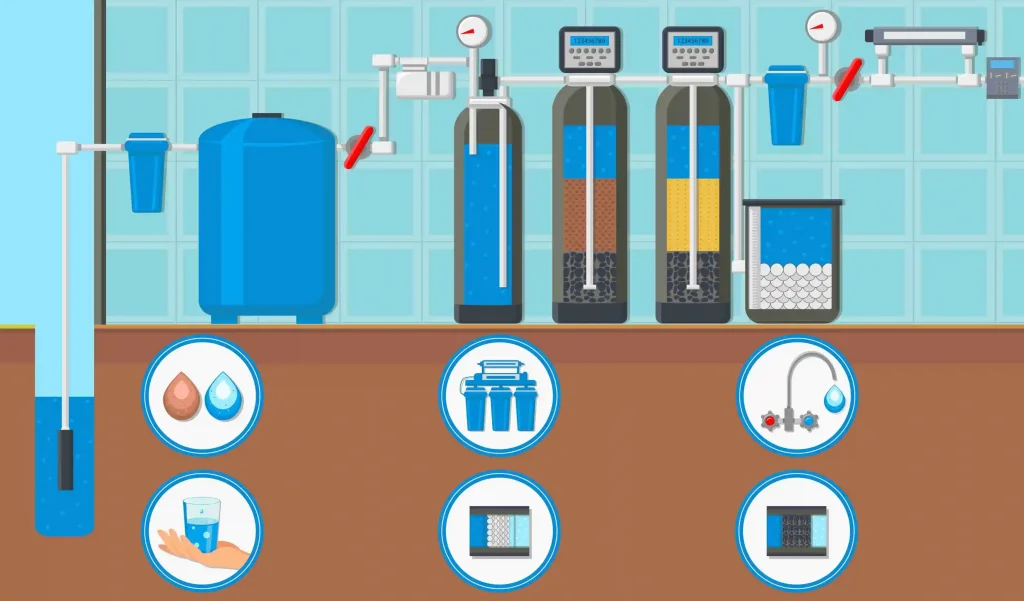
  • What exactly is deionized water, and how is it produced?Deionized water is a kind of high-purity water obtained by removing dissolved ionic impurities, which include minerals and salts such as calcium, magnesium, sodium, chlorine, and sulfate. Unlike ordinary tap water or distilled water, it contains almost no ionic impurities, giving it extremely high application value in both laboratory and industrial scenarios.The production of deionized water relies primarily on ion exchange technology. During this process, water flows through cation exchange resin and anion exchange resin. The cation resin adsorbs positive ions (like calcium and magnesium), while the anion resin adsorbs negative ions (like chloride and sulfate), effectively removing these impurities. Modern preparation methods usually combine this with reverse osmosis technology, which first removes most dissolved salts, suspended particles, and microorganisms, and then further enhances purity through ion exchange. This combination ensures the final water contains almost no impurities, making it suitable for high-demand applications.

    https://www.molewater.com/a-guide-to-deionized-water-production-applications-and-lab-systems

    What exactly is deionized water, and how is it produced?Deionized water is a kind of high-purity water obtained by removing dissolved ionic impurities, which include minerals and salts such as calcium, magnesium, sodium, chlorine, and sulfate. Unlike ordinary tap water or distilled water, it contains almost no ionic impurities, giving it extremely high application value in both laboratory and industrial scenarios.The production of deionized water relies primarily on ion exchange technology. During this process, water flows through cation exchange resin and anion exchange resin. The cation resin adsorbs positive ions (like calcium and magnesium), while the anion resin adsorbs negative ions (like chloride and sulfate), effectively removing these impurities. Modern preparation methods usually combine this with reverse osmosis technology, which first removes most dissolved salts, suspended particles, and microorganisms, and then further enhances purity through ion exchange. This combination ensures the final water contains almost no impurities, making it suitable for high-demand applications.https://www.molewater.com/a-guide-to-deionized-water-production-applications-and-lab-systems
    WWW.MOLEWATER.COM
    A Guide to Deionized Water: Production, Applications, and Lab Systems - Molewater
    Deionized water is a kind of high-purity water obtained by removing dissolved ionic impurities from water. These dissolved ions include minerals and salts such as calcium, magnesium, sodium, chlorine and sulfate.
    0 Comments 0 Shares 279 Views 0 Reviews
Myliveroom — Live Events & Online Communities https://myliveroom.com

