


 Ban & Monetization Policy
 MyLiveRoom Rewards Program Rules & Eligibility
Carbon Footprint Assessment Consultant in India
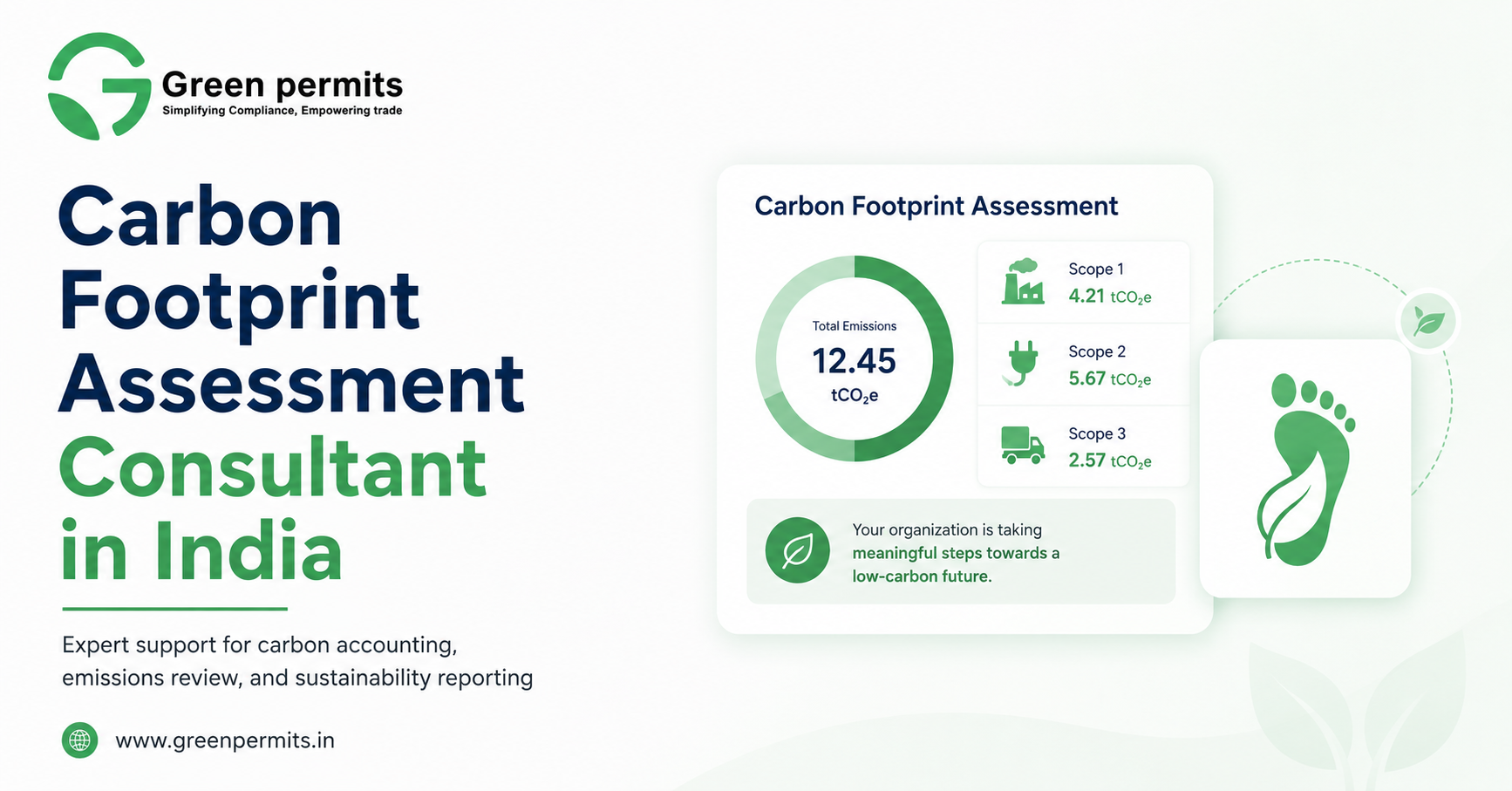
Carbon footprint assessment has become an important requirement for businesses that want to measure, manage, and reduce their greenhouse gas emissions. Companies today are facing increasing pressure from investors, customers, regulators, lenders, and global supply chain partners to disclose their environmental impact and demonstrate measurable climate action.
In India, carbon footprint assessment is becoming highly relevant for manufacturers, exporters, corporate offices, logistics companies, recycling plants, infrastructure projects, renewable energy businesses, and service organizations. It supports ESG reporting, BRSR compliance, sustainability reporting, carbon reduction planning, and net-zero strategy development.
A Carbon Footprint Assessment Consultant helps businesses calculate emissions accurately, identify major emission sources, prepare greenhouse gas inventories, and develop practical reduction strategies. Since carbon accounting involves technical data, emission factors, reporting standards, and scope-wise calculations, professional support is often required for reliable results.
What is Carbon Footprint Assessment
Carbon footprint assessment is the process of measuring the total greenhouse gas emissions generated directly or indirectly by a business, product, facility, project, or activity.
The emissions are usually expressed in carbon dioxide equivalent, also known as CO2e. This allows different greenhouse gases to be measured using a common unit.
A business carbon footprint may include emissions from fuel use, electricity consumption, manufacturing processes, transportation, waste disposal, employee travel, purchased goods, and supply chain activities.
The objective is to understand where emissions are coming from and how they can be reduced over time.
Why Carbon Footprint Assessment is Important
Businesses can only reduce emissions effectively when they know their actual carbon impact.
A carbon footprint assessment provides data-driven clarity on energy use, fuel consumption, production activities, logistics, waste generation, and supplier-related emissions.
For companies preparing ESG reports or BRSR disclosures, carbon data is becoming an important part of sustainability reporting.
Many global buyers and large corporates also ask suppliers to provide carbon emission data before entering long-term business relationships.
Carbon footprint assessment helps companies improve transparency, reduce environmental risks, and build credibility with stakeholders.
Role of a Carbon Footprint Assessment Consultant
A Carbon Footprint Assessment Consultant helps businesses collect data, calculate emissions, classify emission sources, prepare reports, and recommend reduction strategies.
The consultant identifies applicable emission scopes and selects suitable calculation methodologies based on recognized standards.
Professional consultants also help businesses avoid errors in data collection and emission factor application.
Many companies struggle because emission data is spread across multiple departments such as operations, finance, procurement, logistics, HR, and maintenance. A consultant helps organize this data into a structured carbon accounting system.
Scope 1, Scope 2, and Scope 3 Emissions
Carbon footprint assessment is generally divided into three emission scopes.
Scope 1 emissions are direct emissions from sources owned or controlled by the company. This may include fuel used in boilers, furnaces, generators, company vehicles, and process emissions.
Scope 2 emissions are indirect emissions from purchased electricity, steam, heating, or cooling. For many offices and manufacturing facilities, electricity consumption is a major part of Scope 2 emissions.
Scope 3 emissions are indirect emissions from the value chain. These may include purchased goods, logistics, business travel, employee commuting, waste disposal, supplier activities, and product use.
A complete carbon assessment helps businesses understand emissions across all three scopes.
Documents and Data Required
Carbon footprint assessment requires reliable operational and consumption data.
The information generally required includes:
- Electricity bills
- Fuel consumption records
- Diesel generator usage
- Production data
- Vehicle and transport records
- Waste disposal records
- Water consumption data
- Business travel records
- Procurement data
- Refrigerant usage details
The exact data requirement depends on the scope and boundary of the assessment.
Accurate data improves the reliability of the final carbon footprint report.
Carbon Footprint Assessment Process
The process begins with defining the assessment boundary. This means deciding whether the assessment will cover one facility, multiple locations, a product, a project, or the entire organization.
After boundary setting, the consultant identifies relevant emission sources and prepares a data collection plan.
The next step is collecting activity data such as electricity units consumed, fuel quantity used, kilometres travelled, waste generated, or raw material consumed.
Emission factors are then applied to convert activity data into greenhouse gas emissions.
The emissions are categorized into Scope 1, Scope 2, and Scope 3, and a carbon footprint report is prepared.
The final report generally includes total emissions, major emission sources, reduction opportunities, and recommendations for improvement.
Standards Used for Carbon Footprint Assessment
Carbon footprint assessments are generally prepared using recognized frameworks and standards.
Commonly used standards include:
- GHG Protocol
- ISO 14064
- ISO 14067 for product carbon footprint
- IPCC emission factor guidance
- Life Cycle Assessment frameworks
Using recognized standards improves credibility and makes the report more acceptable for ESG, BRSR, investor, and buyer requirements.
The applicable standard depends on the purpose of the assessment.
Benefits of Carbon Footprint Assessment
Carbon footprint assessment provides both environmental and business benefits.
It helps companies identify high-emission areas and develop targeted reduction strategies.
Key benefits include:
- Better ESG and BRSR reporting
- Improved energy efficiency
- Reduced operational costs
- Support for net-zero planning
- Better investor confidence
- Stronger sustainability credentials
- Improved supply chain acceptance
For exporters, carbon reporting can also support readiness for international sustainability and carbon-related requirements.
Industries That Need Carbon Footprint Assessment
Carbon footprint assessment is useful across many sectors.
Manufacturing companies use it to understand process and energy-related emissions. Logistics companies use it to evaluate fleet emissions. Exporters use it to meet buyer requirements. Recycling plants use it to demonstrate sustainability impact.
Other sectors such as real estate, infrastructure, textiles, chemicals, pharmaceuticals, IT, hospitality, renewable energy, and automotive industries also benefit from carbon footprint assessment.
As sustainability expectations increase, even MSMEs are beginning to measure emissions to remain competitive in supply chains.
Common Challenges in Carbon Accounting
Many businesses face challenges because carbon accounting requires accurate data and technical understanding.
Common issues include:
- Missing consumption records
- Incorrect emission factor selection
- Confusion between emission scopes
- Incomplete Scope 3 data
- Lack of internal coordination
- Weak documentation systems
Professional consulting support helps resolve these challenges and improves the accuracy of the assessment.
Carbon Reduction Strategy
A carbon footprint assessment is useful only when it leads to action.
After emissions are calculated, businesses should develop a reduction strategy.
This may include improving energy efficiency, adopting renewable energy, optimizing fuel use, reducing waste, improving logistics, switching to low-carbon materials, and engaging suppliers.
A practical carbon reduction roadmap helps businesses move from reporting to measurable climate action.
Learn the Complete Carbon Footprint Assessment Process
Planning to measure your business carbon footprint? Understanding emission scopes, data requirements, GHG accounting standards, carbon reporting, and reduction planning is essential before starting.
Read the complete guide here:
👉 https://www.greenpermits.in/04/carbon-footprint-assessment-india-scope-1-2-3-guide/
📞 Get Expert Assistance for Carbon Footprint Assessment
Need assistance with Carbon Footprint Assessment, GHG inventory preparation, ESG reporting, BRSR compliance, net-zero strategy, Scope 1, Scope 2, Scope 3 emissions, or sustainability documentation? The experts at Green Permits Consulting can guide you throughout the complete process.
🌐 Website: https://www.greenpermits.in/
📞 Phone: +91 78350 06182
📧 Email: wecare@greenpermits.in
 Portuguese (Brazil)
 English
 Arabic
 French
 Spanish
 Portuguese
 Deutsch
 Turkish
 Dutch
Dutch
 Italiano
 Russian
 Romaian
 Greek
Greek
