


 Ban & Monetization Policy
 MyLiveRoom Rewards Program Rules & Eligibility
How Long Do Sublimation Softball Uniforms Last? Wash Test & Durability Guide
You spent some time picking the right colors, got the logo just right and finally received your team uniforms. They look great on day one , but the real question that every coach, parent, and team manager gets around to asking is kind of this, how long are they actually going to last, like for real?
Uniforms take a beating, really. Softball players slide, dive, sweat through summer doubleheaders, and then throw the jerseys into the wash after every game. A uniform that fades after like ten washes, or starts cracking at the seams in the middle of the season, is not only an eyesore it’s kind of a waste of money too. So yeah durability matters, and it sort of begins with how the uniform is made.
This guide is about sublimation softball uniforms in particular, like what exactly makes them hang up better than the usual printed gear, and how they keep looking sharp through repeated washings , you know over time. Also, it covers what you can do to stretch their life even more , not just let them be. If you’re trying to decide whether sublimation is really worth the investment, this breakdown should give you a clear, honest answer.
Why Sublimation Holds Up Better Than Other Printing Methods
To understand durability, you kind of have to get what sublimation actually does to the fabric, not just the name of it. In traditional screen printing the ink is sitting up top, like it forms a raised layer on the material. With heat transfers, a vinyl sheet or a film layer gets bonded onto the jersey surface. Both of those approaches can end up with a separation problem later on — from washing, friction, heat exposure, and just normal everyday wear.
Sublimation works differently. When heat and pressure are applied, the ink gets turned into a vapor, then it goes and penetrates the polyester fibers, sort of slipping in and bonding at a molecular level. After that, once everything is cooled down, the ink is kind of locked in the fabric— not sitting on top, and not just sticking to the outside surface, but actually part of the fabric itself.
This is why sublimation softball uniforms do not crack, peel , or flake. There is really nothing just sitting on the surface of the jersey that can lift away. The design and the fabric are basically one and the same. That key difference in construction is what gives sublimation its sturdiness edge over every other decoration method.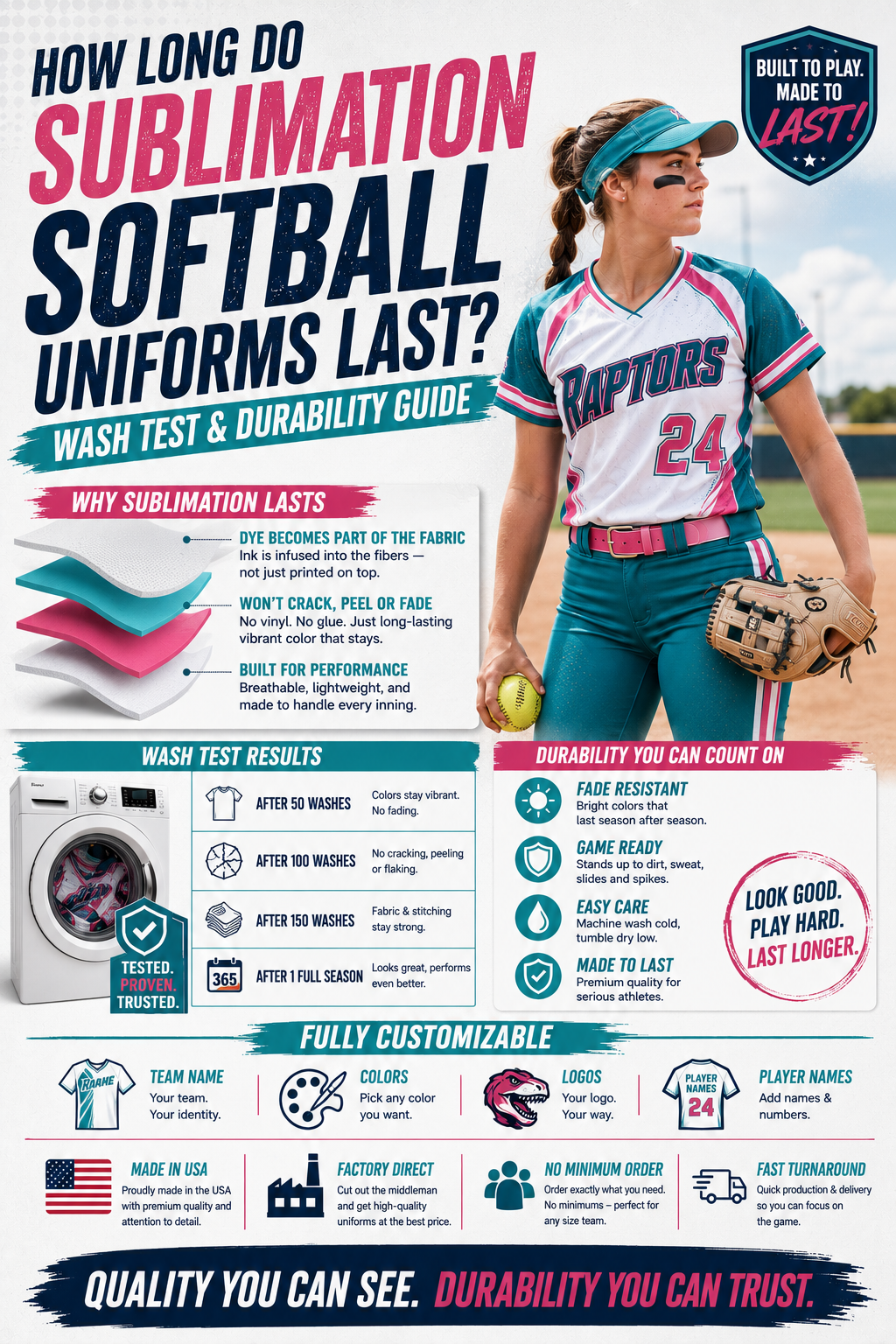
The Wash Test: What Happens After 50, 100, and 150 Washes
Teams that play a full season usually wash uniforms like 30 to 60 times per year, depending on how often they practice, and compete. A travel side that keeps going year-round can wash jerseys about 80 to 100 times in twelve months , more or less. So in all that repeated laundering, how does sublimation printing really hold up?
Here is a realistic picture of what to expect at different wash counts:
-
After 50 washes: Colors stay vibrant, no fading, no cracking, no peeling anywhere on the jersey. The fabric might feel a little softer after repeated wash cycles, which most players think is more comfortable. Performance feels the same as a brand new jersey, really identical.
-
After 100 washes: Still holding strong. There is a little bit of overall softening in the colors possible, if the uniform has been regularly exposed to hot water or high heat drying but with good care, the difference is barely noticeable. No structural separation of the print from the fabric.
-
After 150 washes: This is kind of where the whole quality fabric thing really starts showing up, you know. A jersey made from high-grade polyester, with quality sublimation inks, still looks acceptable and useful even after this many washes. If you go with budget jerseys that use lower-quality materials, you might notice more color shifts by this point too. That’s one of the reasons choosing the right manufacturer matters from the beginning.
The practical takeaway is that sublimation softball uniforms from a quality USA uniform factory can realistically last like two to three full seasons of regular use and sometimes longer, too. That flips the math on uniform investment in a big way, especially for teams that keep buying new gear every year out of habit, not really necessity.
The Role of Quality Fabric in Long-Term Durability
Sublimation printing is only as durable as the fabric it’s printed on. This is kind of a thing people don’t pay enough attention to when teams are looking around for custom sports uniforms. Two jerseys can both get called “sublimated” and seem pretty much the same in a product picture, but if one is made using lower-grade base material and the other uses better fabric that was engineered for athletic use, they won’t wear in the same manner over time.
Good sublimation fabric is usually a higher count polyester, or maybe a polyester blend, made to take the sublimation inks evenly and deeply. It’s lightweight, moisture wicking, and breathable— sort of tuned for athletes doing laps and running bases in summer heat. This kind of cloth won’t just stretch out of shape after repeated washing, it keeps its form along the seams, and it’s pretty resistant to pilling on the rougher spots like the underarms and the side panels.
When you are evaluating a uniform supplier, it is worth asking specifically about the fabric weight and polyester content they use. A USA uniform factory that produces Made in USA gear is usually transparent about their materials because domestic production standards require it. Offshore manufacturers operating at lower price points often use lighter, less durable base fabrics that look fine in the first season and start showing wear in the second.
Good pricing doesn’t always mean it’s cheap stuff. It’s more like finding a manufacturer that sticks to solid materials, and also manages overhead by doing efficient domestic production — not by trimming the quality in the process.
How Washing Habits Affect Uniform Lifespan
Even the toughest sublimation softball uniforms can get a shorter lifespan when the washing habits are, uh, not so great. But the good news is that caring for sublimation jerseys isn’t complicated , it just needs a few steady routines that any team parent or player can actually follow.
Wash in cold water.
Hot water is kind of the biggest enemy for those sublimation colors over time, if you keep doing that. Cold water cleans the jersey well enough without really stressing that dye bond in the fabric. It’s this one small habit alone that ends up making a noticeable difference across a whole season of washing.
Avoid the high-heat dryer setting.
Putting high dryer heat on polyester fabric adds this sort of ongoing thermal pressure, and over time it can lead to a slow color shift along with fabric degradation. Air drying is better, most times. If you do use a dryer, go with low or medium heat, that’s the safer route. Also, many polyester jerseys dry quickly anyway, so line drying usually does not take nearly as long as you might expect.
Turn jerseys inside out.
Washing jerseys inside out really helps with the friction , especially on the printed face during the wash cycle. so the outer side gets less scuffing from rubbing against other clothing or even the drum of the machine.
Skip the fabric softener.
Fabric softener sort of coats the surface of polyester fibers, and it can quietly cut down on the moisture wicking capability that makes athletic fabric feel like it works. It also has a small, kind of sneaky effect on how the sublimation surface stays solid through a lot of launderings. So basically, a gentle detergent without any softener is all you really need.
Treat stains quickly.
Grass stains, the clay from the infield ,and dirt from sliding should be handled pretty soon. The longer any of it hangs around the more difficult it becomes to lift, without doing that aggressive scrubbing thing — and aggressive scrubbing on sublimation fabric is never quite ideal. A light pre-treatment before washing usually takes care of most softball-related stains without any real problems.
Field Durability: More Than Just the Wash Cycle
Washing is not the only thing that puts a softball uniform through its paces. Like, the field itself is what really stresses the gear, and it does it every game. When you slide into base you can see tears start at the stitching. Diving catches stretch the fabric under the arms, fast too. And catchers wear down the knees of their pants sooner than almost anyone else does. How a uniform handles these physical demands matters just as much as how well it survives in the laundry.
Sublimation printing does not weaken the fabric structure, in fact the thermal bonding step can a little tighten up the fiber weave in the areas that get printed. The real, more important structural thing usually is the seams on a well-made sublimation jersey, not the print itself. So try to check for reinforced stitching in high-stress zones, like along the shoulder seams, the side seams, and anywhere the sleeves connect to the body of the jersey.
Custom sports uniforms made at a USA uniform factory usually go through some quality inspection before they go out. In general, domestic makers have more accountability in the whole thing if a seam fails or there’s a weird flaw in the print then returning it and getting it replaced is pretty direct since production stays local. It’s kind of a good setup, you know, because the whole chain is closer.
For roles that get the most physical wear, like catchers shortstops and center fielders, it might be worth asking your manufacturer if reinforced panels are even available for the high abrasion areas. A couple USA uniform factories can offer this as a kind of standard touch, on select jersey and pant styles, depending on the batch.
Comparing Sublimation to Other Decoration Methods Over Time
It helps to see sublimation alongside the alternatives to understand the full durability picture.
-
Screen printing: Begins to crack and fade noticeably by 30 to 40 washes in most cases. Limited color options and cannot cover the full jersey surface.
-
Heat transfer vinyl: Edges lift after repeated washing. High heat in the dryer accelerates delamination. Tends to feel stiff and uncomfortable compared to sublimated fabric.
-
Embroidery: Durable for logos and lettering but adds weight, reduces breathability, and cannot cover large graphic areas. Often used alongside sublimation rather than as a replacement.
-
Sublimation: No surface layer to crack or peel. Colors stay true through 100-plus washes when proper care is followed. Full coverage with no weight addition to the fabric.
When you lay it out like this, the durability angle for sublimation softball uniforms becomes clear. It is not just about looks, it is about value over the lifespan of the garment, overall.
How to Know You Are Getting a Durable Uniform from the Start
Not all sublimation uniforms are created equal, and the choices you make before you order affect how long the finished product lasts. Here are some questions worth asking any manufacturer before you commit:
-
What polyester content and fabric weight do you use for softball jerseys?
-
Are your inks and sublimation process rated for 100-plus wash cycles?
-
Is production done domestically, and do you do quality inspection before shipping?
-
What is your return or replacement policy if seams fail or print defects appear?
-
Can I see samples or reviews from teams that have used your uniforms for multiple seasons?
A manufacturer that answers these questions with confidence and specifics is one that takes product quality seriously. A vague or evasive response is a signal to keep looking.
Genre Sports, a USA uniform factory based in Las Vegas, produces sublimation softball uniforms with quality fabric that is built to last through full seasons of competitive play. Their domestic production setup means real accountability and consistent output — not just on the first jersey, but across every order.
Final Verdict: How Long Will They Actually Last?
With proper care, and a quality manufacturer behind them, sublimation softball uniforms can really last like two to three full seasons, maybe even longer depending. So that’s roughly 100 to 150 washes, a couple hundred innings, and a lot of time from early spring practices into those late-summer tournaments. The graphic keeps looking bright, the fabric keeps its structure and stretch, and the jersey stays dependable and it keeps going.
When you compare this with screen-printed or heat-transfer jerseys, they can start looking worn after just one season, and honestly the price difference is pretty big. With custom sports uniforms made via sublimation, sure, they often cost more up front in some cases, but when you spread it out across multiple seasons the cost-per-wear drops, and that tends to make them the smarter, more economical pick in the long run.
The bottom line is simple, really. If you’re trying to get uniforms that look sharp in April but still look sharp the following October, sublimation from a Made in USA manufacturer using quality fabric is the right call. Just make sure you wash them properly, give them basic care, and they’ll come back and reward your squad with seasons of consistent, crisp performance.
 French
 English
 Arabic
 Spanish
 Portuguese
 Deutsch
 Turkish
 Dutch
Dutch
 Italiano
 Russian
 Romaian
 Portuguese (Brazil)
 Greek
Greek
