


 Ban & Monetization Policy
 MyLiveRoom Rewards Program Rules & Eligibility
The Buyer’s Checklist: How to Vet International Sugar Suppliers & Exporters
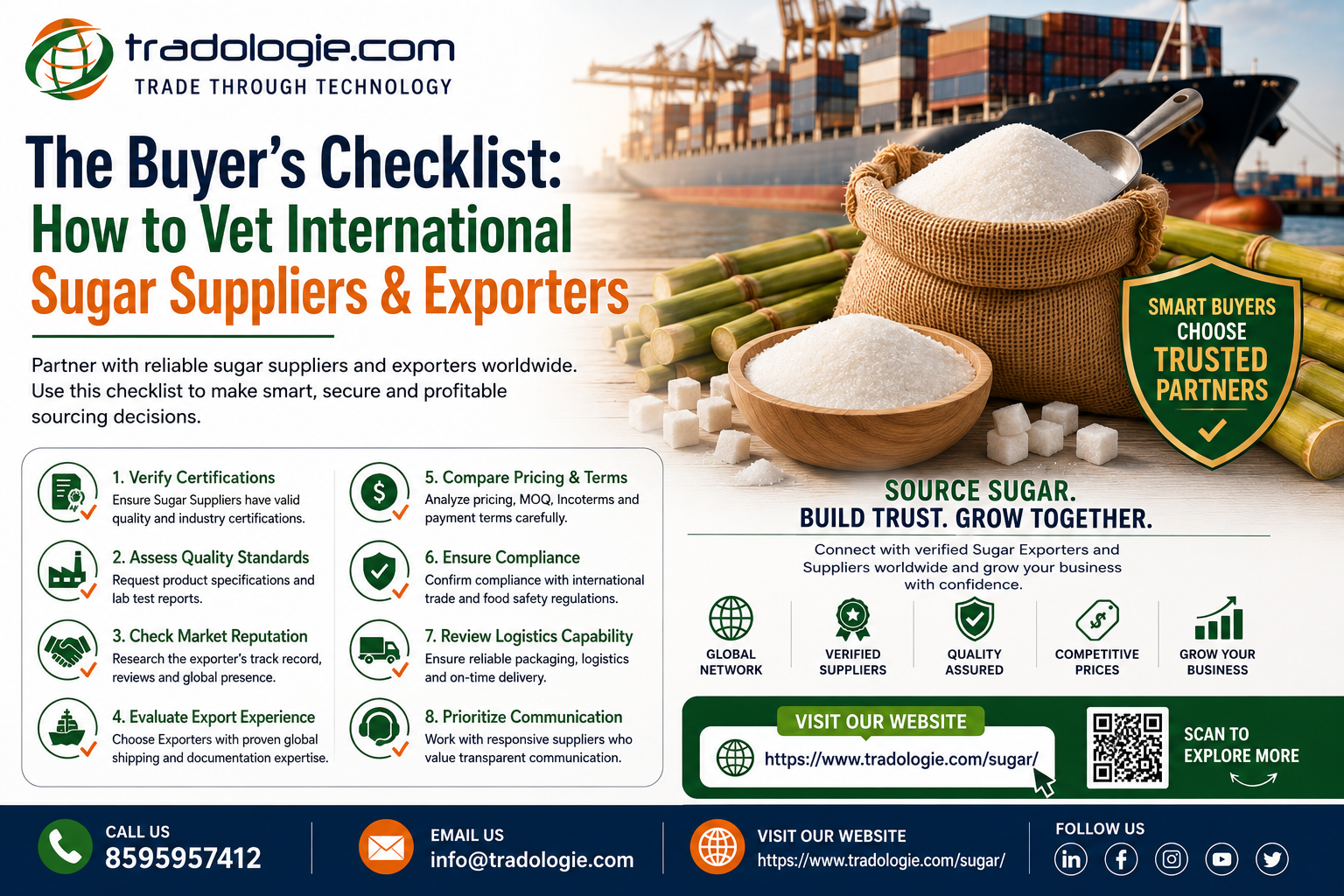
Sourcing agricultural commodities across international borders is a high-stakes endeavor, and sugar is no exception. When you decide to buy sugar in bulk, you are not just purchasing a product. You are committing to a complex logistical and financial partnership. The global sugar market is fast-moving, highly regulated, and occasionally prone to supply chain disruptions or fraudulent offers.
For an importer, a single misstep in vetting a sugar supplier can lead to severe financial losses, stuck cargo, or prolonged legal disputes. To protect your capital and ensure a steady supply of goods, you need a systematic framework for verifying every potential exporter before signing a contract or issuing a letter of credit.
Let us break down the essential checklist for vetting international sugar exporters, covering corporate verification, operational capacity, and shipping compliance.
1. Corporate Identity and Legal Standing
Before any talk of shipping schedules begins, checking the baseline legitimacy of the exporter comes first. Ghost entities and smooth-talking brokers populate the fringes of global trade; they dangle incredibly low wholesale sugar prices to lure you in, only to go silent the moment a deposit clears.
-
Registration Audits: Request the factory's current corporate registry files, tax papers, and export permits. Don't take them at face value. Run these documents directly by local chambers of commerce or domestic sugar councils in the country of origin, whether you are dealing with mills in Brazil, India, or Thailand.
-
Physical Address Verification: Satellite maps tell no lies. Punch in the coordinates of their declared processing facility to make sure an active refinery actually sits on the ground, rather than a generic virtual workspace or residential flat.
-
Third-Party Platforms: De-risking this initial introduction gets a lot easier when you lean on digital trade infrastructure. For instance, Tradologie is one of the agro trade platforms that vets suppliers through a comprehensive KYC process, helping procurement teams filter out unverified intermediaries before negotiations even begin.
2. Financial Stability and Banking Protocol
A massive red flag in bulk trade is an exporter who seems over-eager for immediate liquidity. If a milling house runs into a sudden cash-flow crunch mid-season, your entire production line pays the price.
-
Bank-to-Bank Communication: Keep your negotiations professional and transparent. Background checks on financial health should pass directly through formal banking channels via standard bank reference inquiries or SWIFT lines.
-
Payment Terms: Guard your capital with a tight fist. Legitimate players accustomed to running large operations to export bulk sugar won't bat an eye at standard protection tools. Stick firmly to an Irrevocable, Confirmed Letter of Credit (L/C) payable at sight, or structured Bank Guarantees. If a vendor pushes aggressively for large, upfront wire transfers (T/T) into unfamiliar accounts, walk away.
3. Operational and Milling Capacity
A supplier can be perfectly legal on paper, but completely out of their depth when it comes to raw tonnage. You must ensure the refinery can comfortably absorb your order without choking their local commitments.
-
Production Volume Limits: Dig into their daily throughput. A refinery's maximum monthly output needs to effortlessly cover your contract size while leaving a comfortable cushion for their routine domestic buyers.
-
Sourcing Traceability: Ask where the raw cane or beet is coming from. Competent exporters maintain highly transparent, multi-year supply arrangements with local farming cooperatives, guaranteeing a steady intake of raw materials even if regional weather turns sour.
4. Technical Quality and Specification Assays
Sugar doesn't travel well if it isn't prepped right. It reacts fiercely to ambient humidity and shifting hold temperatures during long ocean voyages. The crystal profile you secure must match international grading codes exactly, or you risk facing customs delays at your destination port.
Standard Technical Specifications for Bulk Sugar Varieties
|
Quality Parameter |
ICUMSA 45 (Refined White) |
ICUMSA 100-150 (White/Crystal) |
ICUMSA 600-1200 (Raw Brown) |
|
Color Rating |
Max 45 ICUMSA attenuation units |
Max 150 ICUMSA units |
Between 600 and 1200 units |
|
Polarization (Sucrose) |
Minimum 99.80% |
Minimum 99.50% |
Between 97.80% and 99.20% |
|
Moisture Content |
Maximum 0.04% by weight |
Maximum 0.10% by weight |
Maximum 0.15% to 0.25% |
|
Ash Content |
Maximum 0.04% by weight |
Maximum 0.10% by weight |
Maximum 0.15% by weight |
-
ICUMSA Rating Verification: The International Commission for Uniform Methods of Sugar Analysis (ICUMSA) provides the definitive global language for sugar clarity. Make sure your supplier backs up their pitch with a fresh, batch-specific chemical assay. -
Independent Pre-Shipment Inspection: Never take the factory’s internal word for it. Your contract should explicitly state that final loading is contingent on an independent check by global inspection bodies like SGS or Bureau Veritas. They must physically inspect the bags for moisture seals, tally weights, and verify the batch criteria right at the dock before the vessel seals its hatches.
5. Logistical Capabilities and Port Proximity
Moving thousands of metric tons of cargo from an inland processing plant to a departure terminal is an absolute logistical puzzle. If the exporter's local transport links are weak, your shipping window will pass you by.
-
Port Infrastructure: Look closely at their usual shipping lanes. Exporters running out of deepwater, high-volume marine hubs run into far fewer bottleneck delays than those relying on congested, smaller coastal points.
-
Storage and Moisture Control: Sugar drinks up atmospheric moisture like a sponge. If bags sit in leaky, unmonitored port sheds, refined white crystals turn into hardened, useless blocks. Insist on seeing their storage protocols—durable, multi-wall woven polypropylene packaging is essential to keep the cargo dry throughout transit.
6. Regulatory Compliance and Import/Export Mandates
Sourcing blindly can land you in a regulatory trap. Every nation uses specific quotas, tariffs, and customs paperwork to manage how traders import bulk sugar. One missing stamp from the origin point can lock your cargo in a legal stalemate for months.
-
Export Quotas and Licenses: High-volume sugar nations frequently cap seasonal exports to protect domestic food security. You must verify that your supplier holds a valid, current allocation within their country's national quota framework before placing an order.
-
Phytosanitary and Health Certificates: Customs desks don't compromise. Ensure the seller's shipping desk can provide clean phytosanitary filings, non-radiation statements, and non-GMO clearances. Without these, your containers will sit under a heavy border hold.
Technical Verdict
Vetting an international supply partner isn't about intuition. It is a game of verification, pure and simple. When large trade investments are on the line, leaving gaps in your due diligence is a recipe for disaster.
By running deep corporate cross-checks, demanding ironclad bank-to-bank terms, requiring third-party dock oversight, and matching technical ICUMSA numbers exactly, you take the risk out of the equation. The buyers who build strict verification habits into their standard operating procedures are the ones who protect their margins and build resilient, profitable trade networks over the long haul.
 English
 Arabic
 French
 Spanish
 Portuguese
 Deutsch
 Turkish
 Dutch
Dutch
 Italiano
 Russian
 Romaian
 Portuguese (Brazil)
 Greek
Greek
