


 Ban & Monetization Policy
 MyLiveRoom Rewards Program Rules & Eligibility
Why Europe’s Cards and Payments Ecosystem Is Moving Beyond Cash
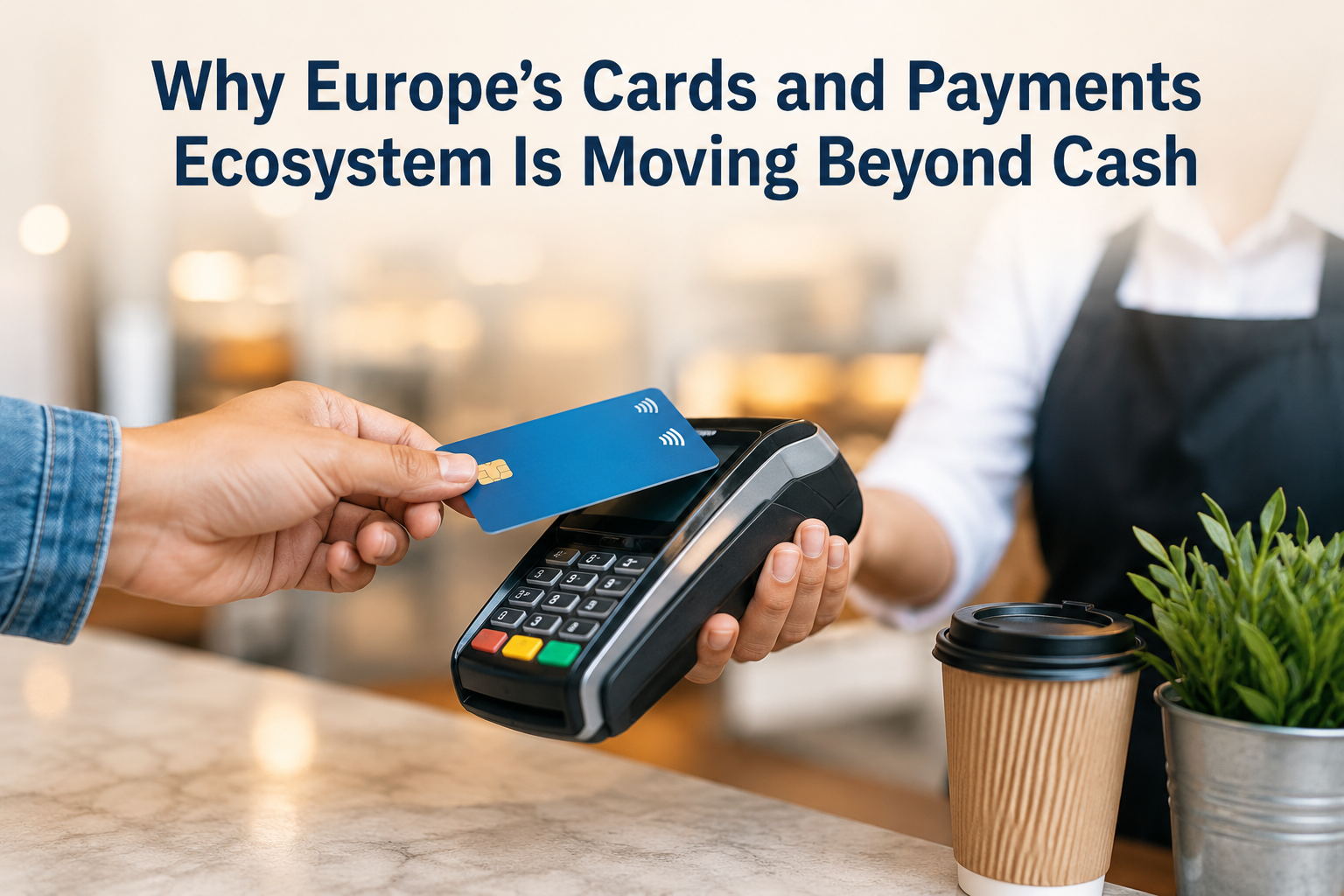
Europe’s cards and payments ecosystem is entering a more digital, regulated, and security-focused phase. According to MarkNtel Advisors, the Europe Cards and Payments Market recorded a transaction value of around USD 5,429 billion in 2024 and is projected to surpass USD 8,193.26 billion by 2030, growing at nearly 7% CAGR during 2025–2030. Detailed insights are available in this Europe cards and payments report.
Digital Payments Are Becoming the Default Consumer Habit
Consumer payment behavior across Europe is shifting steadily toward cards, wallets, and other non-cash methods. The European Central Bank noted that 55% of euro area consumers preferred cards and other cashless methods for in-store payments in 2024, while 22% preferred cash. This shows that digital payments are no longer limited to online commerce but are increasingly embedded in everyday retail transactions.
Contactless payments are a major part of this transition. ECB payment statistics show that contactless card payments at physical terminals reached 29.6 billion in the first half of 2025, up 12.8% from the same period in 2024. Their value also rose 13.9% to EUR 0.8 trillion, indicating wider adoption across both small-ticket and higher-value purchases.
Regulation Is Reshaping Payment Infrastructure
The region’s payment transformation is being supported by regulatory modernization. The Instant Payments Regulation amends SEPA-related rules and adds provisions for instant euro credit transfers, making real-time payments more accessible across the European Union. This is important because banks and payment service providers are being pushed to upgrade settlement infrastructure, fraud controls, and account verification capabilities.
Open banking is another structural force changing the payment environment. The European Court of Auditors explains that open banking requires account data holders, mainly banks, to share customer payment data with authorized third-party providers, enabling payment initiation services for online transactions. This supports more competition, API-based payment models, and better integration between banks, merchants, fintech platforms, and consumers.
Cards Remain Central Despite Wallet Growth
Although instant payments and account-to-account transfers are growing, cards remain highly relevant in Europe’s payment mix. ECB data for the first half of 2025 showed that card payments accounted for 57% of total non-cash transactions in the euro area, compared with 22% for credit transfers and 14% for direct debits. This demonstrates the continued strength of card networks in retail, e-commerce, and recurring payment use cases.
The Europe cards and payments industry report highlights debit cards, prepaid cards, credit cards, mobile wallets, credit transfers, cash, and cheques as key payment instruments. Among application areas, food and groceries hold a leading position, reflecting the high frequency of daily household transactions and the steady migration of retail checkout flows toward digital acceptance.
Security and Compliance Are Becoming Core Priorities
As digital payments expand, fraud prevention and compliance are becoming central to product development. Strong customer authentication, real-time monitoring, biometric verification, tokenization, and transaction-risk analytics are increasingly necessary for issuers, acquirers, wallet providers, and payment processors. The shift is not only about faster checkout but also about maintaining trust in a high-volume, cross-border payment environment.
This is especially important in Europe because payment providers operate across different regulatory, language, and consumer-protection environments. While GDPR has created a strong data-protection framework, localized compliance interpretations can make cross-border deployment complex. Payment companies therefore need scalable systems that support secure authentication, data minimization, fraud screening, dispute management, and interoperability across multiple jurisdictions.
E-Commerce and POS Modernization Are Expanding Use Cases
The rise of omnichannel retail is strengthening demand for integrated payment infrastructure. Merchants increasingly need payment systems that work consistently across physical stores, mobile apps, e-commerce websites, subscription platforms, and marketplace channels. This is increasing the role of payment gateways, card acquiring systems, embedded checkout tools, and wallet acceptance solutions.
At point-of-sale terminals, contactless cards and mobile wallets are improving transaction speed and reducing queue friction. In online channels, saved cards, one-click checkout, wallet-based payments, and account-to-account payment options are helping merchants reduce payment abandonment. These shifts are expanding the commercial relevance of the Europe cards payment analysis for banks, fintech firms, payment processors, and digital commerce platforms.
Competitive Activity Is Moving Toward Platform-Based Payments
The competitive structure includes banks, card networks, wallet providers, and technology-led payment companies. MarkNtel Advisors lists HSBC Holdings, BNP Paribas, Banco Sabadell, Banco Santander, Barclays, Société Générale, UBS Group, Deutsche Bank, CaixaBank, ING Group, PayPal, Apple Pay, Google Pay, Visa, and Mastercard among key players. Their roles differ across issuing, acquiring, wallet enablement, merchant services, and network infrastructure.
European payment providers are also moving beyond transaction processing toward broader platform capabilities. These include fraud analytics, loyalty integration, tokenized credentials, merchant dashboards, cross-border processing, and embedded finance. As payment acceptance becomes more integrated into retail and financial workflows, providers with scalable infrastructure and strong compliance capabilities are likely to remain better positioned.
Outlook
Europe’s payments landscape is moving toward a hybrid model where cards, wallets, instant transfers, and open banking-enabled payments coexist. Cash remains important for inclusion and resilience, but consumer preference, regulatory reform, and merchant digitization are moving the region toward faster and more secure digital payment flows.
The sector’s next phase will be shaped by interoperability, fraud control, real-time settlement, and consumer trust. Rather than replacing cards immediately, newer payment methods are expanding the ecosystem around them. This makes Europe one of the most structured and regulation-led payment environments, where innovation must advance alongside security, compliance, and accessibility.
 Russian
 English
 Arabic
 French
 Spanish
 Portuguese
 Deutsch
 Turkish
 Dutch
Dutch
 Italiano
 Romaian
 Portuguese (Brazil)
 Greek
Greek
