


 Ban & Monetization Policy
 MyLiveRoom Rewards Program Rules & Eligibility
Deploying a Poker Game on AWS or Google Cloud: A DevOps Guide
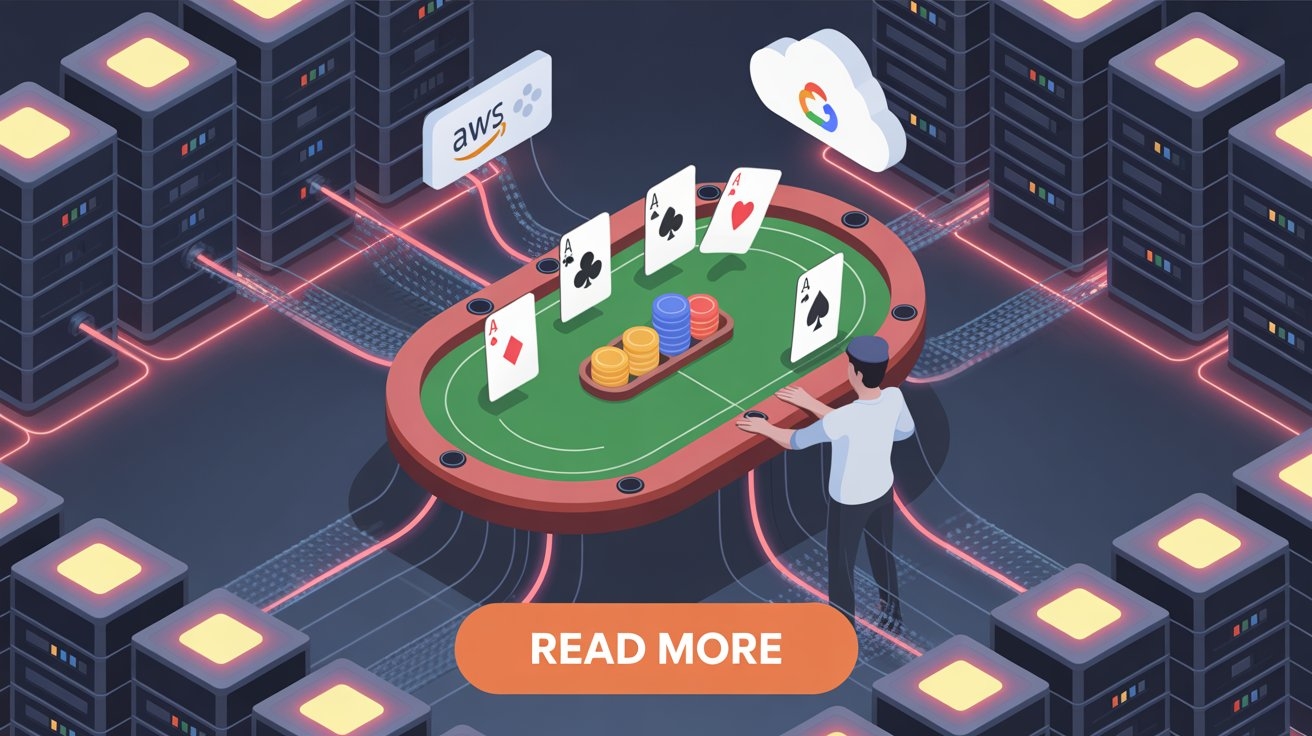
Building and deploying a poker game is more than just writing some code and spinning up servers. Once you’ve finished development and testing, the next big step is deciding how to run it reliably, at scale. Whether it’s a private poker night simulation or a real-money poker tournament platform, deploying it on the cloud is usually the smartest route. But should you go with AWS or Google Cloud? And more importantly how do you actually set this up?
In this guide, I’ll walk you through what a DevOps workflow for a poker game might look like on AWS or Google Cloud, and how to get your game live with monitoring, auto-scaling, and other practical needs in place.
Poker game developers, especially those new to cloud infrastructure, will benefit from this step-by-step breakdown. Let’s get into it.
Step 1: Choose Your Cloud Provider – AWS or Google Cloud?
There’s no absolute winner here. Both Amazon Web Services (AWS) and Google Cloud Platform (GCP) offer strong infrastructure services. Here’s how to make your pick:
-
Familiarity: If you or your team have used one platform more than the other, go with what you know.
-
Ecosystem: AWS has more services and deeper integrations. Google Cloud is often praised for better pricing and strong Kubernetes support.
-
Pricing: Google Cloud often offers better sustained-use discounts, but AWS gives more instance types.
Bottom line: If you’re building with containers and Kubernetes, GCP might give you an edge. For flexibility and wider support, AWS is the safe choice.
Step 2: Define Your Architecture
Before you write a single line of infrastructure code, get clear on what you're building. A typical poker game backend needs:
-
API layer for client communication
-
Real-time engine for game state and player actions
-
Database for user profiles, game history, and wallets
-
Lobby system to manage rooms and matchmaking
-
Authentication to manage logins
-
Admin tools for moderation and analytics
Most poker tournament platform development teams choose microservices for this. Here's a high-level architecture:
-
Frontend served via CDN (CloudFront or Cloud CDN)
-
Backend microservices in Docker containers
-
Kubernetes or ECS (on AWS) for orchestration
-
Redis for fast in-memory session storage
-
PostgreSQL or MySQL for the main DB
-
Object storage for assets (avatars, images)
-
Logging and monitoring stack (CloudWatch, Stackdriver, or third-party tools like Datadog)
Step 3: Containerize Everything
Your game backend should be containerized. Whether you're using Node.js, Java, Python, or something else, Docker is the go-to.
Each microservice gets its own Dockerfile. This makes deployments consistent and scalable. It also allows you to build and test locally, then deploy the exact same container to staging or production.
Make sure your containers are stateless. Store game state in Redis or a state server, not in the container's memory. This way, you can scale services horizontally without breaking gameplay.
Step 4: Set Up Kubernetes (EKS or GKE)
Once your game is in containers, Kubernetes is the next step.
-
On AWS: Use Amazon EKS.
-
On Google Cloud: Use Google Kubernetes Engine (GKE).
Both platforms offer managed Kubernetes clusters, which means they handle control plane setup, scaling, and updates.
Deploy your backend services as Kubernetes Deployments with Services exposed via Ingress. For secure connections, set up HTTPS using Let’s Encrypt with cert-manager.
Important tools:
-
Helm: Package manager for Kubernetes. Makes it easy to install Redis, PostgreSQL, etc.
-
kubectl: Command-line tool to interact with your cluster.
-
Prometheus + Grafana: Monitoring stack.
-
Fluentd or Loki: For log aggregation.
Step 5: Database Setup
Your poker game will need both transactional and in-memory data layers.
-
Use PostgreSQL for user data, chips, transaction logs, game results.
-
Use Redis for fast real-time data like current game states, lobby info, player actions.
On AWS, you can go with RDS (PostgreSQL) and ElastiCache (Redis). On GCP, use Cloud SQL and MemoryStore.
Make sure to:
-
Enable backups
-
Set up read replicas if needed
-
Encrypt data at rest
-
Secure access using IAM or VPC network rules
Step 6: CI/CD Pipeline
A poker game needs rapid updates and fast rollback in case something goes wrong mid-tournament. That’s why your CI/CD setup matters.
Use GitHub Actions, GitLab CI, or CircleCI to build Docker images, run unit tests, push images to container registries, and deploy to Kubernetes clusters.
Workflow should look like this:
-
Code push to GitHub
-
Tests run
-
Docker image built and pushed to ECR (AWS) or GCR (Google)
-
Helm deployment to staging cluster
-
Manual approval → deploy to production
Staging and production should have separate clusters or at least namespaces.
This kind of infrastructure discipline is often a hallmark of the best casino game development company teams, who know that live operations and stability are just as important as gameplay design. CI/CD isn’t just automation, it's peace of mind during peak game hours.
Step 7: Real-Time Communication Layer
WebSockets are the most common tech for real-time poker gameplay.
Use Socket.io, Phoenix Channels, or gRPC streams depending on your backend language.
Deploy this component separately for better control. It should connect to Redis Pub/Sub or another event system to sync game state across instances.
Make sure you:
-
Use sticky sessions or WebSocket load balancing
-
Monitor socket connections
-
Handle reconnections gracefully
This part is core to a poker game development experience. Any latency or dropped messages here can ruin a player’s session.
Step 8: Monitoring and Alerts
Don’t go live without observability.
-
Set up Prometheus + Grafana to monitor CPU, memory, latency.
-
Add alerts for pod crashes, DB slow queries, error rates.
-
Use CloudWatch or Google Cloud Operations suite for logs, traces, and uptime checks.
-
Integrate with Slack or PagerDuty for on-call alerts.
A poker game isn’t a blog; you'll need fast response times for incidents. Players dropping mid-game can damage trust quickly.
Step 9: Cost Optimization Tips
Cloud bills can balloon quickly. Here’s how to keep things lean:
-
Use auto-scaling for both nodes and pods.
-
Use spot instances for non-critical jobs like log aggregation or batch processing.
-
Set resource limits on all containers.
-
Clean up unused volumes, images, and services.
If your game is new and traffic is small, start with small instances and grow as needed. Monitor usage weekly.
This becomes especially important for poker game development companies that are deploying multiple titles or test environments.
Step 10: Security and Compliance
A real-money poker game has sensitive data. Security is not optional.
Checklist:
-
Use HTTPS everywhere.
-
Store secrets in AWS Secrets Manager or GCP Secret Manager.
-
Set firewall rules and private VPCs.
-
Apply IAM roles to limit access to resources.
-
Run vulnerability scans on Docker images.
Also, check if your game needs to comply with any local gambling regulations or data privacy laws (like GDPR or CCPA).
Companies offering casino game development services should have templates for these in place.
Going Live and Maintenance
Once everything is up and running:
-
Do a soft launch with small traffic.
-
Monitor logs and performance.
-
Gather feedback.
-
Add health checks and auto-healing rules.
Rolling updates should be the default in your Kubernetes setup to avoid downtime.
Post-launch, schedule regular DB backups, clean up old game logs, and keep dependencies updated.
Final Thoughts
Deploying a poker game on AWS or Google Cloud isn’t as intimidating as it seems, especially if you break it down into clean steps. With containerization, managed Kubernetes, and some good DevOps practices, your poker app can run smoothly at scale.
If you’re a poker game development company or an indie team pushing your first title, don’t over-engineer in the beginning. Focus on reliability and observability before going wild with custom tooling.
And if you're looking for reliable casino game development services, prioritize teams that understand both gameplay logic and scalable DevOps. Building the game is half the journey, keeping it running is the other.
 Spanish
 English
 Arabic
 French
 Portuguese
 Deutsch
 Turkish
 Dutch
Dutch
 Italiano
 Russian
 Romaian
 Portuguese (Brazil)
 Greek
Greek
