


 Ban & Monetization Policy
 MyLiveRoom Rewards Program Rules & Eligibility
BIS FMCS Guide by sunconsultants.co.in
Introduction
In the global marketplace, India stands as one of the fastest-growing destinations for manufacturing and consumer goods. With increasing quality awareness, strict regulations, and rising competition, entering the Indian market requires more than just a high-quality product—it requires regulatory compliance. For foreign manufacturers producing goods covered under mandatory Indian Standards, the BIS FMCS plays a vital role.
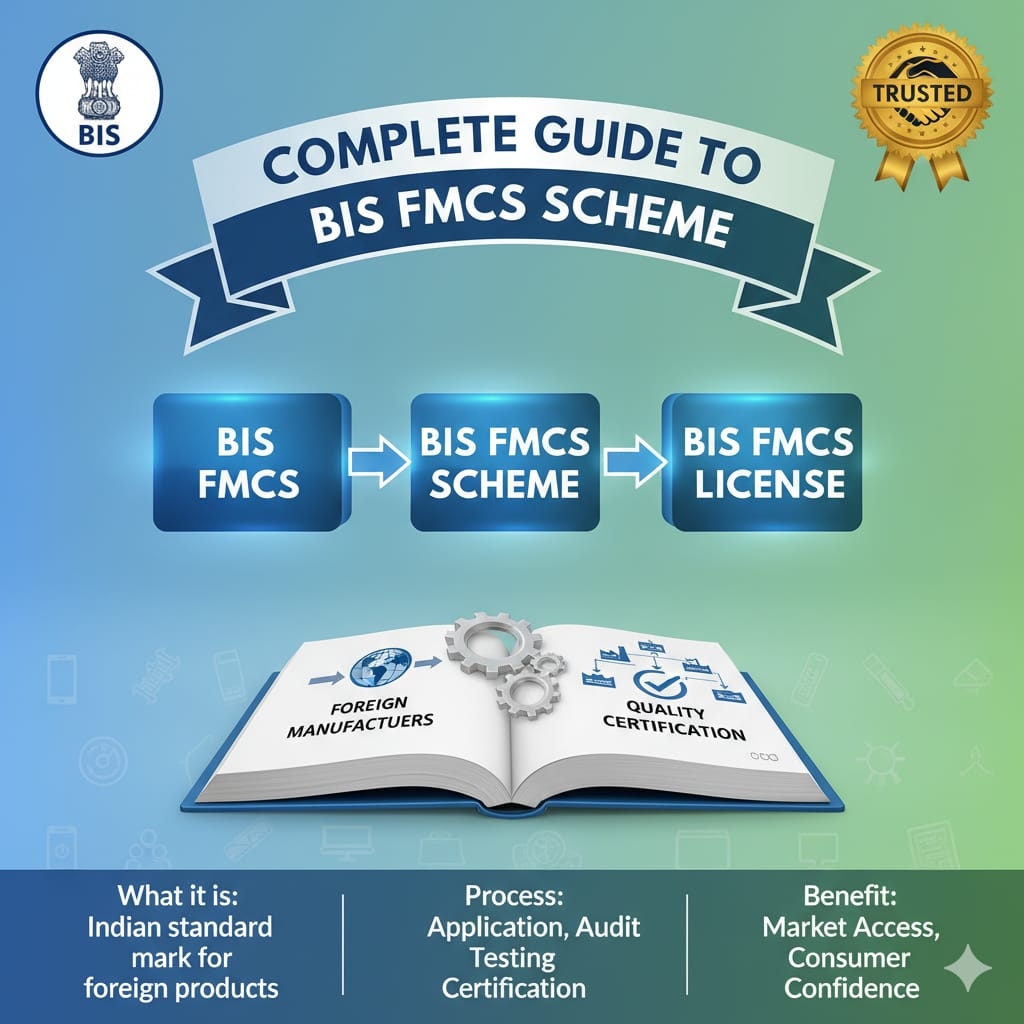
The BIS FMCS (Foreign Manufacturers Certification Scheme) is a crucial system that ensures products manufactured outside India comply with Indian safety, quality, and performance standards. Whether you are producing electrical appliances, steel products, chemicals, valves, or safety equipment, obtaining a BIS Certification for Foreign Manufacturer is mandatory for many categories.
In this comprehensive blog, we will explain what BIS FMCS is, why it is essential, how to obtain a BIS FMCS Certificate, the costs involved, and how sunconsultants.co.in helps streamline the entire procedure for foreign companies.
What Is BIS FMCS?
The Foreign Manufacturers Certification Scheme (FMCS) is a scheme operated by the Bureau of Indian Standards (BIS) specifically for manufacturers located outside India. Under this scheme, foreign manufacturers must obtain a license to use the ISI Mark on their products that fall under mandatory Indian Standards.
Key Points about BIS FMCS:
-
It applies to foreign manufacturers only.
-
A BIS license is issued after a detailed factory inspection, product testing, and quality management system verification.
-
Once approved, the manufacturer can use the ISI Mark, which is India’s symbol of quality and safety.
-
The license holder must comply with ongoing surveillance audits and quality checks.
Having a BIS FMCS license allows manufacturers to legally export and sell regulated goods in India, ensuring compliance with government standards.
Why BIS Certification for Foreign Manufacturer Is Essential
Foreign companies often ask why BIS Certification is necessary if their products already meet international standards. The answer is simple—every country has its own safety and performance requirements. India mandates BIS certification for several product categories.
1. Legal Requirement
Many products under Indian Standards cannot be imported or sold in India without BIS approval. This makes the certification compulsory.
2. Market Access
Distributors, retailers, and government buyers in India only accept ISI-marked products for regulated categories.
3. Product Reliability and Safety
BIS certification ensures that the product meets Indian climatic conditions, electrical requirements, and safety parameters.
4. Enhanced Brand Trust
Indian buyers prefer BIS-certified products as they reflect strong quality assurance.
5. Competitive Advantage
BIS certification helps foreign brands stand out in India’s crowded and price-sensitive market.
Benefits of Obtaining a BIS FMCS Certificate
A BIS FMCS Certificate offers several advantages:
-
Legal entry into India’s regulated sectors
-
Recognition as a trusted and compliant international brand
-
Access to government and institutional tenders
-
Reduced chances of customs rejections or delays
-
Higher customer confidence and market acceptance
With certification, manufacturers find smoother supply chain operations and better acceptance across Indian industries.
BIS FMCS Certification Process for Foreign Manufacturers
The BIS FMCS process is more detailed compared to domestic certification due to international logistics and verification protocols. Below is a step-by-step breakdown:
1. Product and Standard Identification
The first step is determining whether the product falls under mandatory BIS standards. Each product category is linked to a specific Indian Standard (IS). Correct identification is crucial to avoid rejections or delays.
sunconsultants.co.in helps manufacturers identify the correct IS based on product design, materials, and application.
2. Application Preparation and Documentation
Foreign manufacturers must prepare:
-
Company registration documents
-
Factory layout and manufacturing process
-
Quality control procedures
-
Raw material specifications
The AIR plays a significant role in coordinating with BIS on behalf of the foreign manufacturer.
3. Product Testing in BIS-Recognized Labs
Manufacturers must send product samples to India-based BIS-recognized laboratories for testing.
The tests cover:
-
Performance
-
Safety
-
Durability
-
Raw material composition
-
Compliance with Indian climate and voltage conditions
Testing reports serve as a primary basis for certification approval.
4. Factory Inspection by BIS Officials
BIS officers travel to the manufacturer’s country to inspect the production facility.
They verify:
-
Manufacturing capabilities
-
Machinery and equipment
-
In-house quality controls
-
Testing facilities
This is one of the most important steps in obtaining a BIS FMCS Certificate.
5. Evaluation and Grant of License
Once the inspection and testing are successful, BIS evaluates the results. If all parameters meet the standards, BIS issues the BIS FMCS license, allowing the manufacturer to use the ISI Mark.
The license is valid for one year and renewable thereafter.
6. Renewal and Surveillance Audits
BIS conducts periodic audits and product testing to ensure ongoing compliance. Renewal requires updated documents, test reports, and payment of fees.
Cost of BIS FMCS Certification
The cost depends on:
-
Product type
-
Number of tests
-
BIS inspection fees
-
Travel expenses for BIS officers
-
Documentation and consultancy fees
Foreign manufacturers often find it challenging to estimate exact costs due to international logistics. sunconsultants.co.in provides clear, transparent pricing after evaluating the product category and certification requirements.
How sunconsultants.co.in Helps in BIS FMCS Certification
Foreign companies often struggle with:
-
Documentation errors
-
Testing delays
-
Understanding Indian Standards
-
Communication issues
-
AIR appointment
-
Inspection planning
Conclusion
For foreign manufacturers aiming to enter the Indian market, obtaining a BIS FMCS Certificate is not just a regulatory requirement but a strategic advantage. The BIS Certification for Foreign Manufacturer ensures legal compliance, builds trust, and enhances market acceptance.
With expert guidance from sunconsultants.co.in , the entire certification process becomes faster, easier, and fully compliant with Indian regulations. Whether you are exporting electrical goods, steel products, pressure cookers, or industrial equipment, BIS certification ensures your product is ready for India.

 English
 French
 Spanish
 Portuguese
 Deutsch
 Turkish
 Dutch
Dutch
 Italiano
 Russian
 Romaian
 Portuguese (Brazil)
 Greek
Greek
