


 Ban & Monetization Policy
 MyLiveRoom Rewards Program Rules & Eligibility
Short on Wire During Night Shift Again
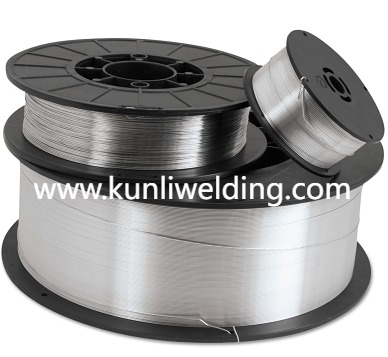
Aluminum fast ferries now launch every few months and offshore wind farms sprout towers faster than anyone predicted. Each new hull or foundation eats kilometers of welding wire, yet purchasing departments still guess quantities the old-fashioned way and pray. Aluminum Welding Wire Manufacturers watch the same cycle repeat: yards either drown in unused spools or halt production waiting for emergency shipments. A handful of straightforward calculations can end both problems forever.
Start with total weld length. Blueprints already show every meter of fillet and butt joint. Multiply structural welds by two for double-sided fillets and add closure seams that always appear once blocks mate on the slipway. Most marine and energy projects fall into predictable patterns; a sixty-meter catamaran hull rarely deviates more than five percent from similar sisters once all stiffener intersections are counted.
Joint cross-section comes next. A six-millimeter fillet on ten-millimeter plate consumes roughly four times the filler of the same leg length on four-millimeter sheet. Throat thickness and leg length appear on every drawing; a quick sketch and pocket calculator give deposited weight per meter in seconds. Robotic lines running pulse spray deposit slightly less than manual welders, but the difference rarely exceeds ten percent when parameters stay consistent.
Plate thickness drives the biggest swing. Transition pieces for wind towers often step from eight millimeters at the flange to twenty-five millimeters at the boat landing. Each thickness band needs its own quick tally because wire consumption more than doubles when root passes and hot passes appear. Yards that separate thick closure welds from normal production joints rarely miss their totals.
Reinforcement height matters too. Marine classification societies allow minimal cap convexity on structural welds, but fatigue-critical areas demand flush grinding. Knowing which joints stay as-welded and which get dressed saves hundreds of kilograms on large modules. The same detail decides whether the last spool finishes the job or sits half-full in stores.
Position welding adds another adjustment. Vertical-up and overhead fillets always deposit more metal than flat position. Offshore modules welded in the shop then tilted for transport contain long vertical seams that surprise planners who only counted flat assembly tables. A simple multiplier based on drawing orientation catches the extra consumption before the first block leaves the jig.
Robotic versus manual consumption creates the final tweak. Robots waste almost nothing once programmed, while hand welders vary by skill and fatigue. Many yards average the two by watching a few shifts and applying a realistic factor. The result lands within one or two spools on even the largest aluminum projects.
Spool size and packaging finish the picture. Fifteen-kilogram plastic spools feed robots without interruption, while seven-kilogram versions suit manual bays. Ordering the right mix prevents partial spools cluttering aisles and keeps cash flowing instead of sitting in inventory.
Production teams that master these steps order once, weld continuously, and finish on time. Aluminum Welding Wire Manufacturers appreciate the accurate forecasts because they can schedule melting and drawing runs without rush charges.
Anyone tired of wire shortages or surplus stock can see the practical worksheets and typical marine consumption tables at kunliwelding.com. The site gathers real examples from ferry hulls, wind tower sections, and crew boat superstructures, showing exactly how joint counts and thickness bands translate into finished kilograms. When the next aluminum project starts burning meters faster than expected, the straightforward planning tools waiting at www.kunliwelding.com turn educated guesses into deliveries that arrive the day the last spool goes on the feeder.
 Turkish
 English
 Arabic
 French
 Spanish
 Portuguese
 Deutsch
 Dutch
Dutch
 Italiano
 Russian
 Romaian
 Portuguese (Brazil)
 Greek
Greek
