


 Ban & Monetization Policy
 MyLiveRoom Rewards Program Rules & Eligibility
Finding the Right Tool: A Complete Guide to Selecting Woodworking Equipment
Choosing the best saw for cutting wood can transform your woodworking projects from frustrating experiences into smooth, enjoyable endeavors. Whether you're a seasoned craftsperson or just starting your journey with timber, understanding which cutting tool suits your specific needs is essential for achieving professional results. The market offers numerous options, each designed for particular applications, and making an informed decision requires careful consideration of various factors.
Know Your Woodworking Needs
Prior to purchasing anything related to cutting, consider taking your time to analyze what you will actually create. The tool to best suit your needs will depend largely on what you actually select to work on. Someone making furniture requires different abilities than someone erecting outdoor scenery or making pieces of intricate decoration. Think in terms of wood types that you would be using most often, as hardwoods demand much heavier equipment than softwoods. Once this is done also consider the scale of your projects, since cutting large sheets differs considerably from that of trim work.
Power Source Options
The debate between corded and cordless tools continues among woodworkers, each side having valid arguments. Corded tools have the advantage of supplying uninterrupted power, making them ideal for extended sessions or for use in very thick and dense materials. Also, they eliminate any concern about battery life during important phases of a project. On the contrary, cordless technology remains free and convenient, especially when having electric outlets would be a hassle, or going from one job site to another within the same day.
The Impact of Blade Choice
The blade you would select would influence your result just as much as the tool itself. Different configurations of blades do different things: ripping along the grain, making clean crosscuts, smooth cutting. Tooth count is also important; the fewer teeth are better suited for material removal and give rough edges, the more teeth produce a very refined finish, albeit much more slowly. The carbide-tipped blades would have the advantage of retaining sharpness much longer than steel and, therefore, require less maintenance while assuring cut quality throughout its lifespan.
Important Safety Features
Never compromise your safety while selecting woodworking tools. Newer equipment achieves some safety features that were not in traditional times. The blade guards should operate freely so as not to interfere with your view, while still giving some protection. Electric brakes that halt the rotation of the cutter immediately after the trigger is released can save an accident in an important moment when the operator needs to steady another hand just after cutting. Anti-kickback devices prevent the risk of material being thrown back towards the operator, which is a big concern when working with certain kinds of wood or grain.
Precision and Accuracy Systems
For professional output, time must be spent in the actual cutting where you want them to go. Laser guides are now very common to project a line showing you exactly where the blade will cross through your material-little more than the visual aids will allow you to avoid costly mistakes in measurements and material wastage. Adjustable fences and miter gauges allow you to dial specific angles and maintain them through repetitive cuts, achieving consistent results across multiple pieces. Some even sophisticated systems feature digital readouts that display precise values for measurement and angles.
Dust Management Systems
Dust from wood can be hazardous for health and hazards for a clean workspace. An efficient dust extraction system is, however, a must for the addresses of good health concerning the respiratory system in a prolonged working environment. A good tool should have a dust port that will bear down to shop-vac-level systems to catch most of the sawdust at the source. This feature becomes essential when one works indoors or in confined areas where airborne particles accumulate very quickly. A clean workspace will also ensure better visibility and increased accuracy in cutting operations.
Portability Versus Stationary Equipment
Depending on the available working area, there would arise a need to evaluate whether mobile or fixed equipment is more appropriate for your condition. Compact and light tools permit you to bring your skills to the material and not the other way around, especially with large sheets or installed components. However, stationary machines offer the best stability and sheer power for serious production work. For increased flexibility, most woodworkers end up having both portable and stationary equipment for precision work that requires total stability.
Maintenance and Longevity
Good quality tools are serious investments that deserve care for them to give you a number of years of good service. Cleaning them on a regular basis prevents sawdust accumulation which could have a bearing on the performance and accuracy of given tools. Taking care of the blades by sharpening or changing them some time or the other keeps the cutting surface free and reduces motor stress. Periodical checks on alignment will ensure your tools are cutting accurately rather than drifting further and further away from true settings. Some tools demand more attention than others anyway, so it would help to know such maintenance in making your choice.
Conclusion
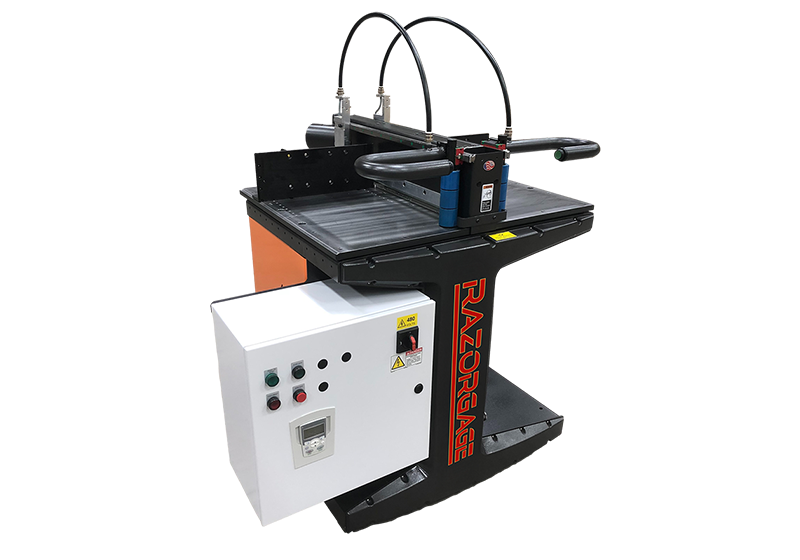
Selecting appropriate woodworking equipment involves balancing numerous factors including your specific project requirements, workspace constraints, budget considerations, and skill level. The best saw for cutting wood for one person may not suit another's needs at all. Take time to handle different options if possible, perhaps borrowing from friends or using demonstration models at suppliers. Read experiences from other woodworkers who tackle similar projects. Modern innovations like the RazorGage Positioner demonstrate how technology continues improving precision and efficiency in woodworking, though remember that even the finest equipment requires proper technique and patience to achieve outstanding results.
Frequently Asked Questions
What thickness of wood can standard cutting tools handle?
Most standard equipment comfortably cuts through materials up to two inches thick, though specific capacity varies between models. Always consult manufacturer specifications before attempting cuts near maximum capacity, as forcing tools beyond their designed limits damages both equipment and materials while creating safety hazards.
How often should blades be replaced?
Blade replacement frequency depends on usage intensity and material types. Professional woodworkers working daily might replace blades monthly, while hobbyists could use the same blade for six months or longer. Watch for signs like increased burning on cut edges, difficulty feeding material smoothly, or requiring excessive force to complete cuts.
Can the same tool handle both rough construction and fine woodworking?
While some versatile tools manage both applications reasonably well, most woodworkers eventually acquire specialized equipment for different purposes. Construction work prioritizes speed and power, while fine woodworking demands precision and smooth finishes. Using dedicated tools for each application produces better results and extends equipment lifespan.
 Greek
Greek
 English
 Arabic
 French
 Spanish
 Portuguese
 Deutsch
 Turkish
 Dutch
Dutch
 Italiano
 Russian
 Romaian
 Portuguese (Brazil)
