


 Ban & Monetization Policy
 MyLiveRoom Rewards Program Rules & Eligibility
How Does a Tea Mill Support Large-Scale Tea Production?
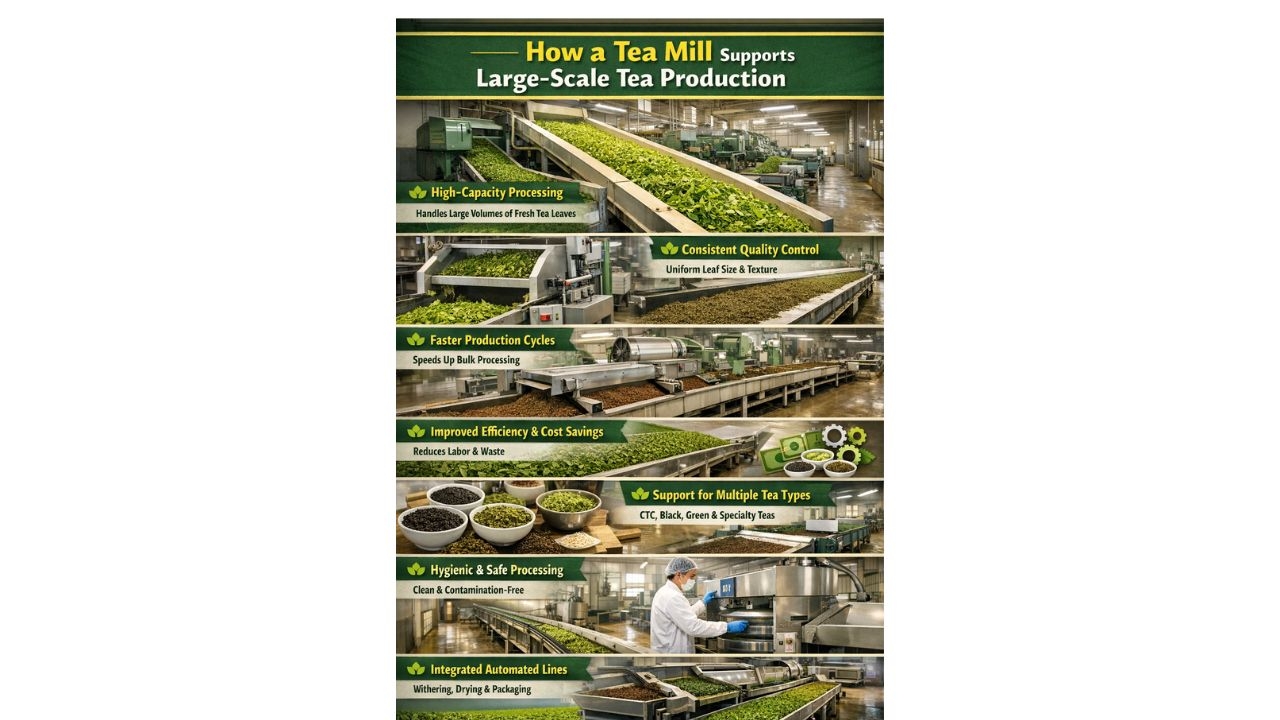
The global tea industry processes millions of tons of tea leaves annually, and at the heart of this massive operation lies the tea mill. A tea mill is an industrial facility equipped with specialized machinery designed to transform freshly harvested tea leaves into the packaged products consumers enjoy worldwide. These processing hubs are essential for maintaining consistency, quality, and efficiency in large-scale tea production.
For commercial tea producers, the tea mill represents the critical bridge between plantation and market. Without these sophisticated facilities, meeting the demands of millions of tea drinkers would be impossible. Modern tea mills combine traditional processing wisdom with cutting-edge technology to deliver exceptional products while maximizing productivity.
The Evolution of Tea Processing
Tea processing has come a long way from manual methods used centuries ago. Traditional tea production involved labor-intensive tasks like hand-rolling leaves and sun-drying, which limited production capacity significantly. The industrial revolution brought mechanization to tea processing, giving birth to the modern tea mill.
Today's tea mills incorporate advanced engineering and automation to handle enormous volumes while preserving the delicate characteristics that define quality tea. This evolution has transformed tea from a luxury commodity into an accessible beverage enjoyed globally, with production capabilities that would have seemed impossible just decades ago.
Core Functions of a Tea Mill
A tea mill performs several critical functions that are fundamental to large-scale production. The primary purpose is withering, where fresh tea leaves lose moisture content in controlled environments. This process typically reduces moisture from 75-80% down to approximately 60-70%, preparing leaves for subsequent processing stages.
Rolling and crushing operations come next, breaking down leaf cells to release essential oils and enzymes. This mechanical process is crucial for developing flavor profiles and initiating oxidation. Modern tea mills use precision rollers that apply consistent pressure, ensuring uniform processing across massive batches.
Oxidation control represents another vital function. Tea mills maintain specific temperature and humidity conditions that allow controlled oxidation, determining whether the final product will be black, oolong, or green tea. Advanced monitoring systems ensure consistency across every batch produced.
Finally, drying and sorting complete the process. Industrial dryers remove remaining moisture to preserve tea quality during storage and transportation. Automated sorting machinery then grades tea leaves by size and quality, ensuring uniform products meet market specifications.
Key Machinery in Modern Tea Mills
The backbone of any tea mill is its machinery. Withering troughs feature temperature-controlled chambers with airflow systems that gently reduce moisture content without damaging delicate leaves. These can process several tons per cycle in commercial operations.
CTC machines (Crush, Tear, Curl) revolutionized black tea production. These powerful units process leaves through cylindrical rollers with hundreds of sharp teeth, creating the small, uniform particles preferred for tea bags. CTC machines can process over 1,000 kilograms per hour, dramatically increasing production capacity.
Orthodox rollers offer an alternative for premium teas, gently rolling whole leaves to preserve their shape and character. While slower than CTC processing, these machines maintain the artisanal qualities valued in specialty tea markets.
Rotary dryers and fluidized bed dryers complete the processing chain. These industrial dryers use precisely controlled heat to reduce moisture to 2-3%, the optimal level for storage stability. Advanced models include automated moisture sensors that adjust drying parameters in real-time.
How Tea Mills Ensure Quality at Scale
Maintaining quality while processing massive volumes presents unique challenges. Tea mills address this through standardized protocols that ensure every batch meets strict specifications. Automated sampling systems continuously monitor moisture content, oxidation levels, and other critical parameters throughout processing.
Hygiene standards in modern tea mills match food-grade manufacturing facilities. Stainless steel equipment, regular sanitization schedules, and controlled environments prevent contamination and preserve tea freshness. This attention to cleanliness is essential for export markets with stringent food safety requirements.
Quality control laboratories within tea mills employ trained tasters and analytical equipment. Every batch undergoes sensory evaluation and chemical analysis before receiving approval for packaging. This rigorous testing ensures consistency that consumers expect from established tea brands.
Traceability systems now track tea from specific gardens through every processing stage. This transparency allows producers to maintain quality standards and quickly identify issues if they arise, protecting brand reputation and consumer safety.
Automation and Technology Integration
Modern tea mills increasingly incorporate IoT sensors and data analytics to optimize production. Smart sensors monitor processing conditions continuously, automatically adjusting parameters to maintain optimal quality. This technology reduces human error while increasing efficiency.
Computer-controlled blending systems create consistent flavor profiles by precisely mixing teas from different batches or origins. These systems can replicate specific taste characteristics with remarkable accuracy, ensuring your favorite tea tastes identical from one purchase to the next.
Predictive maintenance technology monitors machinery performance, identifying potential failures before they cause costly downtime. This proactive approach keeps tea mills running smoothly during peak harvest seasons when every hour of processing capacity counts.
Automated packaging lines integrate seamlessly with processing equipment, moving tea from final drying through weighing, filling, and sealing without manual intervention. These systems can package thousands of units hourly while maintaining precise weight accuracy.
Economic Benefits of Tea Mills
The economic advantages of centralized tea mills are substantial. Economies of scale reduce per-unit processing costs dramatically. Large facilities can process tea at a fraction of the cost of smaller operations, making tea affordable for mass markets while maintaining profitability for producers.
Employment generation represents another significant benefit. A single modern tea mill provides jobs for dozens of skilled workers, from machine operators to quality control specialists. These facilities often become economic anchors in tea-growing regions, supporting entire communities.
Investment efficiency improves when multiple tea gardens share processing facilities. Rather than each estate maintaining expensive equipment, cooperative mills allow smaller producers to access industrial-scale processing, leveling the competitive playing field.
Export competitiveness depends on processing capabilities. Tea mills equipped with international certification and modern equipment open doors to premium markets willing to pay higher prices for quality and consistency. This access transforms regional tea industries into global players.
Conclusion
The tea mill stands as an essential pillar of modern tea production, enabling the industry to meet global demand while maintaining quality standards. Through sophisticated machinery, automated systems, and rigorous quality control, these facilities transform millions of tons of fresh leaves into the beloved beverage consumed worldwide. As technology continues advancing, tea mills will become even more efficient and sustainable, ensuring that tea remains accessible and affordable for future generations. For anyone involved in tea production or simply curious about their favorite drink's journey, understanding the tea mill's role provides valuable insight into this fascinating industry.
 Romaian
 English
 Arabic
 French
 Spanish
 Portuguese
 Deutsch
 Turkish
 Dutch
Dutch
 Italiano
 Russian
 Portuguese (Brazil)
 Greek
Greek
