


 Ban & Monetization Policy
 MyLiveRoom Rewards Program Rules & Eligibility
How 3D Product Configurators Transform Online Shopping
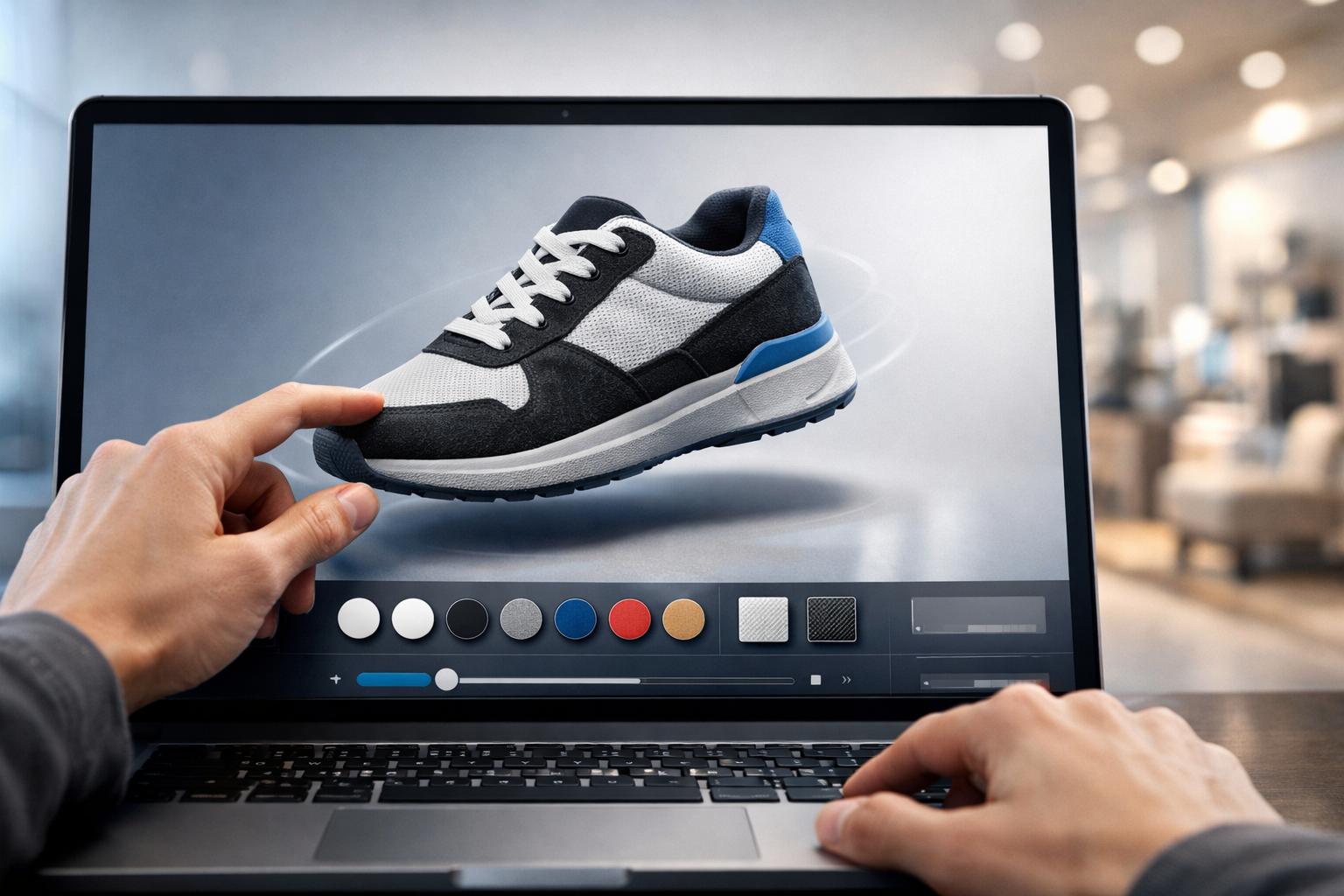
Online shopping has revolutionized retail, offering unparalleled convenience and selection. Yet despite decades of growth and refinement, digital commerce has struggled with a fundamental limitation: the inability to physically interact with products before purchase. Customers cannot touch fabrics, rotate items to examine construction, or truly understand scale and proportion. This tangibility gap has constrained online shopping's effectiveness, particularly for complex or high-value products where uncertainty drives customers back to physical stores.
The 3D product configurator is closing this gap in ways previously thought impossible. Through immersive product visualization and interactive 3D product customization, these tools are transforming online shopping from a convenience-driven compromise into an experience that rivals and often surpasses physical retail. This transformation extends beyond mere technological novelty to fundamentally reshape customer expectations, business models, and the competitive landscape of digital commerce.
Bridging the Physical-Digital Divide
The most fundamental transformation 3D product configurators bring to online shopping addresses the persistent challenge that has limited e-commerce since its inception: helping customers understand products without physical examination.
Virtual Manipulation Replaces Physical Handling. In physical stores, customers naturally pick up products, rotate them, examine them from various angles, and inspect details. This tactile exploration builds understanding and confidence. Traditional e-commerce replaced this with static photographs from predetermined angles, requiring customers to imagine what photographers didn't capture. The 3D product configurator restores interactive exploration digitally, allowing customers to rotate products freely, zoom into details, and examine from any perspective they choose.
This virtual manipulation feels remarkably similar to physical handling. Customers drag to rotate products, pinch to zoom, and navigate intuitively through 3D space. The interactive nature satisfies the human need to explore objects spatially, building the same comprehension that physical examination provides. The transformation means online shopping no longer requires customers to accept incomplete visual information as an inevitable compromise.
Photorealistic Detail Surpasses Physical Observation. Paradoxically, product visualization through advanced 3D configurators sometimes provides clearer detail than physical examination. In stores, lighting may be suboptimal, products might be displayed at inconvenient heights or behind glass, and examining fine details requires awkward positioning. Digital 3D product customization allows unlimited zoom, revealing textures, stitching, material composition, and construction details with clarity impossible in many physical retail environments.
High-resolution rendering exposes the quality that justifies premium pricing. Customers examining luxury goods through configurators see fine craftsmanship, material quality, and attention to detail that builds appreciation and justify investment. This detailed product visualization helps online shopping compete effectively even for high-end products traditionally sold primarily through physical showrooms.
Spatial Understanding Without Physical Presence. Understanding product scale and proportion proves challenging online. Dimensions provide mathematical information but don't convey intuitive size understanding. The 3D product configurator addresses this through contextual visualization, showing products in realistic settings with familiar reference objects. A sofa appears in a living room where customers understand scale intuitively. A configured appliance displays in a kitchen, providing size context.
Advanced implementations include augmented reality features allowing customers to view products at actual scale in their own spaces. Point a smartphone at your room and see the configured furniture piece sitting there at true size. This spatial product customization eliminates uncertainty about whether products will fit appropriately, removing a major barrier to online furniture and home goods purchasing.
Enabling True Product Personalization at Scale
Beyond improved visualization, 3D product configurators enable personalization levels previously impossible in online shopping, transforming it from selecting among standard options to co-creating customized products.
Mass Customization Becomes Accessible. Traditional retail offered two extremes: mass-produced standard products, affordable but generic, or bespoke customization, expensive and slow. The 3D product configurator enables mass customization, combining personalization with efficiency and affordability. Customers configure products to exact preferences while manufacturers leverage digital workflows and flexible production to deliver customized items at reasonable prices and timelines.
This democratization of customization transforms customer expectations. Rather than accepting standard offerings, shoppers increasingly expect personalization options. Brands providing sophisticated product customization through configurators differentiate themselves while commanding premium pricing for personalized products that customers value highly.
Visual Feedback Enables Confident Customization. Customization without visualization creates anxiety. Will selected colors coordinate well? How do materials combine aesthetically? Will the configured product look as imagined? The real-time product visualization provided by 3D configurators eliminates this uncertainty. Every customization choice updates the rendered product instantly, showing exact results before commitment.
This immediate visual feedback encourages experimentation. Customers try bold combinations knowing they can easily adjust if results disappoint. The safe experimentation environment leads to creative configurations customers love but might never have risked without visual confirmation. This experimental product customization often yields higher satisfaction than conservative, safe choices.
Complexity Becomes Manageable. Products offering extensive customization can overwhelm customers with choices. Hundreds of options across multiple categories create decision paralysis rather than empowerment. The 3D product configurator manages this complexity intelligently through progressive disclosure, smart filtering, and visual organization that makes even extensive customization feel approachable.
Intelligent configurators guide customers through logical sequences, making foundational decisions first that filter subsequent options appropriately. Visual categorization helps customers navigate options intuitively. Real-time validation prevents invalid combinations. This structured product customization transforms overwhelming complexity into manageable, even enjoyable, decision-making.
Accelerating Purchase Decisions
While online shopping offers convenience, the purchase journey often extends longer than physical retail as customers research extensively, comparison shop, and seek confidence before committing. The 3D product configurator accelerates this journey by building confidence faster and reducing uncertainty.
Comprehensive Understanding Eliminates Research Delays. Traditional online shopping requires customers to piece together understanding from multiple sources—product descriptions, specifications, customer reviews, and whatever images retailers provide. This research is time-consuming and often leaves questions unanswered. The interactive product visualization through configurators provides a comprehensive understanding in a single session, consolidating what previously required extensive multi-source research.
Customers exploring products through 3D configurators develop a thorough comprehension quickly. They see products from every angle, understand construction and materials, appreciate design details, and visualize how customization options affect appearance. This complete understanding builds purchase confidence without prolonged research across multiple platforms.
Decision Confidence Reduces Hesitation. Purchase hesitation stems largely from uncertainty. Will the product meet expectations? Is this the right choice? Should I keep looking? The 3D product configurator reduces uncertainty dramatically through accurate product visualization and interactive exploration. Customers seeing photorealistic representations of configured products feel confident about what they're purchasing, reducing the hesitation that extends decision timelines.
This confidence proves especially valuable for significant purchases. Buying furniture, vehicles, or other expensive items online traditionally required exceptional trust or risk tolerance. Configurators build sufficient confidence that customers comfortably make major purchases online, expanding the categories where digital commerce competes effectively with physical retail.
Comparison Efficiency Improves. Online shopping facilitates easy comparison across products and retailers, but comparing customizable products proves challenging when configurations vary. The 3D product configurator enables meaningful comparison by allowing customers to configure multiple products consistently, then evaluate results visually. Save configurations across different brands or models, then compare side-by-side through standardized product visualization.
This comparison capability helps customers make informed choices efficiently. Rather than vaguely comparing dissimilar products, customers configure options to match their preferences, then evaluate which delivers the best result. This structured comparison through product customization accelerates decisions while increasing satisfaction with final choices.
Creating Engaging Shopping Experiences
Traditional online shopping, while convenient, often feels transactional and utilitarian. The 3D product configurator transforms shopping into an engaging, even entertaining experience that customers enjoy and return to frequently.
Interactive Exploration Feels Like Play. Well-designed configurators incorporate game-like elements that make interaction enjoyable. Rotating products, trying different combinations, and discovering pleasing configurations—these activities engage customers similarly to entertainment applications. The line between shopping and entertainment blurs as product customization becomes an activity customers pursue for enjoyment rather than merely necessity.
This engagement proves commercially valuable. Customers who enjoy configuration experiences spend more time with products, return more frequently, and develop stronger brand connections. The emotional engagement transforms transactional relationships into deeper brand affinity that drives loyalty and referrals.
Discovery Creates Delight. The exploration enabled by interactive product visualization leads to delightful discoveries. Customers find color combinations they love but never would have imagined. They discover features that perfectly address needs they didn't articulate. They appreciate design details visible only through detailed 3D examination. These discovery moments create positive emotional experiences associated with brands and products.
The element of discovery also reduces decision fatigue. Rather than systematically evaluating every option analytically, customers can explore intuitively, discovering appealing configurations organically. This exploratory product customization feels less like work and more like creative play.
Social Sharing Extends Engagement. When customers create configurations they're proud of, sharing becomes natural. Social integration, allowing customers to post configured products directly from configurators to Instagram, Pinterest, or other platforms, transforms shopping into a social activity. Friends see creative configurations alongside the tools that enabled them, driving interest and traffic.
This social dimension creates a community around products and brands. Customers browse others' configurations for inspiration, comment on creative designs, and share their own creations. The product customization experience extends beyond individual shopping into social engagement that amplifies brand reach while deepening customer connections.
Reducing Friction and Abandonment
Online shopping cart abandonment rates persistently hover around 70% industry-wide, with uncertainty and friction driving customers away before completing purchases. The 3D product configurator addresses multiple abandonment causes, smoothing the path to conversion.
Visual Uncertainty Elimination. A primary abandonment driver is uncertainty about whether products will meet expectations. Customers question whether items will look as hoped, fit as needed, or match existing possessions. The accurate product visualization through configurators eliminates this uncertainty. Seeing exactly configured products rendered photorealistically provides confidence that reduces abandonment from doubt.
Complexity Anxiety Reduction. Customizable products can intimidate customers who worry about making wrong choices or missing important options. The guided product customization provided by intelligent configurators reduces this anxiety. Progressive disclosure prevents overwhelm, intelligent suggestions guide decisions, and visual feedback confirms choices. Customers feel supported rather than abandoned to figure out complexity alone.
Decision Confidence Building. Abandonment often occurs when customers lack the confidence to commit. They intend to purchase but want to "think about it" or "do more research" first. The comprehensive understanding built through interactive 3D product customization provides the confidence needed to convert. Customers who've thoroughly explored products through configurators feel ready to purchase rather than needing additional consideration time.
Price Transparency Throughout. Hidden costs discovered at checkout drive significant abandonment. When configuration tools update pricing in real-time as customers add options, no unpleasant surprises occur. This price transparency through product customization allows customers to make budget-conscious decisions throughout configuration rather than discovering at checkout that their configured product exceeds budget.
Transforming Customer Service and Support
The transformation 3D product configurators bring to online shopping extends beyond initial purchases into customer service and post-purchase support, improving these interactions substantially.
Reduced Pre-Purchase Inquiries. When customers can thoroughly explore products through interactive configurators, they need less assistance with basic questions about appearance, features, or customization options. The comprehensive product visualization answers questions that would otherwise require contacting customer service. This self-service capability reduces support costs while providing faster answers than waiting for service representatives.
More Effective Support Conversations. When customers do need assistance, having configuration records transforms support quality. Service representatives see exact customer configurations, understanding precisely what customers are considering or have purchased. This visibility enables specific, relevant assistance rather than generic advice. The shared visual reference through product customization creates a common understanding that improves communication.
Accurate Specification Documentation. Configuration data provides complete, accurate product specifications automatically. No transcription errors, missed options, or unclear descriptions. This documentation accuracy reduces errors throughout order fulfillment while providing perfect records for future reference. When customers contact support years later, representatives access original configuration details instantly.
Enhanced Post-Purchase Engagement. Brands can reference customer configurations for targeted support, accessory recommendations, and maintenance reminders. Understanding exactly what customers purchased enables personalized communication that feels relevant rather than generic. This configuration-informed engagement strengthens ongoing customer relationships.
Reshaping Business Models and Operations
Beyond customer-facing transformations, 3D product configurators enable fundamental shifts in how online retailers operate, creating new business model possibilities and operational efficiencies.
Build-to-Order Models. Traditional online retail requires maintaining inventory based on predictions about what customers might want. The 3D product configurator enables build-to-order models where products are manufactured according to actual customer configurations. This transformation reduces inventory costs, eliminates unsold stock, and ensures customers receive exactly what they specified. The shift from speculative inventory to demand-driven production represents a fundamental business model evolution.
Dynamic Inventory Management. Configuration analytics reveal which options customers actually select versus which sit unused. This intelligence informs inventory optimization, helping businesses stock popular variants while sourcing less common options as needed. The data-driven approach through product customization reduces carrying costs while ensuring availability for customer-selected features.
Virtual Showroom Expansion. Physical showrooms can display only limited inventory, constraining what customers can see and try. The 3D product configurator creates virtual showrooms with unlimited space. Every product, every variation, every customization option becomes accessible regardless of physical inventory. This virtual expansion democratizes access to complete product ranges for businesses of all sizes.
Marketing Content Efficiency. Rather than photographing every product variant for marketing materials, businesses generate unlimited images from configurator rendering engines. Product customization visualization produces marketing photography, social media content, email imagery, and advertising materials. This efficiency reduces marketing production costs substantially while ensuring perfect consistency.
Customer Intelligence Generation. Every configuration session generates valuable data about preferences, popular options, and decision patterns. This intelligence informs product development, pricing strategies, and marketing messages. Businesses treating configurators as intelligence generation platforms gain competitive advantages through a better understanding of customer desires and market trends.
Industry-Specific Transformations
While 3D product configurators transform online shopping broadly, specific industries experience unique impacts tailored to their characteristics.
Furniture and Home Decor sees perhaps the most dramatic transformation. Furniture shopping historically required showroom visits due to uncertainty about appearance, scale, and quality. Configurators enable confident online furniture purchasing through detailed product visualization, AR placement in customers' spaces, and extensive material customization. This transformation has accelerated online furniture sales dramatically while reducing returns.
Fashion and Footwear benefit from customization , enabling personal expression. Athletic shoe customization through configurators has become mainstream, with customers designing unique colorways and styles. The combination of product customization with social sharing creates communities around creative designs while driving engagement and brand loyalty.
Automotive leverages configurators to transform vehicle purchasing from dealership-centric to customer-directed. Buyers explore vehicles extensively online through sophisticated product visualization, arriving at dealers educated and decided. The build-to-order model enabled by configurators optimizes inventory while ensuring customer satisfaction.
Jewelry and Luxury Goods use configurators to make customization accessible while showcasing craftsmanship through detailed product visualization. Customers design engagement rings, watches, and accessories with confidence that configured items will match visualizations precisely. The configurator democratizes luxury customization previously available only through bespoke services.
Future Transformations on the Horizon
The transformation of online shopping through 3D product configurators continues accelerating as emerging technologies enable new capabilities.
Artificial Intelligence Integration will provide intelligent shopping assistance. AI will recommend products based on preferences, suggest configurations matching stated needs, and guide customers through complex decisions. This intelligent product customization will make online shopping more accessible while helping customers discover options they'd otherwise overlook.
Virtual Reality Shopping will create immersive experiences where customers explore virtual stores, examine products at scale, and experience configured items in simulated environments. VR will further reduce the experience gap between online and physical shopping while creating entirely new engagement possibilities.
Voice and Conversational Interfaces will enable natural interaction with configurators. Customers will describe preferences conversationally and see relevant product visualization instantly. This natural interaction makes product customization more accessible to customers uncomfortable with complex visual interfaces.
Blockchain Verification might provide transparency about configured products' authenticity, materials sourcing, and production processes. Customers could verify that their configured luxury items contain claimed materials and were manufactured ethically, addressing growing desires for transparency.
Biometric Customization will enable products configured to individual physical characteristics. Fashion items tailored to body scans, ergonomic products designed for specific measurements, or accessories optimized for personal dimensions will make product customization even more personal and functional.
Measuring the Transformation Impact
The transformation 3D product configurators bring to online shopping manifests in measurable business outcomes, demonstrating significant impact.
Conversion Rate Improvements consistently reach 25-60% when comparing products with configurators versus static presentations. The confidence and engagement configurators translate directly to purchase decisions, substantially improving online shopping effectiveness.
Average Order Values increase 20-40% as engaged customers select premium options and features. The interactive product customization encourages exploration of upgrades and enhancements that customers might skip with simpler presentations.
Return Rates decrease 30-50% as accurate product visualization sets proper expectations. Customers receiving configured products matching visualizations precisely have little reason to return items, reducing costs while improving satisfaction.
Customer Lifetime Value grows as positive experiences build loyalty. Customers who enjoyed configuration experiences return for future purchases and recommend brands to others, multiplying the configurator's value beyond individual transactions.
Market Expansion occurs as configurators enable online sales in categories previously requiring showroom visits. Businesses penetrate markets and customer segments formerly inaccessible through traditional online retail.
Conclusion
The 3D product configurator is fundamentally transforming online shopping from a convenience-driven alternative to physical retail into an experience that equals or surpasses in-store shopping across many dimensions. Through immersive product visualization, personalized product customization, and engaging interactive experiences, configurators address longstanding e-commerce limitations while creating entirely new possibilities.
The transformation extends throughout the online shopping ecosystem, customer experiences become more engaging and confidence-building, purchase journeys accelerate, business models evolve toward efficiency, and entire product categories become viable for online sales. As technology continues advancing and implementations become more sophisticated, the transformation will only deepen.
The future of online shopping is visual, interactive, personalized, and confident. The 3D product configurator is the technology making that future reality, establishing new standards for digital commerce that will define competitive success for years to come. Businesses embracing this transformation position themselves at the forefront of retail evolution, while those hesitating risk falling behind as customer expectations continue rising and competitors race ahead.
 Turkish
 English
 Arabic
 French
 Spanish
 Portuguese
 Deutsch
 Dutch
Dutch
 Italiano
 Russian
 Romaian
 Portuguese (Brazil)
 Greek
Greek
