


 Ban & Monetization Policy
 MyLiveRoom Rewards Program Rules & Eligibility
Is Train Ambulance Affordable for Long-Distance Transfers?
When a loved one needs to be moved from one city to another for advanced treatment, families are suddenly faced with two overwhelming questions:
“Is it safe?” and “Can we afford it?”
Long-distance medical transfers are rarely planned. They happen in moments of stress—after a sudden diagnosis, post-surgery complications, or when local hospitals run out of options. While air ambulances promise speed and road ambulances offer familiarity, both often come with limitations—especially when distance and cost collide.
This is where train ambulance service in Patna are increasingly emerging as a practical, affordable, and medically reliable option for long-distance patient transfers across India.
But the big question remains:
Is a train ambulance really affordable for long-distance transfers?
Let’s break it down honestly.
Understanding What a Train Ambulance Really Is
A train ambulance is not just a patient lying on a train berth.
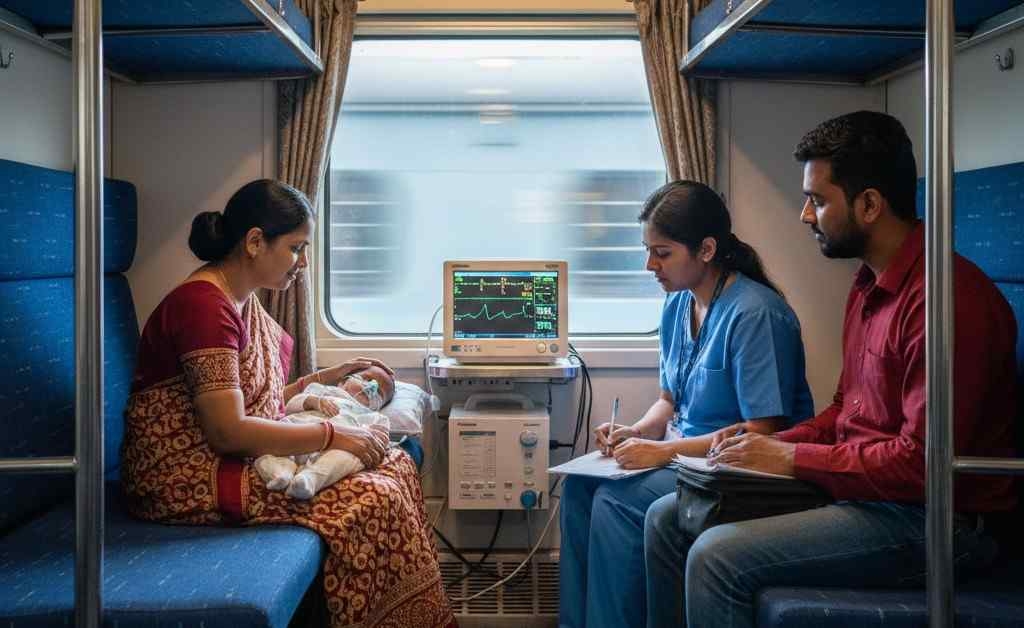
It is a fully equipped mobile ICU setup installed inside a reserved train coach or compartment. Depending on the patient’s condition, it may include:
- ICU bed or modified lower berth
- Ventilator and oxygen support
- Cardiac monitors
- Infusion pumps
- Emergency medicines
- Trained medical staff such as doctors, nurses, and EMTs
The goal is to ensure continuous medical monitoring and stability throughout the journey—sometimes lasting 12, 24, or even 36 hours.
Why Long-Distance Medical Transfers Are Expensive
To understand affordability, it’s important to first understand why medical transfers cost so much, regardless of the mode.
1. Road Ambulances Over Long Distances
While road ambulances may seem cheaper initially, costs increase rapidly for long routes due to:
- Fuel and toll expenses
- Driver fatigue and staff rotation
- Increased risk of patient discomfort
- Limited space for advanced ICU equipment
For distances beyond 500–600 km, road transfers often become physically taxing and medically risky.
2. Air Ambulances
Air ambulances are fast—but they are also:
- Extremely expensive
- Logistically complex
- Limited in availability
- Not always medically necessary
In many non-critical but stable ICU cases, speed is not the priority—continuity of care is.
How Train Ambulances Keep Costs Manageable
Train ambulances strike a balance between care quality and cost efficiency.
Here’s why they are generally more affordable for long-distance transfers:
1. Lower Operational Costs
Train ambulances utilize India’s existing railway network. Unlike aircrafts, they do not require:
- Aviation fuel
- Airport handling fees
- Specialized flight crews
This alone reduces costs significantly.
2. Stable Medical Environment
Trains offer:
- Less vibration than road travel
- More space for equipment and staff
- Easier movement for caregivers
This reduces the risk of complications, which can otherwise increase medical expenses mid-transfer.
3. Efficient Staffing
A well-planned train ambulance transfer uses only the required medical staff, avoiding unnecessary escalation of cost without compromising patient safety.
What Factors Decide the Cost of a Train Ambulance?
Train ambulance pricing is not fixed—it depends on multiple clinical and logistical factors, including:
- Distance between cities
- Patient’s medical condition
- ICU or non-ICU requirement
- Ventilator, oxygen, or cardiac monitoring needs
- Number of medical staff required
- Emergency vs planned transfer
Because of this, train ambulances often provide customized cost structures, making them more accessible for middle-income families.
Train Ambulance vs Air Ambulance: A Cost Perspective
While exact numbers vary, families often find that:
- Air ambulances may cost 4 to 6 times more than train ambulances
- For stable ICU patients, the level of medical care can be comparable
- Train ambulances allow longer monitoring without the pressure of rapid transfer
For distances above 700–800 km, train ambulances frequently offer the best value-for-care ratio.
Is Train Ambulance Cheaper Than Road Ambulance for Long Routes?
Surprisingly, yes—in many cases.
While road ambulances may appear cheaper for short distances, long-distance road transfers involve:
- Multiple driver changes
- Increased fuel costs
- Higher risk of patient instability
- Physical exhaustion for medical staff
Train ambulances, on the other hand, provide a controlled and predictable environment, often resulting in better outcomes at comparable or lower overall cost.
Hidden Savings Families Often Don’t Consider
Affordability is not just about the bill—it’s about avoiding additional costs.
- Train ambulances help reduce:
- Emergency medical interventions en route
- Sudden hospital admissions due to transfer-related complications
- Repeat transfers due to patient deterioration
Additionally, family members can travel alongside the patient, reducing separate travel and accommodation expenses.
Who Should Consider a Train Ambulance?
Train ambulances are especially suitable for:
- Stable ICU patients
- Elderly patients needing constant monitoring
- Post-surgical transfers
- Cancer patients
- Long-distance transfers between metro and tier-2 or tier-3 cities
They may not be ideal for extremely time-sensitive trauma cases—but for most planned or semi-emergency transfers, they are a safe and affordable choice.
A Realistic Scenario
Imagine a patient requiring transfer from eastern India to a metro city for advanced neurological care.
- Road ambulance: Long duration, high fatigue, multiple risks
- Air ambulance: Very high cost, limited medical continuity
- Train ambulance: Continuous monitoring, stable environment, manageable cost
In such scenarios, families often find train ambulances to be the most sensible decision—not just the cheapest one.
How to Plan a Cost-Effective Train Ambulance Transfer
- Share complete medical reports in advance
- Plan early when possible
- Choose only essential medical equipment
- Work with experienced providers who understand railway coordination
- Proper planning can significantly reduce unnecessary expenses.
Common Myths About Train Ambulance Costs
Myth: Train ambulances are slow and unsafe
Fact: They are medically supervised and ideal for stable long-distance care
Myth: Only basic care is provided
Fact: Many train ambulances function as full ICUs on wheels
Myth: Booking is complicated
Fact: With the right provider, coordination is handled end-to-end
Final Verdict: Is Train Ambulance Affordable?
Yes—when affordability is measured in terms of value, safety, and continuity of care, train ambulances are often the most balanced option for long-distance medical transfers.
They may not be the cheapest on paper, but they frequently prevent additional medical risks and hidden costs—making them a financially and medically sound choice for many families.
When every decision matters, affordability should never come at the cost of care—and train ambulance service prove that it doesn’t have to.
 Greek
Greek
 English
 Arabic
 French
 Spanish
 Portuguese
 Deutsch
 Turkish
 Dutch
Dutch
 Italiano
 Russian
 Romaian
 Portuguese (Brazil)
