


 Ban & Monetization Policy
 MyLiveRoom Rewards Program Rules & Eligibility
Why is UV Resistance Critical for Outdoor Labeling Success?
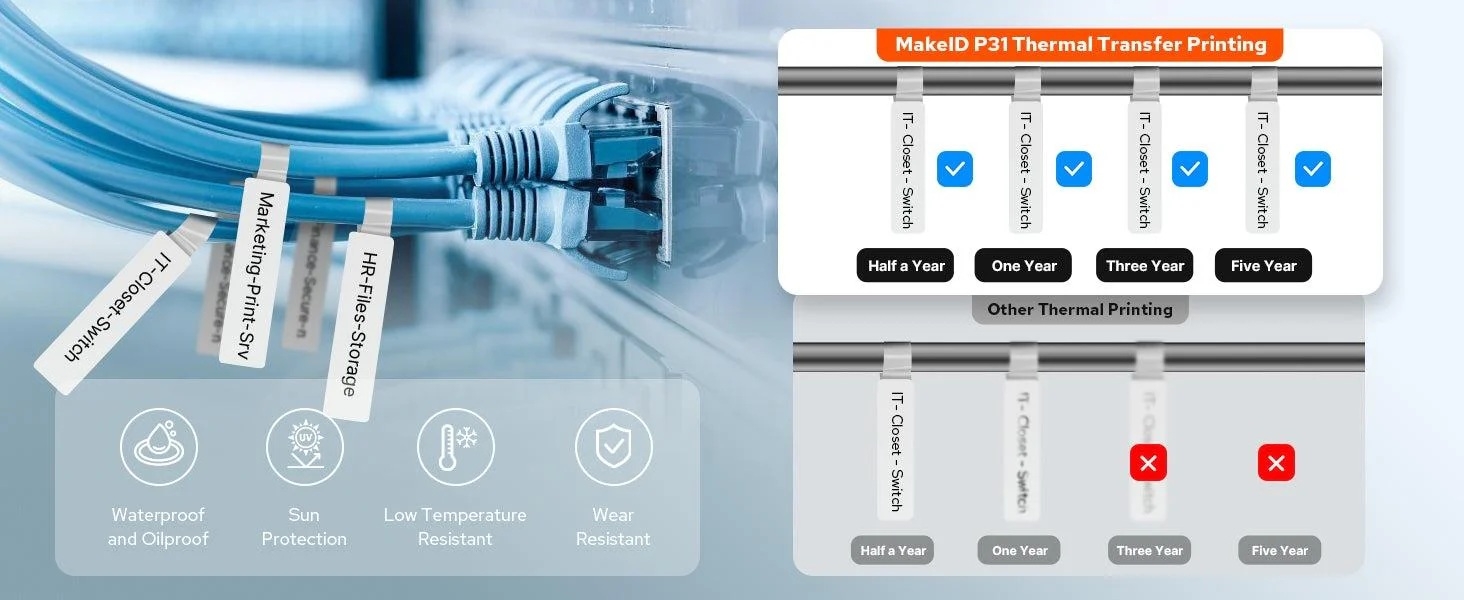
Sunlight is the silent killer of information. Through a process called photodegradation, ultraviolet (UV) rays break down the chemical bonds in pigments and dyes, eventually turning a vibrant label into an unreadable blank strip. For businesses and homeowners, this is more than an aesthetic issue; it’s a safety and compliance risk. MakeID addresses this by using UV-stabilized PET materials and resin-based thermal transfer technology.
Standard labels often use dyes that are highly susceptible to UV light. In contrast, MakeID’s printing process uses carbon-rich or resin-based ribbons that are much more stable under solar radiation. This is why a MakeID label can sit in direct sunlight for years while a standard label might fade in less than three months. The PET face stock also acts as a protective shield, absorbing a portion of the UV energy before it can reach the adhesive layer, which prevents the label from becoming brittle and cracking.
To maximize the life of your labels in sun-drenched areas, it is recommended to use high-contrast color combinations, such as black text on white or silver tape. These combinations provide the best legibility over time. Whether you are labeling solar panels, outdoor electrical boxes, or patio furniture, choosing a UV-resistant solution like MakeID ensures that your message survives the relentless heat and light of the summer sun. Click here to know more.
 French
 English
 Arabic
 Spanish
 Portuguese
 Deutsch
 Turkish
 Dutch
Dutch
 Italiano
 Russian
 Romaian
 Portuguese (Brazil)
 Greek
Greek
