


 Ban & Monetization Policy
 MyLiveRoom Rewards Program Rules & Eligibility
High-Resolution Printing with Shanghai MSD
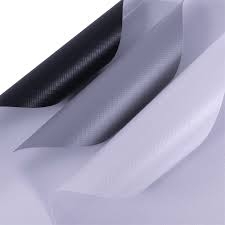
In high-visibility advertising environments where scale, color intensity, and structural durability intersect, PVC Flex Banner developed by Shanghai MSD International Trade Co., Ltd. represents a technically refined material solution. Designed to perform under mechanical tension and environmental exposure, this flexible banner substrate integrates engineered polymer chemistry with reinforced textile architecture to meet the demanding requirements of outdoor billboards, building wraps, transit graphics, and exhibition structures.
The material architecture of PVC Flex Banner centers on a multi-layer composite system. A woven polyester scrim forms the internal reinforcement matrix, while plasticized PVC layers are coated or laminated on both sides to create a unified structure. The scrim density, typically expressed in threads per inch, determines the load-bearing capacity and resistance to elongation. Higher yarn counts enhance dimensional stability and tear resistance, making the banner suitable for large-span installations exposed to wind stress. Meanwhile, the outer PVC coating is formulated to provide a balanced combination of flexibility and surface smoothness, ensuring both structural resilience and optimal print definition.
Coating technology significantly influences performance. Knife-over-roll coating and direct coating processes are commonly used to apply PVC paste uniformly over the scrim. Precise control of coating thickness ensures even weight distribution and consistent mechanical properties across the sheet width. During curing, temperature and dwell time are calibrated to achieve complete gelation of the PVC compound without degrading stabilizers or plasticizers. Shanghai MSD employs advanced monitoring systems to maintain coating uniformity, preventing pinholes, micro-cracks, or thickness variations that could affect durability or visual consistency.
Ink compatibility is an essential parameter in banner applications. PVC Flex Banner surfaces are engineered to accommodate solvent, eco-solvent, UV-curable, and latex ink systems. Surface energy levels are carefully adjusted to promote ink anchorage while preventing excessive penetration that could dull color vibrancy. Adhesion testing, including cross-hatch and peel evaluations, ensures printed graphics remain intact during rolling, transport, and installation. Color retention tests under accelerated UV exposure further validate the banner’s ability to preserve visual intensity in outdoor conditions.
Mechanical integrity under dynamic stress is another defining characteristic. Wind load simulations assess how the banner behaves when tensioned across large frames or mounted on building facades. The interplay between PVC elasticity and scrim reinforcement enables the material to absorb transient forces without permanent deformation. Edge reinforcement zones, particularly around grommets, are evaluated through cyclic loading tests to ensure long-term reliability. These assessments confirm that properly fabricated banners maintain structural stability even in challenging climatic regions.
Environmental endurance is achieved through advanced stabilizer systems integrated into the PVC matrix. UV absorbers and heat stabilizers reduce polymer degradation caused by solar radiation and thermal cycling. Cold-crack testing determines flexibility thresholds at low temperatures, verifying that the material does not embrittle in winter conditions. Moisture resistance evaluations confirm that water does not infiltrate the composite layers or weaken the adhesive bond between PVC and polyester. Such comprehensive testing enables consistent performance across diverse geographic markets.
Fire safety considerations are increasingly important in public advertising spaces. Flame-retardant grades of PVC Flex Banner are formulated to meet specific international standards for flame spread and smoke density. These formulations incorporate non-halogenated or low-smoke additives that enhance fire performance without compromising flexibility or print quality. Vertical burn tests and heat release assessments provide measurable data to ensure compliance for use in airports, exhibition halls, shopping centers, and event venues.
Fabrication versatility further expands application potential. PVC Flex Banner can be heat-sealed using high-frequency welding to produce seamless large-scale graphics. Stitching, pocket formation, and reinforced hem construction allow compatibility with diverse mounting systems. The material can also be cut into complex shapes for creative installations, maintaining edge integrity without fraying due to its composite construction. Shanghai MSD supports customized production parameters to match specific project requirements, from lightweight indoor displays to heavy-duty architectural wraps.
Manufacturing efficiency and environmental stewardship are integrated into production practices. Optimized curing cycles reduce energy consumption, while scrap management systems allow partial recycling of trimmed materials. Stabilizer and plasticizer formulations are selected to comply with international environmental directives, ensuring responsible manufacturing aligned with global market expectations.
With engineered reinforcement structures, advanced coating technologies, validated mechanical and environmental testing, and adaptable fabrication capabilities, PVC Flex Banner continues to serve as a core substrate for impactful visual communication in commercial and architectural settings. For detailed product specifications, customization options, and application guidance, please visit Shanghai MSD’s official product page at https://www.shanghaimsd.com/product .

 English
 French
 Spanish
 Portuguese
 Deutsch
 Turkish
 Dutch
Dutch
 Italiano
 Russian
 Romaian
 Portuguese (Brazil)
 Greek
Greek
