


 Ban & Monetization Policy
 MyLiveRoom Rewards Program Rules & Eligibility
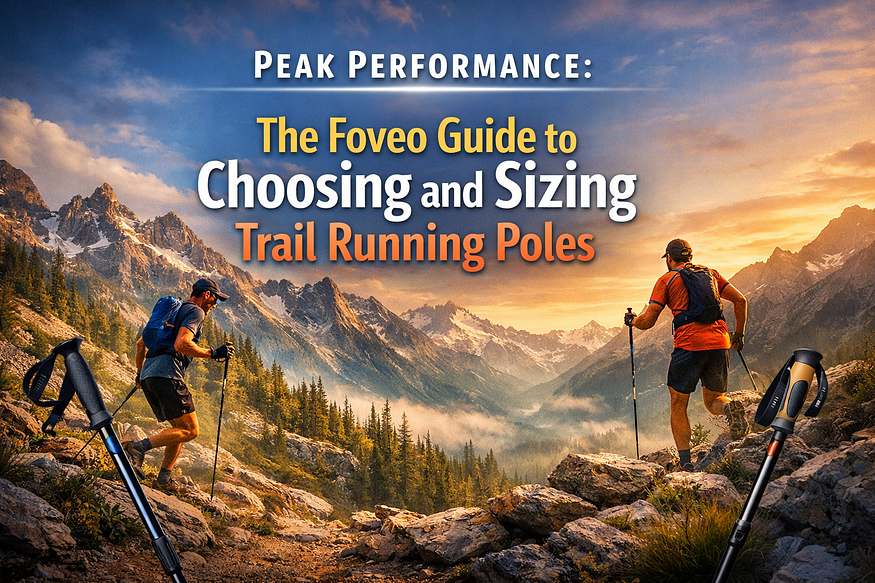
Peak Performance: The Foveo Guide to Choosing and Sizing Trail Running Poles
Whether you’re tackling the steep technical climbs of the North Shore or prepping for a mountain ultra, trail running poles are a total game-changer. They don’t just help you power up the inclines; they save your quads on the descents and provide essential stability when the terrain gets tricky.
But walking into Foveo Running and seeing a wall of poles can be intimidating. Between carbon vs. alloy and straps vs. gloves, how do you know what’s right for your 2026 mountain goals? Here is our breakdown on how to find your perfect match.
Step 1: Find Your Size
Getting the right length is the most critical step. A pole that is too long will push your weight backward on climbs, while one that is too short will have you hunching over, ruining your breathing and posture.
The 90-Degree Rule: Stand in your trail running shoes on flat ground. Hold the pole grip in your hand with the tip touching the floor. Your elbow should be bent at a 90-degree angle.
- Fixed Length Poles: These are lighter and more “solid” feeling, but you have to get the size exactly right. Most brands provide a size chart (e.g., a 120cm pole for someone roughly 5'8" to 5'10").
- Adjustable Poles: These are great if you are between sizes or if you like to shorten your poles for long climbs and lengthen them for steep descents.
Step 2: Material Matters — Carbon vs. Alloy
This is the most common question we get at the shop. The “best” material depends on your budget and where you run.
- Carbon Fiber: These are the “Ferrari” of poles. They are incredibly lightweight, which reduces arm fatigue over long distances. They also vibrate less, making them more comfortable on hard-packed trails. The Trade-off: Carbon is brittle. If a pole gets caught between two rocks and you put lateral pressure on it, it can snap.
- Aluminum (Alloy): Slightly heavier than carbon, but much more durable. Aluminum is “tougher” — it tends to bend rather than snap under pressure. If you’re a beginner or running in very rocky, “pole-eating” terrain, alloy is a reliable, cost-effective choice.
Step 3: The Connection — Straps vs. Gloves
How the pole attaches to your hand changes your efficiency and comfort.
- Traditional Straps: Found on most Black Diamond poles, like the legendary Distance Z. These are simple, adjustable, and allow you to “palm” the top of the grip on steep descents. They are easy to slip in and out of when you need to grab a gel or check your watch.
- The Glove System (Trigger Shark): Famous on LEKI poles, this system uses a small mesh “glove” that clips directly into the pole. This creates a much more efficient power transfer — you can actually push off the pole with an open hand. It’s a favorite for vertical kilometer racers and ultra-runners who want maximum efficiency.
Step 4: Folding vs. Telescoping
- Z-Poles (Folding): These fold into three sections (like a tent pole). They are the gold standard for trail running because they pack down small enough to fit into the back of a Naked Running Band or a hydration vest in seconds.
- Telescoping: These slide into themselves. While common for hiking, they are rarer in trail running because they tend to be slightly heavier and slower to deploy.
Foveo Pro Tip: Practice Your “Stow and Go”
Poles are only helpful when they’re in your hands. If they are a hassle to put away, you won’t use them. When you visit us at Foveo Running, bring your hydration vest with you! We’ll help you practice stowing different pole models into your vest or waist belt to ensure the transition is seamless when you’re out on the trails.
Ready to gain some “uphill legs”? Come visit us in the Comox Valley. Our team will help you measure your 90-degree angle and let you test the “click-in” feel of the LEKI system vs. the classic Black Diamond Z-poles.
 Russian
 English
 Arabic
 French
 Spanish
 Portuguese
 Deutsch
 Turkish
 Dutch
Dutch
 Italiano
 Romaian
 Portuguese (Brazil)
 Greek
Greek
