


 Ban & Monetization Policy
 MyLiveRoom Rewards Program Rules & Eligibility
Pradhan Mantri Garib Kalyan Anna Yojana (PMGKAY): Eligibility & Latest Updates
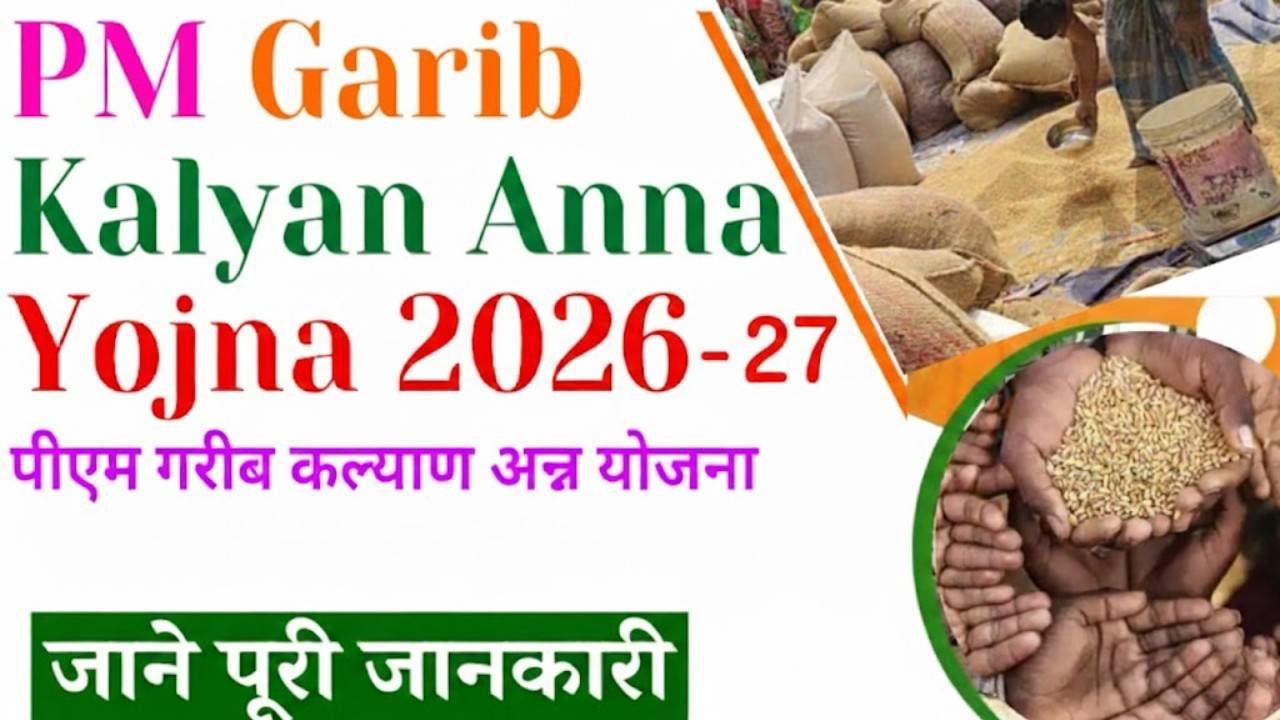
India’s commitment to ensuring security for its most vulnerable populations took a significant turn during the COVID-19 pandemic. What began as an emergency relief measure has now evolved into one of the world’s most extensive food distribution programs, supporting over 81 crore people across the nation.
What Is Pradhan Mantri Garib Kalyan Anna Yojana (PMGKAY)?
PMGKAY is a central government food security scheme implemented through the Public Distribution System (PDS). Under this scheme, eligible ration card holders receive free rice or wheat every month, eliminating food insecurity among economically weaker sections.The scheme operates under the National
Security Act (NFSA) and is funded entirely by the Government of India.
PMGKAY Key Highlights
|
Particulars |
Details |
|
Scheme Name |
Pradhan Mantri Garib Kalyan Anna Yojana (PMGKAY) |
|
Launched |
March 2020 |
|
Implemented By |
Government of India |
|
Coverage |
81.35 crore beneficiaries |
|
Validity |
Till December 2028 |
|
Cost to Beneficiaries |
Completely Free |
|
Distribution System |
Public Distribution System (PDS) |
|
Portability |
One Nation One Ration Card (ONORC) |
Understanding the Core Purpose
The government launched this initiative in March 2020 to address the severe economic challenges faced by millions during the pandemic-induced lockdowns. The primary objective was straightforward: ensure that no family goes hungry during times of crisis. What started as a temporary support mechanism has transformed into a long-term welfare commitment running through December 2028.
This initiative operates through the Public Distribution System, delivering essential food grains directly to households that need them most. The program targets families identified under the National Food Security Act, providing them with rice or wheat based on regional dietary preferences.
Objectives of PM Garib Kalyan Anna Yojana
|
Objective |
Description |
|
Food Security |
Ensure no poor household goes hungry |
|
Crisis Support |
Protect families during economic shocks |
|
Nutritional Support |
Provide fortified rice to combat malnutrition |
|
Financial Relief |
Remove food expenditure burden |
|
Nationwide Access |
Enable portability across states |
Who Benefits from This Program?
The scheme reaches two distinct categories of beneficiaries. First, families under the Antyodaya Anna Yojana receive 35 kilograms of food grains monthly per household. Second, Priority Household members get 5 kilograms per person each month. Together, these categories encompass approximately 81.35 crore individuals, representing nearly 57% of India’s total population.
The government ensures that migrants and workers who move across states can still access their food grain entitlements through the One Nation One Ration Card system. This portability feature allows beneficiaries to collect their allocation from any Fair Price Shop nationwide, eliminating geographical barriers.
PMGKAY Beneficiary Categories & Entitlements
|
Category |
Food Grain Allocation |
|
Antyodaya Anna Yojana (AAY) |
35 kg per household per month |
|
Priority Household (PHH) |
5 kg per person per month |
PMGKAY Eligibility Criteria
To be eligible for PMGKAY:
-
Must be a ration card holder under NFSA
-
Belong to AAY or Priority Household category
-
Aadhaar-linked ration card preferred
-
Migrant workers eligible under ONORC
Distribution Mechanism and Implementation
Food grains flow from central storage facilities operated by the Food Corporation of India to state-level distribution centers, ultimately reaching local Fair Price Shops. The Department of Food and Public Distribution oversees this massive logistical operation, while the Ministry of Finance serves as the nodal ministry.
Since January 2023, the government has eliminated all costs for beneficiaries. Previously, recipients paid nominal amounts for subsidized grains, but now everything is provided completely free. This policy shift removed financial barriers for the poorest families.
To prevent misuse and ensure transparency, authorities have implemented Aadhaar-based authentication at distribution points. Beneficiaries verify their identity through fingerprint scanning or OTP verification before receiving their allocation. This digital system has helped eliminate approximately 5.8 crore duplicate or fraudulent ration cards from the system.
Financial Investment and Budgetary Allocation
The Union Budget 2025-26 allocated Rs. 2,03,000 crore specifically for this program, reflecting the government’s sustained financial commitment. Over the five-year period from January 2024 to December 2028, authorities expect total expenditure to reach approximately Rs. 11.80 lakh crore as subsidy costs.
From its inception through various phases, the scheme has distributed roughly 1,118 lakh metric tons of food grains. This massive quantity demonstrates the scale at which the program operates to serve millions of households monthly.
Quality Assurance Through Fortification
Starting from March 2024, the government achieved complete replacement of regular rice with fortified rice across all schemes. Fortified rice contains added micronutrients that address nutritional deficiencies prevalent among vulnerable populations. This initiative continues as a centrally funded component through December 2028, using the existing budgetary framework.
The transition to fortified grains represents an evolution beyond mere calorie provision toward comprehensive nutritional security. This approach recognizes that food security must encompass both quantity and quality to effectively combat malnutrition.
Digital Integration and Technological Advancement
Nearly all 20.4 crore ration cards have undergone digitization, with 99.8% linked to Aadhaar and 98.7% of beneficiaries verified through biometric authentication. This technological infrastructure creates accountability at every distribution point while making the system more user-friendly for legitimate beneficiaries.
Electronic Know Your Customer verification helps maintain database accuracy by regularly updating beneficiary information. States and Union Territories can add or remove ration cards based on changing family circumstances, ensuring resources reach genuinely eligible households.
Recent Developments and Policy Review
Government authorities recently initiated a comprehensive review process to identify and remove ineligible beneficiaries from the system. This verification drive aims to ensure taxpayers, vehicle owners, and inactive ration card holders do not unnecessarily burden the subsidy framework.
Current data indicates that against the intended coverage of 81.35 crore persons, approximately 80.67 crore individuals actively receive free food grains. The ongoing re-verification process seeks to close this gap while eliminating wasteful expenditure on ghost beneficiaries.
Interstate Portability Success
The One Nation One Ration Card initiative has achieved nationwide implementation across all 36 States and Union Territories. Since its August 2019 launch in just four states, the system has processed over 125 crore portability transactions, delivering more than 241 lakh metric tons of food grains to beneficiaries away from their home locations.
Monthly portability transactions now exceed 2.5 crore, demonstrating how essential this flexibility has become for India’s mobile workforce. Migrant workers, students, and families relocating for employment can maintain continuous access to their food grain entitlements regardless of their current location.
Impact Assessment and International Recognition
The International Monetary Fund acknowledged that this program played a crucial role in preventing increased extreme poverty levels in India during the pandemic. Doubling food entitlements effectively absorbed COVID-19 induced income shocks experienced by poor households, providing a vital safety net during unprecedented economic disruption.
By May 2020, the program had already reached 740 million beneficiaries, prompting government officials to describe the coverage as impressive. This rapid scaling demonstrated India’s administrative capacity to execute welfare programs at massive scale during emergencies.
Infrastructure Development for Storage
The government continues investing in storage infrastructure through a Central Sector Scheme focused on the North Eastern Region and select other states. Funding goes directly to the Corporation of India for land acquisition, warehouse construction, railway sidings, and related facilities.
A total capacity of 1,05,890 metric tons in northeastern regions and 56,690 metric tons in other regions has received approval for completion, with financial outlays increased to Rs. 484.08 crore. Adequate storage capacity ensures food grains remain protected from wastage while maintaining quality standards.
Frequently Asked Questions
What is PM Garib Kalyan Anna Yojana?
PMGKAY is a government scheme that provides free food grains every month to eligible ration card holders under NFSA.
How long will PMGKAY continue?
The scheme is extended till December 2028.
How much food grain is given under PMGKAY?
AAY families: 35 kg per month
PHH beneficiaries: 5 kg per person per month
Is PMGKAY completely free?
Yes, since January 2023,grains are provided at zero cost.
Can migrants get ration under PMGKAY?
Yes, through One Nation One Ration Card, beneficiaries can collect rations anywhere in India.
Which grains are distributed under PMGKAY?
Rice or wheat, depending on the state, with 100% fortified rice nationwide.
How to check PMGKAY eligibility?
Check your ration card status on the state PDS portal or at the nearest FPS.
As India continues economic development while managing population needs, programs like this represent critical social safety nets. The government’s commitment to maintaining free distribution through 2028 provides stability for millions of families who depend on this support.
Ongoing technological improvements, infrastructure investments, and periodic beneficiary verification ensure the program evolves to serve genuine needs efficiently. The combination of digital governance, nationwide portability, and nutritional quality improvements positions this initiative as a model for large-scale welfare delivery in developing economies.
 Italiano
 English
 Arabic
 French
 Spanish
 Portuguese
 Deutsch
 Turkish
 Dutch
Dutch
 Russian
 Romaian
 Portuguese (Brazil)
 Greek
Greek
