


 Ban & Monetization Policy
 MyLiveRoom Rewards Program Rules & Eligibility
Why Smart Businesses Are Switching to Automated Voice Calls And How to Do It Right
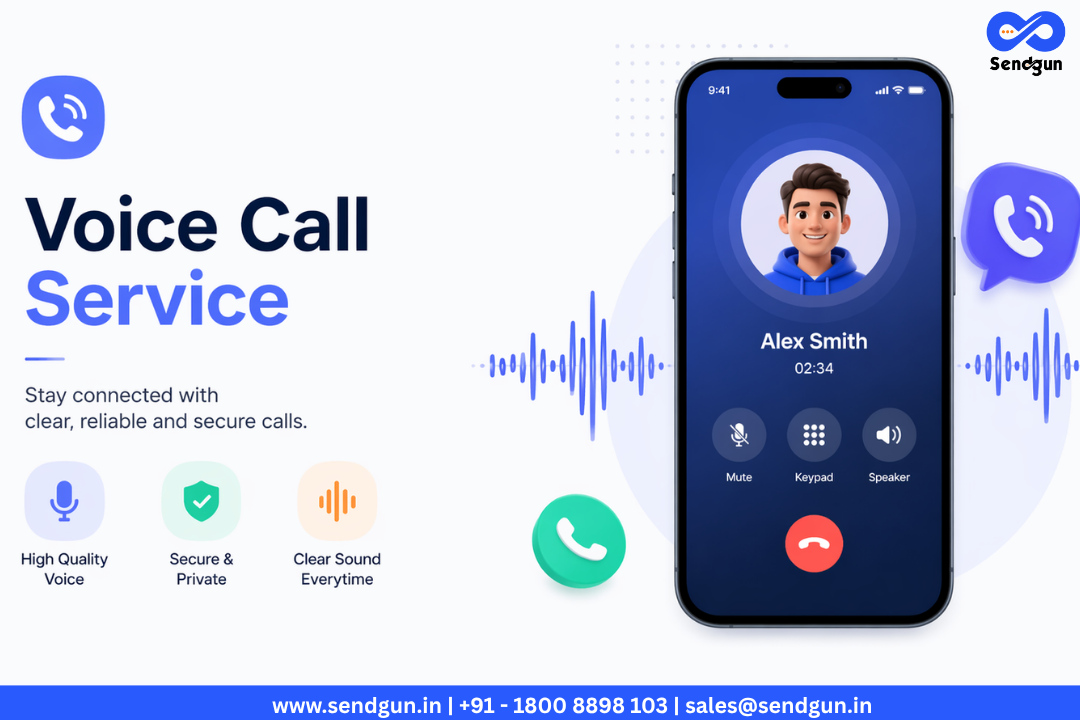
There's a moment every growing business hits, you have too many customers to call one by one, but not enough budget to hire a team of agents. You need to send reminders, confirmations, alerts, or promotions. And you needed them out yesterday. That frustration is exactly what led thousands of Indian businesses to rethink how they communicate at scale.
What Is a Voice Call Service?
Let's skip the textbook definition for a second. Think about the last time your bank called to remind you about an EMI, or a hospital sent a recorded message about your upcoming appointment. That wasn't a real person sitting at a desk dialing your number. It was an automated system, and the business behind it reached hundreds of thousands of people that same day, with the same effort it would take one agent to make a dozen calls. That's the core idea behind a voice call service. You record a message — or type one out and let a text-to-speech engine handle it — upload a list of numbers, and the platform does the rest. Calls go out automatically and in parallel, and you get a full report when they're done. What makes this genuinely useful (rather than just clever) is that it removes the biggest constraint in outbound communication: human bandwidth. Your team doesn't have to be involved at all once a campaign is set up. The businesses that get the most out of automated calling aren't the ones with the biggest budgets — they're the ones who take the time to write messages that actually sound like they came from a person, not a press release.
How It Actually Works
People often assume that setting up an outbound calling campaign is complicated. It's really not — at least not with a decent platform. Here's how the whole process typically plays out, from start to finish:
-
Upload Your Contact List — Pull a CSV from your database, paste it in, or hook up your CRM directly via API. Most platforms accept standard formats without any reformatting needed.
-
Prepare Your Message — Either upload a pre-recorded audio file in your own voice, or type out your script and let the platform's text-to-speech engine read it aloud. Regional language support matters a lot here — more on that later.
-
Set Your Campaign Rules — Decide when calls should go out, what happens when someone doesn't pick up (retry once? twice?), which caller ID to display, and whether recipients can respond by pressing a key.
-
Hit Send and Watch the Dashboard — The platform dials out simultaneously across your entire list. You can see live updates — who picked up, who didn't, who pressed a response key — as it happens.
-
Review the Results — Once the campaign wraps, you get a full breakdown: delivery rate, average call duration, response patterns, and more. This is where the learning happens for future campaigns.
Worth Knowing: Platforms that support DTMF responses (that's the technical term for keypad presses) turn a one-way message into an actual interaction. A customer can press 1 to confirm an appointment, 2 to reschedule, or 0 to speak with someone. It sounds simple, but that one feature significantly changes what you can accomplish with a single campaign.
Top Use Cases Across Industries
|
Industry |
Common Use Case |
Typical Message Type |
|
Healthcare |
Appointment reminders, health camp alerts |
Reminder + rescheduling option |
|
E-commerce |
Order updates, delivery notifications |
Transactional alerts |
|
Banking & Finance |
OTP delivery, fraud alerts, EMI reminders |
Security & compliance calls |
|
Education |
Exam schedules, fee due reminders, and results |
Informational broadcasts |
|
Political / NGO |
Campaign outreach, voter awareness |
Mass engagement messages |
|
Real Estate |
Lead follow-up, site visit reminders |
Personalized prospect calls |
|
Retail / FMCG |
Promotional offers, loyalty campaigns |
Marketing broadcasts |
What stands out here is that automated calling isn't a "big company only" tool. A reliable bulk voice call service provider gives a 10-person startup access to the same outreach infrastructure that large enterprises use. The difference is that smaller teams often use it more creatively — and more personally.
Key Benefits for Your Business
I want to be honest here — automated calling isn't magic, and it won't fix a bad product or a poorly thought-out offer. But when used well, it removes real friction from customer communication in ways that other channels just can't match.
-
You Scale Without Hiring — One person can run a campaign that reaches 50,000 people in a single afternoon. That's not an exaggeration — it's the everyday reality for businesses already using this.
-
People Actually Remember What They Hear — There's a well-documented gap between how much we retain from audio versus text. A spoken reminder about an overdue payment lands differently than a WhatsApp message that gets buried under 47 other notifications.
-
Local Language Makes a Real Difference — Sending a message in Tamil to a customer in Chennai isn't just good manners — it measurably improves response rates. Most serious platforms support 10 or more Indian languages.
-
You Always Know What Happened — Did the call connect? Did they listen till the end? Did they press a key? You get answers to all of that, not just a vague "delivered" notification as you'd get with SMS.
-
The Cost Is Genuinely Low — Running a 10,000-call campaign can cost less than ₹1,000 on bulk pricing. That's hard to argue with when a single field agent makes maybe 60–80 calls a day.
-
DND Handling Is Built In — A good platform automatically removes DND-registered numbers before dialing. This keeps you compliant with TRAI rules and protects your sender reputation.
Speed matters most in emergencies. When a school needs to notify 3,000 parents about a sudden closure, or a hospital needs to push a health advisory, voice calls are the only channel that gets that message out in minutes — not hours.
What to Look for in a Provider
This is where most businesses make avoidable mistakes. The cheapest option on the first page of Google results is rarely the right choice — and in this category, the consequences of picking wrong go beyond wasted money. A poor provider can get your numbers flagged, your campaigns blocked, or your business penalized.
Here's what actually matters when you're evaluating a voice call service provider:
-
Delivery Rate Is Everything — Ask point-blank: what's your average call connection rate? If they can't give you a number above 88–90%, keep looking. Low delivery rates mean money wasted on calls that never land.
-
API Documentation That's Actually Usable — If your team plans to trigger calls automatically from your app or CRM, the API needs to be clean, well-documented, and backed by real developer support — not a PDF from 2019.
-
Can It Handle Your Peak Load? — Test this before you commit. A platform that works fine for 500 calls may choke when you need 50,000 on a sale day. Ask about concurrent call capacity explicitly.
-
Text-to-Speech That Doesn't Sound Robotic — Listen to actual demo calls before signing up. A voice that sounds unnatural or clipped will reflect badly on your brand — customers will hang up before the message is halfway done.
-
Support That Actually Shows Up — When something breaks mid-campaign, you can't afford to wait 48 hours for an email reply. Look for platforms with live chat or phone support during business hours at a minimum.
-
No Surprise Charges — Some platforms lure you in with low per-call pricing and then charge separately for reports, retries, DND filtering, and API access. Get a full cost breakdown in writing before you start.
-
TRAI Compliance, Verified — In India, commercial voice communications are subject to strict telecom regulations. Your provider should be able to confirm their compliance status without hesitation.
Best Practices to Maximize Results
Getting the platform right is only part of the job. The campaigns that genuinely move the needle share a few things in common — and none of them are complicated. They just require a bit of intentional thinking before you hit send.
-
Say What You Need to Say in Under 30 Seconds — Most people decide within the first 8–10 seconds whether they're going to stay on the line. If your message hasn't made its point by then, you've probably already lost them. Start with the most important thing, not a preamble.
-
Timing Matters More Than You'd Think — For consumers, late morning (10 AM–noon) and early evening (4–7 PM) consistently outperform other windows. For business contacts, mid-morning on weekdays works best. Avoid Sundays and national holidays unless it's genuinely urgent.
-
Use Their Name — "Hello Priya" takes two seconds to add to a script and meaningfully changes how the message lands. People are far more likely to listen when the call feels addressed to them personally.
-
One Clear Ask — Don't cram three things into one message. Pick one action — confirm, call back, visit a link — and make it obvious. The more options you give, the less likely anyone is to do any of them.
-
Don't Send the Same Message to Everyone — A loyal customer who's been with you for three years should hear something different from a first-time buyer who just signed up yesterday. Segmenting your list takes a little extra effort, but the results are worth it.
-
Test Before You Scale — Send your message to a small sample — 200 to 500 people — before rolling it out to your full list. Check the response rate, listen to the recording again, and fix anything that feels off.
-
Learn from Every Campaign — The data your platform gives you after each campaign is genuinely useful if you use it. High drop-off early in the call usually means the opening needs work. Low-keypress responses usually mean your call to action wasn't specific enough.
So, Which Platform Should You Actually Use?
If you've read this far, you're probably at the stage where you want to stop researching and start doing. That's a good instinct. Most businesses overthink the platform decision and underinvest in the message itself — so don't let the tool selection become a six-week rabbit hole.
That said, the platform you choose does matter — especially once you're running campaigns at any real volume. After looking at what's available for Indian businesses specifically, one name keeps coming up among marketers and operations teams who actually run large-scale outbound campaigns:
Sendgun
Sendgun is a bulk voice call service provider that was built with Indian businesses in mind — which means it handles things like regional language TTS, TRAI-compliant DND filtering, and high-volume concurrent calls without flinching. Whether you're a 5-person startup testing your first 1,000-call campaign or a large enterprise running daily automated alerts to millions of customers, the infrastructure holds up.
What I genuinely appreciate about Sendgun beyond the technical specs — is that it's not built to confuse you into buying more than you need. The pricing is straightforward, the dashboard is clean, and the setup process is fast enough that most teams have their first campaign live within the same day they sign up
There are no hidden charges for reports, no extra fees to use the API, and no minimum monthly commitment that locks you in before you've had a chance to see results. They also integrate directly with the most popular CRMs and e-commerce platforms, which removes a lot of the manual work that slows teams down.
 Spanish
 English
 Arabic
 French
 Portuguese
 Deutsch
 Turkish
 Dutch
Dutch
 Italiano
 Russian
 Romaian
 Portuguese (Brazil)
 Greek
Greek
