


 Ban & Monetization Policy
 MyLiveRoom Rewards Program Rules & Eligibility
Clothes Dryer Vent Cleaning in San Antonio, TX: The Complete 2026 Safety Guide
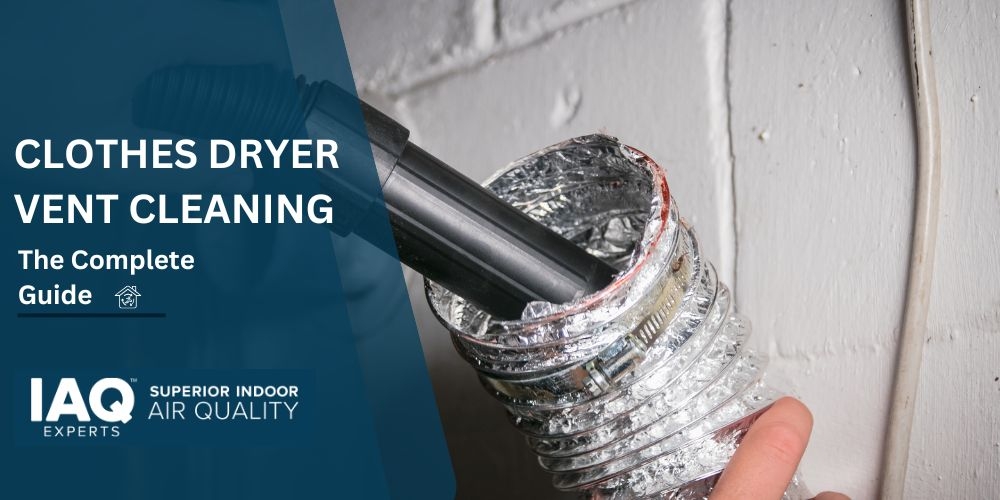
If you live in San Antonio, your dryer vent faces a problem most national guides never mention: South Texas humidity. In a city where summer heat index regularly hits 100°F and moisture lingers year-round, lint doesn’t just accumulate inside your dryer vent — it clumps, hardens, and sticks to duct walls far faster than in drier climates. The result is a faster path to restricted airflow, higher energy bills, and — in the worst cases — a preventable house fire.
At IAQ Experts, we’ve cleaned clothes dryer vents in homes across San Antonio and surrounding areas for over a decade. We’ve seen what a neglected vent looks like at the 18-month mark versus the 5-year mark. This guide shares what we know, not just what the generic internet guides say — because San Antonio homes have specific challenges that a national guide will never cover.
Quick fact: The U.S. Fire Administration reports roughly 2,900 dryer-related house fires every year. The leading cause in 92% of cases: failure to clean the vent. In San Antonio’s humid climate, that buildup happens faster than most homeowners expect.
Why Clothes Dryer Vent Cleaning Matters More in San Antonio Than Almost Anywhere Else
Most dryer vent guides are written for a national audience. They tell you to clean once a year. That’s accurate for Phoenix, Denver, or Minneapolis. For San Antonio and the South Texas region, it often isn’t enough.
Here’s why our climate creates a more demanding situation:
1. High humidity causes lint to clump and stick
In dry climates, lint moves through a duct as loose fibers that are relatively easy to remove. In San Antonio’s humid environment, moisture from drying cycles mixes with the ambient humidity inside duct walls, causing lint to become dense and sticky. It adheres to bends, joints, and the interior surface of the duct rather than blowing through freely. This means a standard annual cleaning interval can leave dangerous accumulation behind.
2. Year-round dryer use means no natural rest period
In colder northern states, homeowners naturally use their dryers less during mild-weather months. San Antonio doesn’t have that seasonal break — most households run the dryer consistently year-round, which accelerates lint accumulation at a steady pace without the self-correcting pauses seen in other regions.
3. Long attic vent runs are common in local home layouts
Many San Antonio homes — especially in Stone Oak, Alamo Heights, Helotes, and neighborhoods along Loop 1604 — have laundry rooms in interior hallways with vent runs that travel through the attic and exit through the roof. These runs can stretch 15 to 25 feet, with multiple 90-degree elbows. Heat rises in Texas attics, which further hardens lint around those bends. The standard DIY brush kit from a hardware store typically reaches 8–12 feet — far short of what’s needed for a proper clean in these homes.
4. Exterior vent caps face bird nesting and weather exposure
San Antonio’s warm climate makes exterior vent terminations an attractive spot for birds and insects year-round. We regularly find nesting materials partially or fully blocking exterior vent caps on homes in Boerne, Spring, and North San Antonio — a problem that causes the entire duct to back up with nowhere to exhaust.
7 Warning Signs Your San Antonio Home Needs Clothes Dryer Vent Cleaning Now
Use this table to assess your situation. If you recognize two or more of these signs, your vent likely needs professional attention immediately.
| Warning Sign | What It Means | Urgency |
|---|---|---|
| Clothes still damp after a full cycle | Restricted airflow — lint blockage likely | Schedule this week |
| Dryer or laundry room feels very hot | Heat has nowhere to escape — fire risk rising | Call today |
| Burning smell during operation | Lint is heating to ignition point | Stop dryer immediately |
| Drying time doubled or tripled | Vent may be 50–70% blocked | Schedule within days |
| Laundry room feels humid or muggy | Moisture not venting properly outdoors | Schedule this month |
| Visible lint around exterior vent cap | Exterior blockage restricting airflow | Inspect this week |
| Dryer shuts off mid-cycle | Thermal safety switch tripping from overheating | Call today |
San Antonio homeowner tip: If your laundry room feels noticeably humid after a drying cycle, that moisture isn’t venting outside — it’s staying in your home. In San Antonio’s already-humid climate, this speeds up mold growth inside walls and can cause structural moisture damage over time. It’s a sign of a failing vent that goes beyond just fire safety.
How IAQ Experts Cleans Clothes Dryer Vents in San Antonio: Our 7-Step Process
Not all dryer vent cleaning services in San Antonio follow the same process. Here is exactly what our NADCA-certified technicians do on every visit — and why each step matters.
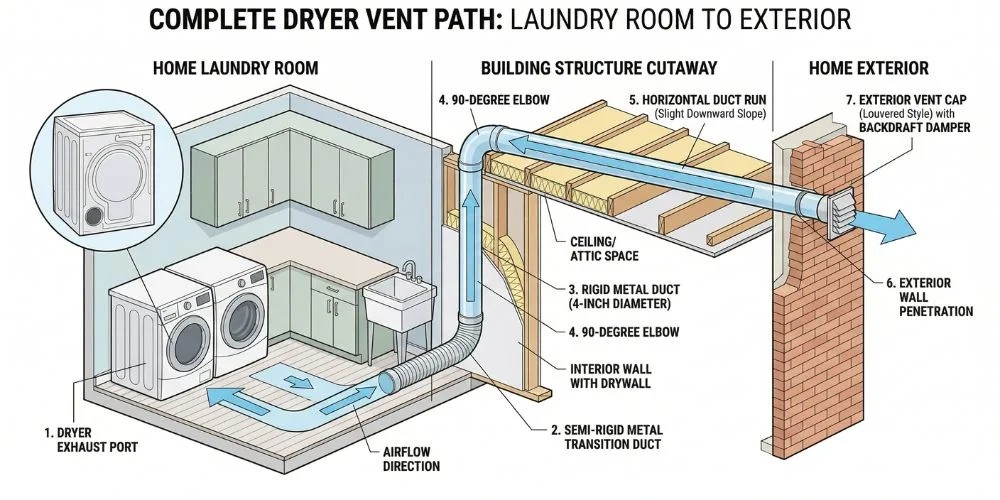
Step 1: Full system inspection before we touch anything
We assess your vent system from the dryer exhaust port all the way to the exterior termination point. We note the duct length, the number of bends, the type of flexible hose connecting to your dryer, and where the exterior cap is located. For homes in Stone Oak, Alamo Heights, and other areas with attic-routed vents, this inspection step is especially critical. We identify issues before cleaning starts, not during.
Step 2: Disconnect and inspect the flexible transition hose
The short flexible hose connecting your dryer to the wall duct is where many problems begin. Kinked, crushed, or foil accordion hoses restrict airflow significantly and are a common fire hazard. If we find a compromised hose, we let you know before proceeding — this is a simple, low-cost fix that makes a major difference to your system’s performance.
Step 3: High-powered rotary brush cleaning
We use professional-grade rotary brush systems — not the $25 consumer kits — that are designed to clean the full length of any residential duct run, including long attic runs with multiple elbows. The rotating brush action loosens packed lint from all surfaces, including the stuck-on humid-environment buildup that’s common in San Antonio homes.
Step 4: HEPA vacuum extraction throughout
As the rotary brush dislodges lint, our HEPA-filtered commercial vacuum extracts it continuously. This prevents loosened debris from blowing into your laundry room, into your home’s air, or back into the dryer. Consumer-grade cleaning often skips this step, scattering debris rather than removing it.
Step 5: Exterior vent cap inspection and clearing
We go outside and physically inspect the exterior termination — whether it exits through a wall, soffit, or rooftop. We remove any lint buildup behind the cap, clear bird nests or insect debris, and confirm the vent flap opens freely during operation. This step is frequently skipped by less thorough services, leaving a partial blockage at the exit point even after the internal duct is cleaned.
Step 6: Airflow verification test
After cleaning, we run the dryer and verify that airflow from the exterior vent is strong and unobstructed. We can measure air speed to confirm the system is performing at the level it should. You’ll see the difference yourself — and we’ll show you the before-and-after results.
Step 7: Reconnection and final safety check
We reconnect the transition hose with proper clamps (not tape, which deteriorates), push the dryer back into position, and do a final check of the connection points. We leave you with a written summary of what we found, what we did, and any recommendations — whether that’s a hose replacement, a vent cap upgrade, or simply your next recommended cleaning date.
| Ready to schedule your San Antonio dryer vent cleaning? IAQ Experts serves San Antonio, Boerne, Stone Oak, Alamo Heights, Helotes, and surrounding South Texas communities. NADCA certified. 300+ five-star reviews. No hidden fees. Available 24/7. Call us: (210) 494-5222 | Available 24/7 |
DIY Clothes Dryer Vent Cleaning in San Antonio: When It Works and When It Doesn’t
We’ll be direct: DIY dryer vent cleaning works well for some San Antonio homes and is completely inadequate for others. Here is how to tell the difference.
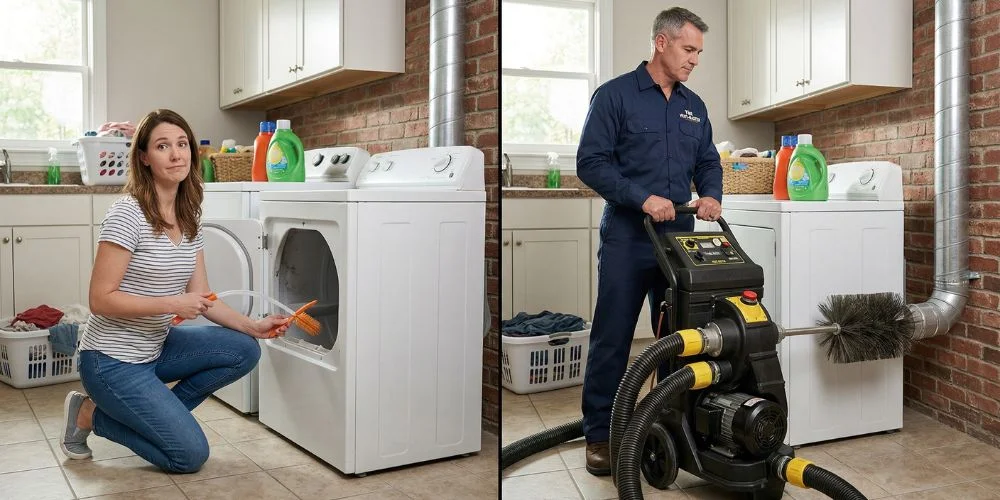
DIY is appropriate if all of the following are true:
- Your dryer exhausts directly through an exterior wall — short, straight run of under 10 feet
- The vent has no more than one 90-degree bend
- Your transition hose is rigid metal, not accordion foil
- You can access both ends — the back of the dryer AND the exterior cap
- You last had the vent professionally cleaned within 12–18 months
You need professional cleaning if any of the following apply:
- Your vent exits through the attic or roof — extremely common in San Antonio homes
- Your laundry room is in an interior hallway (vent run is likely 15–25 feet)
- You’re in a multi-story home with duct running between floors
- You notice any of the warning signs listed earlier in this guide
- It’s been more than 18 months since your last cleaning
- You have a large household doing 7+ loads of laundry per week
- You have pets that shed heavily — pet hair accelerates lint accumulation significantly
Why the brush kit often isn’t enough in San Antonio: A standard consumer brush kit extends 8–12 feet. The majority of San Antonio homes we service have vent runs of 15–25 feet through attic spaces. Even if you successfully clean the first half of the duct, the packed lint at the bends and far end — which is where the most dangerous buildup occurs — remains untouched.
How Often Should San Antonio Homeowners Clean Their Dryer Vent?
The national standard recommendation is once per year. For most San Antonio homeowners, we align with that — but with important exceptions specific to our climate and home layouts:
- Every 6 months: Households doing 8 or more laundry loads per week
- Every 6 months: Homes with heavy pet shedders (dogs, cats)
- Every 6 months: Attic-routed or roof-exit vent systems
- Every 6 months: Homes where the previous cleaning revealed significant buildup
- Every 12 months: Standard household with a wall-exit vent and normal laundry volume
- Every 12–18 months: Single occupants or couples with low laundry frequency
One additional rule that applies specifically to our South Texas climate: if you notice drying times increasing during the summer months — even if you recently had the vent cleaned — humidity-accelerated buildup may be the cause. Do not wait until your annual service date if you’re seeing performance changes. A quick professional inspection costs far less than a dryer repair or, worse, fire damage.
Frequently Asked Questions: Clothes Dryer Vent Cleaning in San Antonio, TX
How much does clothes dryer vent cleaning cost in San Antonio?
Professional dryer vent cleaning in San Antonio typically ranges from $85 to $175 for a standard residential service. At IAQ Experts, we provide transparent, flat-rate pricing with no surprise fees. Homes with longer duct runs, attic routing, or roof exits may cost slightly more due to the additional time and equipment required — we’ll tell you the exact price before we start. Call (210) 494-5222 for a quick quote.
Is dryer vent cleaning actually worth it?
Yes — and the math is straightforward. A dryer with a 50% blocked vent uses up to 30% more energy per cycle, according to the U.S. Department of Energy. For a family doing 8 loads per week, that translates to roughly $100–$180 in wasted energy per year. A professional cleaning that costs $100–$150 pays for itself within one year in energy savings alone — before you factor in the cost of a dryer repair, a fire insurance claim, or a new dryer altogether.
Can a clogged dryer vent cause a fire in San Antonio homes?
Yes — and it is more of a risk here than in drier climates. Lint is highly flammable. When San Antonio’s humidity causes lint to clump and harden around duct bends and joints, it creates dense blockages that trap the heat from your dryer close to this flammable material. The National Fire Protection Association (NFPA) identifies clogged dryer vents as a leading cause of residential fires. Our NADCA-certified technicians are trained specifically to identify and eliminate these hazards.
What areas in San Antonio does IAQ Experts serve?
We serve all of San Antonio and the surrounding South Texas region, including Stone Oak, Alamo Heights, Helotes, Boerne, Leon Valley, Converse, Universal City, Schertz, Cibolo, New Braunfels, and beyond. We also operate in Austin and Spring, TX. Call (210) 494-5222 or visit our contact page to confirm service in your specific zip code.
How long does dryer vent cleaning take?
A standard residential cleaning by our team takes 60 to 90 minutes. Homes with longer attic vent runs or roof exits may take up to 2 hours. We arrive on time, protect your floors and appliances, and leave the area cleaner than we found it.
My dryer is only 2 years old — do I still need the vent cleaned?
Yes. The age of your dryer has no bearing on how quickly your vent accumulates lint. A new dryer in a San Antonio home with a long attic vent run can develop dangerous buildup within 12 months of installation. If your home was built or renovated with the vent routed through the attic, we strongly recommend a professional inspection within the first year regardless of how new the appliance is.
Do you offer dryer vent repair or replacement services?
Yes. In addition to cleaning, our technicians can replace damaged or substandard transition hoses, repair disconnected duct sections, install proper rigid metal ductwork in place of foil accordion hose, and replace deteriorated exterior vent caps. If we find a problem during your cleaning service, we’ll explain it clearly and give you options — there’s no pressure to upgrade beyond what’s actually necessary.
How to clean laundry vent
Unplug dryer, disconnect vent hose, vacuum lint from hose and vent opening, then clean exterior vent. Reattach and run dryer to check airflow.
How to clean clothes dryer vent
Turn off dryer, remove vent hose, use a vent brush or vacuum to clear lint buildup, clean the outside vent cover, then reconnect everything.
How to clean dryer vent from inside
Unplug dryer, pull it away, detach the vent, and use a brush or vacuum to remove lint from inside the duct and behind the dryer.
How to clean dryer vent
Disconnect dryer, clean lint from hose and wall duct using a brush or vacuum, clear exterior vent, then reconnect and test for proper airflow.
Why San Antonio Homeowners Choose IAQ Experts for Dryer Vent Cleaning
We’re not a national franchise dispatching unfamiliar technicians to your door. IAQ Experts was built in San Antonio to serve San Antonio — and South Texas. Here’s what that means in practice:
- NADCA-certified technicians — the gold standard for air system cleaning professionals
- Over 300 five-star Google reviews from verified San Antonio customers
- Flat-rate, no-hidden-fee pricing — we quote before we start
- Available 24/7, including emergency situations
- Local knowledge of South Texas home layouts, climate conditions, and common vent configurations
- Serving San Antonio, Austin, Boerne, and Spring, TX — all with the same team and standards
When you call IAQ Experts, you speak with someone who knows why a home in Stone Oak has different needs than a home near Downtown, and why humid South Texas summers require a different maintenance approach than national guidelines suggest.
| Schedule Your San Antonio Dryer Vent Cleaning Today Don’t wait for warning signs to become a fire hazard. Our NADCA-certified team will clean, inspect, and certify your dryer vent system — with transparent pricing and same-week availability across all San Antonio and South Texas service areas. Call us: (210) 494-5222 | Available 24/7 |
 English
 Arabic
 French
 Spanish
 Portuguese
 Deutsch
 Turkish
 Dutch
Dutch
 Italiano
 Russian
 Romaian
 Portuguese (Brazil)
 Greek
Greek
