


 Ban & Monetization Policy
 MyLiveRoom Rewards Program Rules & Eligibility
What Goes Into Designing an Automotive Plastic Injection Mold?
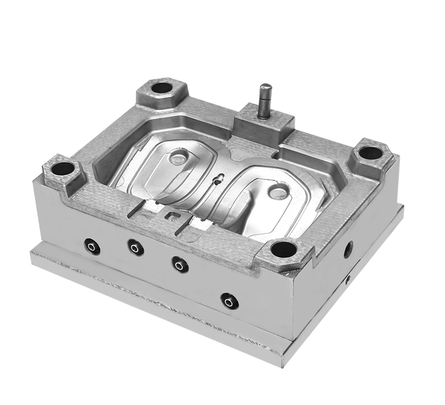
The automotive industry runs on repeatability. A vehicle rolling off an assembly line in the morning needs to be built from components that match — in dimension, appearance, and mechanical behavior — the components that went into the vehicle built the previous afternoon. Automotive plastic injection mold technology is one of the primary mechanisms that makes that consistency achievable at scale.
When an automotive manufacturer or tier-one supplier commissions a new plastic injection mold, the process begins well before any steel is cut. Mold flow analysis software simulates how molten resin will travel through the proposed cavity geometry, predicting where air traps might form, how weld lines will develop where flow fronts meet, and whether the filling pattern will produce uniform pressure distribution. Adjusting gate locations, wall thickness, or runner design at the simulation stage costs almost nothing compared to correcting those issues after the physical mold has been machined.
The tooling itself is typically produced using CNC machining centers capable of holding very tight dimensional tolerances across complex three-dimensional surfaces. Electrode discharge machining — often called EDM — handles the fine detail work in areas where cutting tools can't reach, burning away metal with precisely controlled electrical sparks to create sharp corners, deep ribs, and intricate texture patterns. The combination of CNC and EDM gives mold makers the ability to translate a digital design file into physical steel with remarkable accuracy.
Cooling system design within an automotive plastic injection mold receives considerable engineering attention because cycle time is directly tied to how quickly heat can be extracted from the molten plastic. Conformal cooling channels, which follow the contour of the part cavity rather than running in straight lines, bring coolant closer to complex surface geometries and reduce thermal variation across the mold face. Shorter, more uniform cooling translates into faster cycles and more consistent part dimensions.
Hot runner systems represent another area of mold technology that matters in high-volume automotive production. Rather than allowing the plastic in the runner channels to solidify and be ejected as waste with each cycle, a hot runner system keeps the delivery channels at melt temperature continuously. This eliminates runner scrap, reduces material consumption, and often allows faster cycle times — all meaningful factors when a single automotive plastic injection mold might run continuously for months producing millions of identical parts.
 French
 English
 Arabic
 Spanish
 Portuguese
 Deutsch
 Turkish
 Dutch
Dutch
 Italiano
 Russian
 Romaian
 Portuguese (Brazil)
 Greek
Greek
