


 Ban & Monetization Policy
 MyLiveRoom Rewards Program Rules & Eligibility
What Makes Reaction Kettles So Hard to Replace?
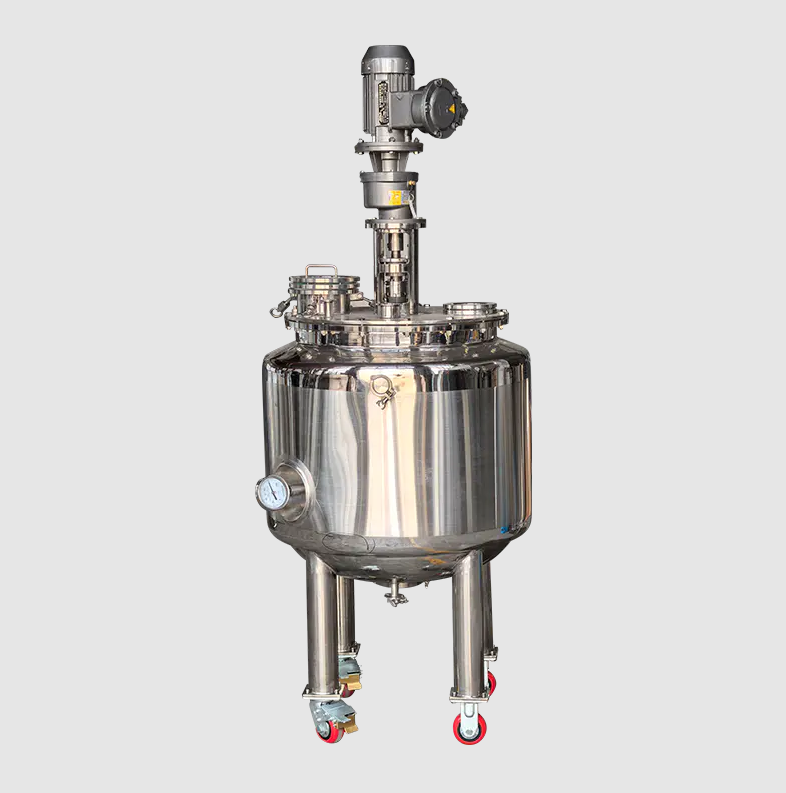
If you've ever wondered where chemistry actually happens at an industrial scale, the answer is usually inside a reaction kettle. These vessels are the workhorses of chemical manufacturing, pharmaceutical production, polymer synthesis, and food processing — quietly doing the work that most finished products depend on, without receiving much of the credit.
A reaction kettle is essentially a vessel designed to contain and control chemical reactions under specific conditions. Unlike a simple storage tank, it's built to manage temperature, pressure, mixing, and sometimes vacuum conditions simultaneously. The combination of these variables determines the outcome of the reaction, which is why the design and construction of the kettle matter as much as the chemistry happening inside it.
The basic anatomy of a reaction kettle includes a cylindrical vessel body, a jacket surrounding the vessel for temperature control, an agitator or mixing system, and a series of ports for feeding materials, monitoring conditions, and removing products. The jacket allows heating or cooling media — water, steam, thermal oil, or glycol — to circulate around the vessel wall, transferring heat in or out of the reaction mixture as needed. This indirect heating and cooling approach gives process engineers precise control over reaction temperature without exposing the contents to a direct flame or heating element.
Material selection is a critical design decision. Stainless steel is widely used for its corrosion resistance, cleanability, and compatibility with a broad range of chemicals. Glass-lined reaction kettles offer superior resistance to acids and highly corrosive reagents, making them a standard choice in pharmaceutical and fine chemical applications where contamination control is paramount. Hastelloy and other specialty alloys handle aggressive chemical environments where stainless steel would degrade over time.
Scale matters enormously with reaction kettles. Laboratory-scale vessels might hold a few liters, while production-scale kettles can reach tens of thousands of liters. The chemistry that works cleanly at bench scale sometimes behaves differently when the volume increases — heat removal becomes harder, mixing becomes less uniform, and reaction times may shift. This is why pilot-scale kettles occupy an important middle ground, allowing process development teams to validate their chemistry before committing to full production volumes.
 Dutch
Dutch
 English
 Arabic
 French
 Spanish
 Portuguese
 Deutsch
 Turkish
 Italiano
 Russian
 Romaian
 Portuguese (Brazil)
 Greek
Greek
