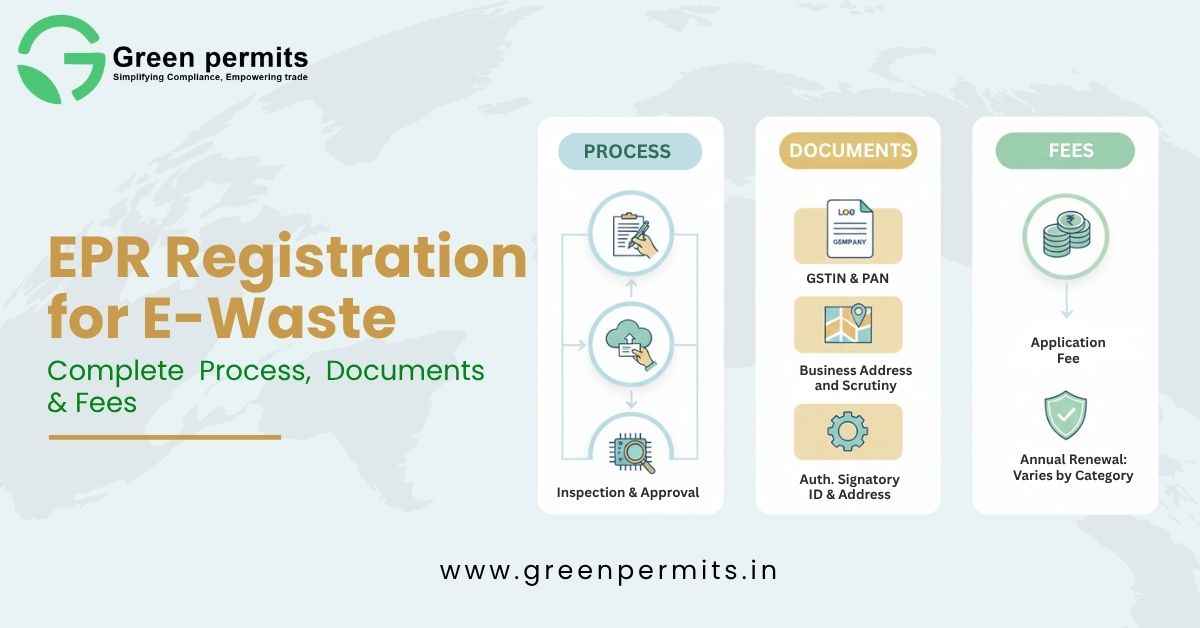
• EPR Registration for E-Waste: Process, Documents & Fees Explained
    India is generating more than 1.6 million tonnes of e-waste annually, and this number is growing rapidly with increasing electronics consumption. To manage this, the government has made EPR Registration for E-Waste mandatory for producers, importers, and brand owners.

    If your business deals with electrical or electronic products, understanding EPR compliance is not optional anymore - it is a legal requirement.

    In this blog, we break down the complete process, documents, and fees for EPR registration in India.

    What is EPR Registration for E-Waste?
    Extended Producer Responsibility (EPR) means that producers are responsible for the collection, recycling, and disposal of e-waste generated from their products.

    Under the E-Waste (Management) Rules, 2022:

    Producers must register on the CPCB portal
    They must meet recycling targets annually
    They must work only with authorized recyclers
    The system ensures a circular economy where waste is reused instead of being dumped.

    Read detailed blog here: https://www.greenpermits.in/10/epr-registration-for-e-waste-process-documents-fees/

    Step-by-Step EPR Registration Process in India
    The registration process is completely online through the CPCB portal. However, it requires proper documentation and technical understanding.

    Step 1: Business Identification
    You must first identify your category:

    Manufacturer
    Producer (Brand Owner)
    Importer
    Each category has different compliance requirements.

    Step 2: Portal Registration
    Register on CPCB EPR Portal
    Create login credentials
    Fill company details (GST, PAN, IEC, CIN)
    As per CPCB SOP, no entity can operate without registration on the portal, making it a mandatory compliance step

    Step 3: Documentation Submission
    Upload all required documents (covered below)

    Step 4: EPR Plan Submission
    You must submit:

    Estimated e-waste generation
    Collection mechanism
    Recycling partnerships
    Step 5: Approval from CPCB
    Application is reviewed
    Queries (if any) must be resolved within timeline
    Registration is granted
    Step 6: Post-Registration Compliance
    Purchase EPR certificates
    File annual returns
    Maintain records
    Documents Required for E-Waste EPR Registration
    Proper documentation is critical. Even a small error can delay approval.

    Basic Company Documents
    PAN Card
    GST Certificate
    Certificate of Incorporation
    IEC (for importers)
    Operational Documents
    Details of products (EEE category)
    Production or import data
    Waste generation estimates
    Environmental & Compliance Documents
    Consent to Establish (CTE)
    Consent to Operate (CTO)
    Authorization under waste rules (if applicable)
    CPCB requires detailed manufacturing and waste-related data, including production capacity and disposal methods


    EPR Registration Fees in India
    The fees depend on:

    Type of entity
    Quantity of EEE introduced in market
    CPCB fee structure
    Typical Cost Structure
    Government Fee (CPCB)
    Consultant Fee (if applicable)
    Annual compliance & return filing cost
    For most MSMEs and startups, the total cost can range between ₹25,000 to ₹1,50,000, depending on complexity.

    Common Challenges Businesses Face
    Many companies struggle with EPR compliance due to:

    Incorrect documentation
    Lack of recycler tie-ups
    Wrong category selection
    Portal errors or rejection
    Even after registration, compliance continues annually, which becomes difficult without expert guidance.

    Why EPR Compliance is Important
    EPR is not just a legal requirement - it directly impacts your business growth.

    Key Benefits
    Avoid heavy penalties and legal issues
    Improve brand credibility
    Enable smooth import/export operations
    Align with ESG and sustainability goals
    How Green Permits Helps You
    At Green Permits, we simplify the entire EPR process from start to finish.

    We provide:

    Complete documentation support
    CPCB portal registration
    EPR plan preparation
    Recycler network setup
    Annual compliance & return filing
    Explore our service: https://www.greenpermits.in/e-waste-epr-registration/

    Final Thoughts
    With strict enforcement of E-Waste Rules 2022, businesses cannot afford to ignore EPR compliance. The process may look simple, but errors can lead to delays, penalties, or rejection.

    Getting expert support ensures faster approval, correct filing, and long-term compliance.


    Ready to Get Your EPR Registration Done?
    Connect with experts today

    Visit: https://www.greenpermits.in

    Let Green Permits handle your EPR compliance while you focus on growing your business.
    EPR Registration for E-Waste: Process, Documents & Fees Explained India is generating more than 1.6 million tonnes of e-waste annually, and this number is growing rapidly with increasing electronics consumption. To manage this, the government has made EPR Registration for E-Waste mandatory for producers, importers, and brand owners. If your business deals with electrical or electronic products, understanding EPR compliance is not optional anymore - it is a legal requirement. In this blog, we break down the complete process, documents, and fees for EPR registration in India. What is EPR Registration for E-Waste? Extended Producer Responsibility (EPR) means that producers are responsible for the collection, recycling, and disposal of e-waste generated from their products. Under the E-Waste (Management) Rules, 2022: Producers must register on the CPCB portal They must meet recycling targets annually They must work only with authorized recyclers The system ensures a circular economy where waste is reused instead of being dumped. 👉 Read detailed blog here: https://www.greenpermits.in/10/epr-registration-for-e-waste-process-documents-fees/ Step-by-Step EPR Registration Process in India The registration process is completely online through the CPCB portal. However, it requires proper documentation and technical understanding. Step 1: Business Identification You must first identify your category: Manufacturer Producer (Brand Owner) Importer Each category has different compliance requirements. Step 2: Portal Registration Register on CPCB EPR Portal Create login credentials Fill company details (GST, PAN, IEC, CIN) As per CPCB SOP, no entity can operate without registration on the portal, making it a mandatory compliance step Step 3: Documentation Submission Upload all required documents (covered below) Step 4: EPR Plan Submission You must submit: Estimated e-waste generation Collection mechanism Recycling partnerships Step 5: Approval from CPCB Application is reviewed Queries (if any) must be resolved within timeline Registration is granted Step 6: Post-Registration Compliance Purchase EPR certificates File annual returns Maintain records Documents Required for E-Waste EPR Registration Proper documentation is critical. Even a small error can delay approval. Basic Company Documents PAN Card GST Certificate Certificate of Incorporation IEC (for importers) Operational Documents Details of products (EEE category) Production or import data Waste generation estimates Environmental & Compliance Documents Consent to Establish (CTE) Consent to Operate (CTO) Authorization under waste rules (if applicable) CPCB requires detailed manufacturing and waste-related data, including production capacity and disposal methods EPR Registration Fees in India The fees depend on: Type of entity Quantity of EEE introduced in market CPCB fee structure Typical Cost Structure Government Fee (CPCB) Consultant Fee (if applicable) Annual compliance & return filing cost For most MSMEs and startups, the total cost can range between ₹25,000 to ₹1,50,000, depending on complexity. Common Challenges Businesses Face Many companies struggle with EPR compliance due to: Incorrect documentation Lack of recycler tie-ups Wrong category selection Portal errors or rejection Even after registration, compliance continues annually, which becomes difficult without expert guidance. Why EPR Compliance is Important EPR is not just a legal requirement - it directly impacts your business growth. Key Benefits Avoid heavy penalties and legal issues Improve brand credibility Enable smooth import/export operations Align with ESG and sustainability goals How Green Permits Helps You At Green Permits, we simplify the entire EPR process from start to finish. We provide: Complete documentation support CPCB portal registration EPR plan preparation Recycler network setup Annual compliance & return filing 👉 Explore our service: https://www.greenpermits.in/e-waste-epr-registration/ Final Thoughts With strict enforcement of E-Waste Rules 2022, businesses cannot afford to ignore EPR compliance. The process may look simple, but errors can lead to delays, penalties, or rejection. Getting expert support ensures faster approval, correct filing, and long-term compliance. Ready to Get Your EPR Registration Done? 📞 Connect with experts today 🌐 Visit: https://www.greenpermits.in Let Green Permits handle your EPR compliance while you focus on growing your business. 🚀

    WWW.GREENPERMITS.IN
    EPR Registration for E-Waste: Complete Process, Documents & Fees - Green Permits
    Learn how to register for EPR e-waste compliance in India. Step-by-step guide to process, documents, and fees. Consult Green Permits for easy CPCB registration.
    0 Commentaires 0 Parts 25 Vue 0 Aperçu
  • Lead the Climate Change Movement in India by pursuing a Masters in Sustainability that equips you with real-world skills, industry exposure, and future-ready knowledge. At NAMTECH, this program empowers you to tackle environmental challenges, drive sustainable innovations, and contribute to India’s green growth story. From renewable energy to circular economy strategies, you’ll be prepared to create impactful solutions and become a leader in the sustainability space.

    #MastersinSustainability #MastersinSustainabilityIndia

    https://blogingers.com/lead-the-climate-change-movement-in-india-after-pursuing-masters-in-sustainability/

    Lead the Climate Change Movement in India by pursuing a Masters in Sustainability that equips you with real-world skills, industry exposure, and future-ready knowledge. At NAMTECH, this program empowers you to tackle environmental challenges, drive sustainable innovations, and contribute to India’s green growth story. From renewable energy to circular economy strategies, you’ll be prepared to create impactful solutions and become a leader in the sustainability space. #MastersinSustainability #MastersinSustainabilityIndia https://blogingers.com/lead-the-climate-change-movement-in-india-after-pursuing-masters-in-sustainability/
    BLOGINGERS.COM
    Lead the Climate Change Movement in India after pursuing Masters in Sustainability
    In the summer of 2022, Chennai's Adyar River flooded for the third consecutive year during the monsoon season. The city had a flood management plan. It had
    0 Commentaires 0 Parts 372 Vue 0 Aperçu
  • Renewable Biomass Fuel Market Set to Triple by 2034 on Policy Push, Tech Advancements, and Circular Economy Momentum

    Renewable biomass fuel, comprising compressed organic materials like wood waste, agricultural residues, and dedicated energy crops, has transitioned from a niche alternative to a mainstream energy solution. These fuels, primarily in forms such as wood pellets, biomass black pellets, and briquettes, are engineered for high energy density and serve as direct, carbon-neutral substitutes for fossil fuels in power generation and industrial heating

    Get Full Report Here: https://www.24chemicalresearch.com/reports/306258/renewable-biomass-fuel-market
    Renewable Biomass Fuel Market Set to Triple by 2034 on Policy Push, Tech Advancements, and Circular Economy Momentum Renewable biomass fuel, comprising compressed organic materials like wood waste, agricultural residues, and dedicated energy crops, has transitioned from a niche alternative to a mainstream energy solution. These fuels, primarily in forms such as wood pellets, biomass black pellets, and briquettes, are engineered for high energy density and serve as direct, carbon-neutral substitutes for fossil fuels in power generation and industrial heating Get Full Report Here: https://www.24chemicalresearch.com/reports/306258/renewable-biomass-fuel-market
    WWW.24CHEMICALRESEARCH.COM
    Renewable Biomass Fuel Market Demand, Supply Balance and Capacity Outlook and Forecast 2026-2033
    Renewable Biomass Fuel The global Renewable Biomass Fuel market was valued at 1118 million in 2025 and is projected to reach US$ 2578 million by 2034, at a CAGR of 13.0% during the forecast period. The market is well established…
    0 Commentaires 0 Parts 595 Vue 0 Aperçu
  • North America’s 11.2% CAGR: Fastest growth in Bio-based Nylon. What’s fueling it?

    Bio-based nylon offers comparable performance characteristics to conventional nylon while reducing carbon footprint by up to 50% in production. Major brands across automotive, electronics, and textile sectors are increasingly incorporating these sustainable polymers into their supply chains to meet ESG targets and circular economy objectives. Recent advancements in fermentation technology and monomer extraction processes have significantly improved cost competitiveness versus traditional variants.

    Download FREE Sample Report: https://www.24chemicalresearch.com/download-sample/281824/global-biobased-nylon-market-2024-648
    North America’s 11.2% CAGR: Fastest growth in Bio-based Nylon. What’s fueling it? Bio-based nylon offers comparable performance characteristics to conventional nylon while reducing carbon footprint by up to 50% in production. Major brands across automotive, electronics, and textile sectors are increasingly incorporating these sustainable polymers into their supply chains to meet ESG targets and circular economy objectives. Recent advancements in fermentation technology and monomer extraction processes have significantly improved cost competitiveness versus traditional variants. Download FREE Sample Report: https://www.24chemicalresearch.com/download-sample/281824/global-biobased-nylon-market-2024-648
    Sample Report: Global Bio-based Nylon Market Research Report 2026(Status and Outlook)
    Download Sample Report PDF : Global Bio-based Nylon market was valued at USD 678.4 million in 2024 and is projected to reach USD 1.22 billion by 2030, at a CAGR of 10.4% during 2024-2030.
    0 Commentaires 0 Parts 1KB Vue 0 Aperçu
  • Growing Need for E-Waste Recycling in India

    India is one of the fastest-growing markets for electronic devices, including smartphones, laptops, televisions, and industrial electronics. With the rapid increase in technology usage, the country is generating a significant amount of electronic waste (e-waste) every year. Improper disposal of this waste can lead to serious environmental and health hazards due to toxic materials such as lead, mercury, and cadmium present in electronic components.

    E-waste recycling plays a crucial role in recovering valuable materials such as gold, silver, copper, aluminum, and rare metals from discarded electronics. Proper recycling helps reduce environmental pollution, conserve natural resources, and support India’s transition toward a sustainable circular economy.

    Regulatory Framework for E-Waste Recycling Plants
    Setting up an e-waste recycling plant in India requires compliance with environmental regulations notified by the government. The industry is regulated under the E-Waste Management Rules, which mandate proper collection, dismantling, recycling, and reporting of electronic waste.

    Businesses involved in recycling must obtain registration from the Central Pollution Control Board (CPCB) and authorization from the State Pollution Control Board (SPCB). Companies must also comply with the Extended Producer Responsibility (EPR) framework, which requires producers to ensure responsible recycling of electronic waste generated from their products.

    Following these regulations ensures environmentally sound recycling practices and prevents hazardous materials from harming the environment.

    Investment and Machinery for an E-Waste Recycling Plant
    Establishing an e-waste recycling facility requires investment in infrastructure, recycling technology, and specialized machinery. The plant typically includes equipment for manual dismantling, shredding, separation, and recovery of metals and other reusable materials from electronic components.

    Investment costs vary depending on plant capacity, automation level, and technology used for material recovery. Businesses must also allocate funds for pollution control systems, storage areas for hazardous waste, and skilled technical manpower.

    With the growing demand for recycled metals and electronic components, e-waste recycling plants offer strong business potential for entrepreneurs looking to enter the sustainability and recycling sector.

    Complete Guide to E-Waste Recycling Plant Setup
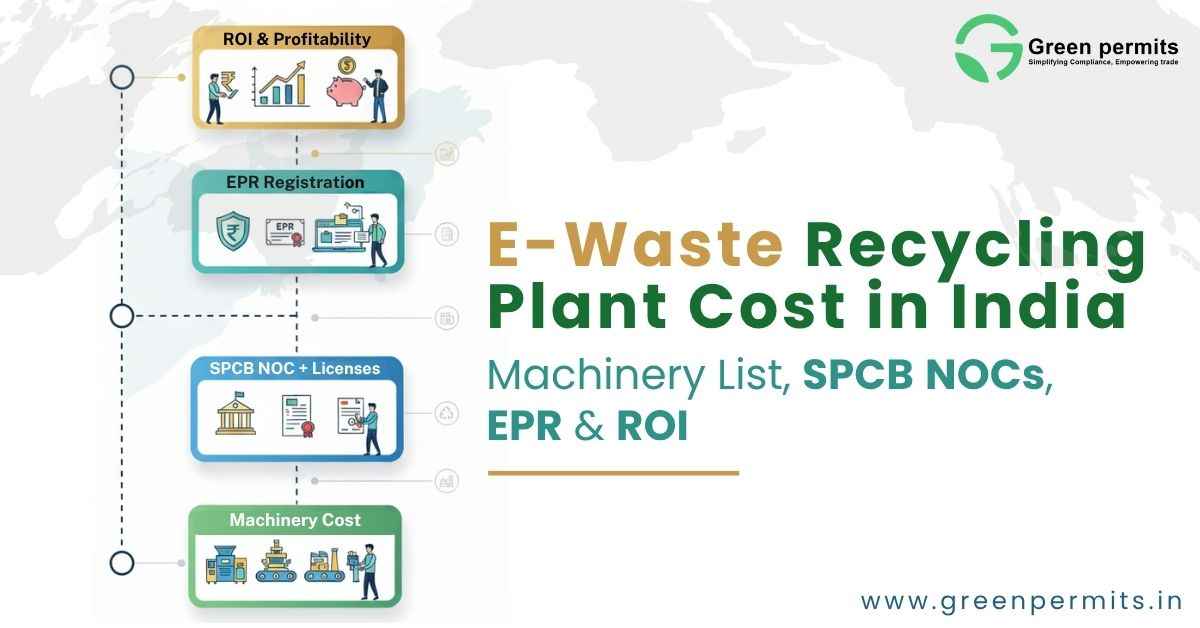
    If you are planning to start an e-waste recycling facility, understanding the plant setup cost, required licenses, machinery, and expected return on investment (ROI) is essential before making an investment decision.

    Read the complete guide here:

    https://www.greenpermits.in/e-waste-recycling-plant-cost-in-india-machinery-roi/

    Start Your E-Waste Recycling Project with Expert Guidance
    Setting up an e-waste recycling plant requires environmental approvals, regulatory compliance, and proper plant planning. Green Permits Consulting provides end-to-end assistance for CPCB registrations, EPR compliance, and recycling plant setup across India.

    Website: https://www.greenpermits.in

    Phone: +91 78350 06182

    Email: wecare@greenpermits.in

    Book a Consultation with Green Permits today and launch your e-waste recycling business with complete regulatory compliance.
    Growing Need for E-Waste Recycling in India India is one of the fastest-growing markets for electronic devices, including smartphones, laptops, televisions, and industrial electronics. With the rapid increase in technology usage, the country is generating a significant amount of electronic waste (e-waste) every year. Improper disposal of this waste can lead to serious environmental and health hazards due to toxic materials such as lead, mercury, and cadmium present in electronic components. E-waste recycling plays a crucial role in recovering valuable materials such as gold, silver, copper, aluminum, and rare metals from discarded electronics. Proper recycling helps reduce environmental pollution, conserve natural resources, and support India’s transition toward a sustainable circular economy. Regulatory Framework for E-Waste Recycling Plants Setting up an e-waste recycling plant in India requires compliance with environmental regulations notified by the government. The industry is regulated under the E-Waste Management Rules, which mandate proper collection, dismantling, recycling, and reporting of electronic waste. Businesses involved in recycling must obtain registration from the Central Pollution Control Board (CPCB) and authorization from the State Pollution Control Board (SPCB). Companies must also comply with the Extended Producer Responsibility (EPR) framework, which requires producers to ensure responsible recycling of electronic waste generated from their products. Following these regulations ensures environmentally sound recycling practices and prevents hazardous materials from harming the environment. Investment and Machinery for an E-Waste Recycling Plant Establishing an e-waste recycling facility requires investment in infrastructure, recycling technology, and specialized machinery. The plant typically includes equipment for manual dismantling, shredding, separation, and recovery of metals and other reusable materials from electronic components. Investment costs vary depending on plant capacity, automation level, and technology used for material recovery. Businesses must also allocate funds for pollution control systems, storage areas for hazardous waste, and skilled technical manpower. With the growing demand for recycled metals and electronic components, e-waste recycling plants offer strong business potential for entrepreneurs looking to enter the sustainability and recycling sector. Complete Guide to E-Waste Recycling Plant Setup If you are planning to start an e-waste recycling facility, understanding the plant setup cost, required licenses, machinery, and expected return on investment (ROI) is essential before making an investment decision. Read the complete guide here: 👉 https://www.greenpermits.in/e-waste-recycling-plant-cost-in-india-machinery-roi/ 📞 Start Your E-Waste Recycling Project with Expert Guidance Setting up an e-waste recycling plant requires environmental approvals, regulatory compliance, and proper plant planning. Green Permits Consulting provides end-to-end assistance for CPCB registrations, EPR compliance, and recycling plant setup across India. 🌐 Website: https://www.greenpermits.in 📞 Phone: +91 78350 06182 📧 Email: wecare@greenpermits.in Book a Consultation with Green Permits today and launch your e-waste recycling business with complete regulatory compliance.
    WWW.GREENPERMITS.IN
    E-Waste Recycling Plant Cost in India: Machinery List, SPCB NOCs, EPR & ROI - Green Permits
    Detailed guide on e-waste recycling plant cost in India, machinery list, SPCB approvals, EPR compliance, and ROI insights. Book a consultation today.
    0 Commentaires 0 Parts 2KB Vue 0 Aperçu
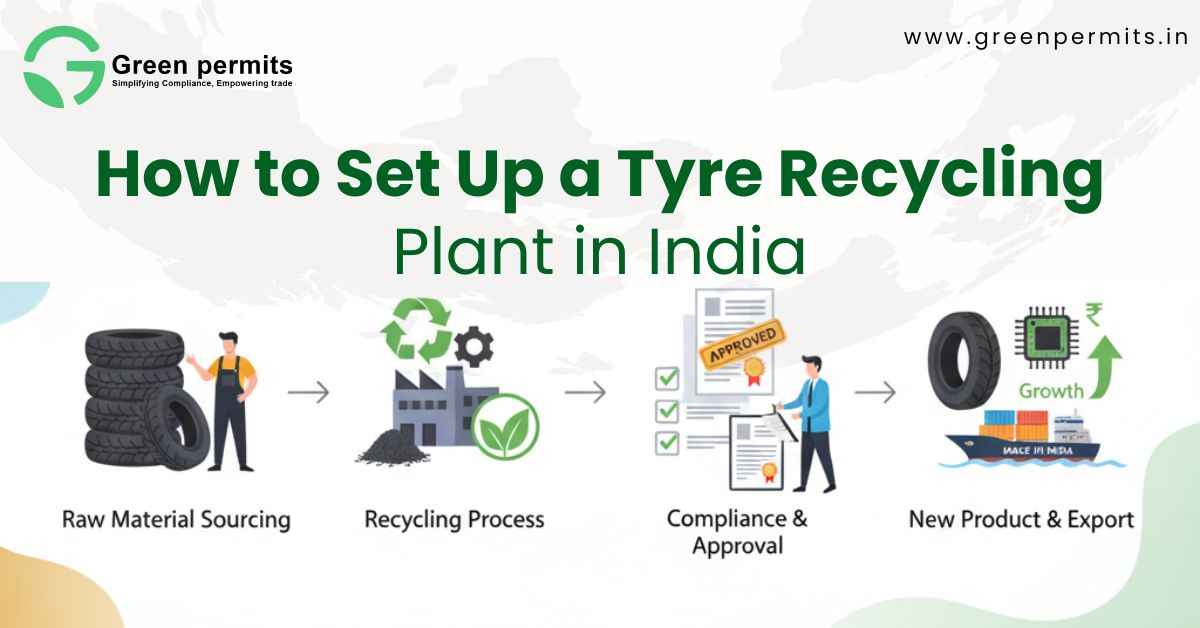
  • Growing Opportunity for Tyre Recycling in India

    India generates millions of tonnes of waste tyres every year due to the rapid growth of automobiles, logistics, and transportation industries. Improper disposal of used tyres can lead to severe environmental problems, including air pollution, fire hazards, and land contamination. Because of this, tyre recycling has become a critical part of sustainable waste management in the country.

    Tyre recycling converts end-of-life tyres into valuable materials such as crumb rubber, pyrolysis oil, carbon black, and steel wire. These recovered materials are widely used in industries like road construction, rubber manufacturing, fuel generation, and infrastructure development. With the increasing focus on circular economy practices, tyre recycling plants are becoming a promising business opportunity for entrepreneurs and investors.

    Environmental Regulations and Compliance
    Setting up a tyre recycling plant in India requires strict compliance with environmental laws and waste management regulations. Businesses must follow the Hazardous and Other Wastes (Management and Transboundary Movement) Rules and comply with Extended Producer Responsibility (EPR) guidelines for waste tyres.

    Companies involved in tyre recycling must obtain authorization from the State Pollution Control Board (SPCB) and ensure that waste tyres are processed using environmentally safe technologies. Proper documentation, pollution control systems, and regulatory approvals are essential to operate legally and sustainably in this sector.

    These regulations aim to ensure responsible waste management while promoting resource recovery and reducing environmental pollution.

    Investment, Machinery and Plant Setup Requirements
    Establishing a tyre recycling facility requires investment in land, plant infrastructure, and specialized recycling machinery. Depending on the recycling method—such as mechanical shredding or pyrolysis—the plant may require equipment for tyre cutting, shredding, granulation, oil recovery, and separation of steel and rubber materials.

    The investment cost varies based on plant capacity, automation level, and technology used. Entrepreneurs must also consider costs related to environmental compliance, storage facilities, pollution control equipment, and skilled workforce.

    With increasing demand for recycled rubber products and industrial fuel derived from tyre waste, the tyre recycling industry offers attractive profit potential for long-term investors.

    Complete Guide to Tyre Recycling Plant Setup
    If you are planning to start a tyre recycling business, it is important to understand the licenses required, plant setup cost, machinery requirements, and profit potential before investing.

    Read the complete guide here:

    https://www.greenpermits.in/tyre-recycling-plant-setup-in-india-licenses-cost-profit-analysis/

    Start Your Tyre Recycling Plant with Expert Guidance
    Setting up a tyre recycling plant involves environmental approvals, plant design planning, and regulatory compliance. Green Permits Consulting provides expert support for recycling plant setup, environmental licensing, and compliance across India.

    Website: https://www.greenpermits.in

    Phone: +91 78350 06182

    Email: wecare@greenpermits.in

    Book a Consultation with Green Permits today and start your tyre recycling business with complete regulatory compliance.
    Growing Opportunity for Tyre Recycling in India India generates millions of tonnes of waste tyres every year due to the rapid growth of automobiles, logistics, and transportation industries. Improper disposal of used tyres can lead to severe environmental problems, including air pollution, fire hazards, and land contamination. Because of this, tyre recycling has become a critical part of sustainable waste management in the country. Tyre recycling converts end-of-life tyres into valuable materials such as crumb rubber, pyrolysis oil, carbon black, and steel wire. These recovered materials are widely used in industries like road construction, rubber manufacturing, fuel generation, and infrastructure development. With the increasing focus on circular economy practices, tyre recycling plants are becoming a promising business opportunity for entrepreneurs and investors. Environmental Regulations and Compliance Setting up a tyre recycling plant in India requires strict compliance with environmental laws and waste management regulations. Businesses must follow the Hazardous and Other Wastes (Management and Transboundary Movement) Rules and comply with Extended Producer Responsibility (EPR) guidelines for waste tyres. Companies involved in tyre recycling must obtain authorization from the State Pollution Control Board (SPCB) and ensure that waste tyres are processed using environmentally safe technologies. Proper documentation, pollution control systems, and regulatory approvals are essential to operate legally and sustainably in this sector. These regulations aim to ensure responsible waste management while promoting resource recovery and reducing environmental pollution. Investment, Machinery and Plant Setup Requirements Establishing a tyre recycling facility requires investment in land, plant infrastructure, and specialized recycling machinery. Depending on the recycling method—such as mechanical shredding or pyrolysis—the plant may require equipment for tyre cutting, shredding, granulation, oil recovery, and separation of steel and rubber materials. The investment cost varies based on plant capacity, automation level, and technology used. Entrepreneurs must also consider costs related to environmental compliance, storage facilities, pollution control equipment, and skilled workforce. With increasing demand for recycled rubber products and industrial fuel derived from tyre waste, the tyre recycling industry offers attractive profit potential for long-term investors. Complete Guide to Tyre Recycling Plant Setup If you are planning to start a tyre recycling business, it is important to understand the licenses required, plant setup cost, machinery requirements, and profit potential before investing. Read the complete guide here: 👉 https://www.greenpermits.in/tyre-recycling-plant-setup-in-india-licenses-cost-profit-analysis/ 📞 Start Your Tyre Recycling Plant with Expert Guidance Setting up a tyre recycling plant involves environmental approvals, plant design planning, and regulatory compliance. Green Permits Consulting provides expert support for recycling plant setup, environmental licensing, and compliance across India. 🌐 Website: https://www.greenpermits.in 📞 Phone: +91 78350 06182 📧 Email: wecare@greenpermits.in Book a Consultation with Green Permits today and start your tyre recycling business with complete regulatory compliance.
    WWW.GREENPERMITS.IN
    How to Set Up a Tyre Recycling Plant in India: Licenses, Cost & Profit Analysis - Green Permits
    Start a tyre recycling plant in India with this 2025 guide. Learn licenses, setup cost, profit margins, EPR registration & CPCB rules.
    0 Commentaires 0 Parts 2KB Vue 0 Aperçu
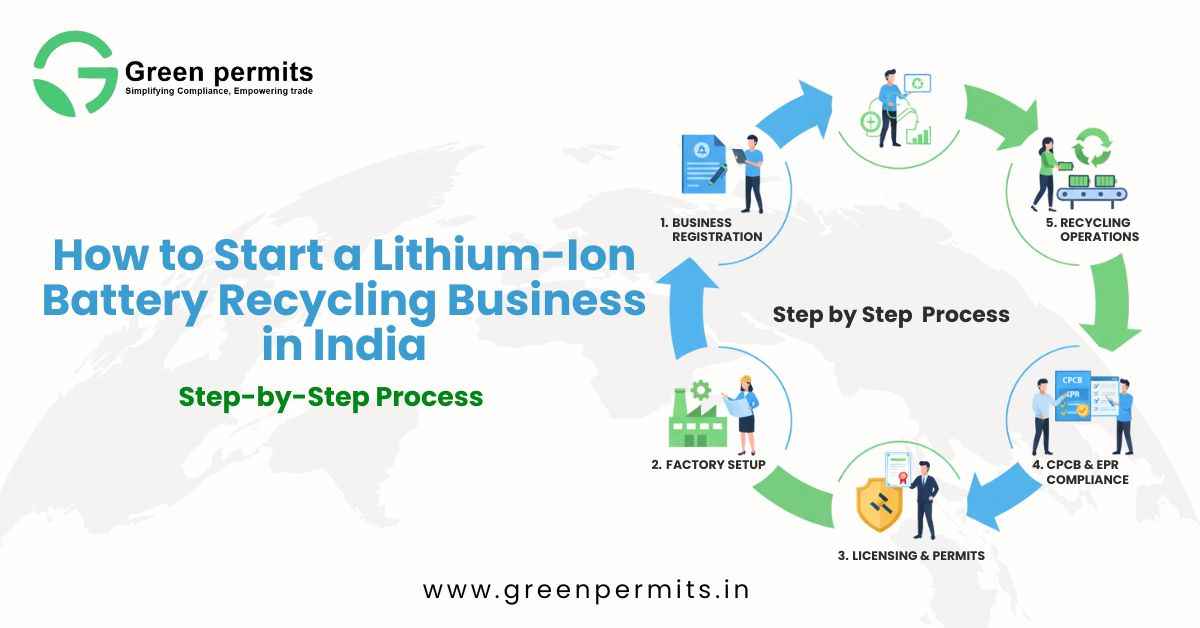
  • Rising Demand for Lithium-Ion Battery Recycling in India

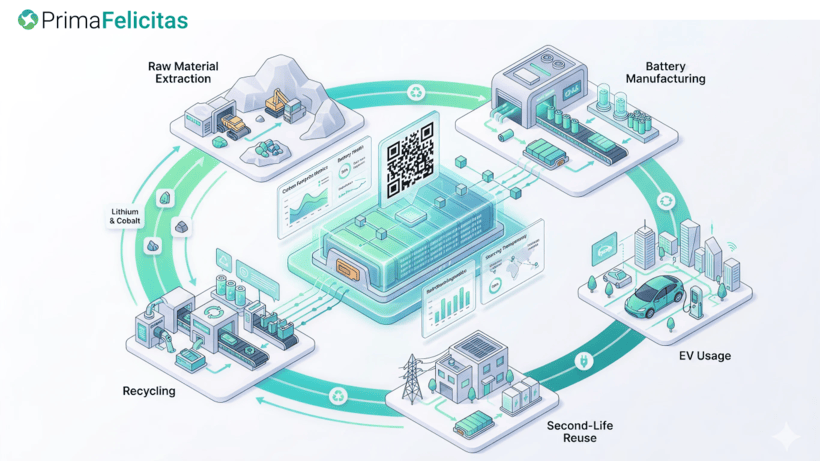
    The rapid expansion of electric vehicles, energy storage systems, and portable electronics is driving an unprecedented demand for lithium-ion batteries in India. As these batteries reach the end of their life cycle, managing lithium-ion battery waste has become a critical environmental and economic challenge.

    Lithium-ion batteries contain valuable materials such as lithium, cobalt, nickel, manganese, and copper. Recycling these materials not only prevents environmental contamination but also reduces the need for mining new resources. With India targeting aggressive EV adoption and renewable energy expansion, lithium-ion battery recycling is emerging as a strategic industry supporting the country’s circular economy goals.

    Regulatory Framework for Lithium Battery Recycling
    Establishing a lithium-ion battery recycling business in India requires strict compliance with environmental regulations. The industry operates under the Battery Waste Management Rules introduced by the Ministry of Environment, Forest and Climate Change.

    Businesses involved in battery recycling must register on the CPCB EPR portal, obtain authorization from the State Pollution Control Board (SPCB), and ensure environmentally sound handling of battery waste. The Extended Producer Responsibility (EPR) framework requires producers and recyclers to track and recycle battery waste responsibly.

    Compliance with these regulations ensures safe recovery of materials while preventing hazardous chemicals from entering the environment.

    Investment, Technology and Infrastructure Requirements
    Starting a lithium-ion battery recycling plant involves investment in specialized infrastructure and advanced recycling technologies. Facilities typically require equipment for battery dismantling, mechanical separation, chemical extraction, and recovery of metals.

    The overall investment depends on factors such as plant capacity, technology used, automation level, and safety systems. Lithium-ion battery recycling also requires proper pollution control systems, hazardous waste management processes, and trained technical staff to operate the facility safely.

    As demand for lithium-ion batteries continues to grow in India’s EV and electronics sectors, the recycling market offers strong long-term revenue potential for investors and entrepreneurs.

    Complete Guide to Lithium-Ion Battery Recycling Business
    If you are planning to start a lithium-ion battery recycling plant, understanding the business model, regulatory approvals, plant investment, and profitability is essential before launching the project.

    Read the detailed guide here:

    https://www.greenpermits.in/lithium-ion-battery-recycling-business-in-india/

    Start Your Lithium Battery Recycling Business with Expert Support
    Setting up a lithium-ion battery recycling facility requires proper regulatory approvals, plant design planning, and environmental compliance. Green Permits Consulting provides end-to-end support for recycling plant setup and environmental licensing across India.

    Website: https://www.greenpermits.in

    Phone: +91 78350 06182

    Email: wecare@greenpermits.in

    Book a Consultation with Green Permits today to start your lithium-ion battery recycling business with complete compliance.
    Rising Demand for Lithium-Ion Battery Recycling in India The rapid expansion of electric vehicles, energy storage systems, and portable electronics is driving an unprecedented demand for lithium-ion batteries in India. As these batteries reach the end of their life cycle, managing lithium-ion battery waste has become a critical environmental and economic challenge. Lithium-ion batteries contain valuable materials such as lithium, cobalt, nickel, manganese, and copper. Recycling these materials not only prevents environmental contamination but also reduces the need for mining new resources. With India targeting aggressive EV adoption and renewable energy expansion, lithium-ion battery recycling is emerging as a strategic industry supporting the country’s circular economy goals. Regulatory Framework for Lithium Battery Recycling Establishing a lithium-ion battery recycling business in India requires strict compliance with environmental regulations. The industry operates under the Battery Waste Management Rules introduced by the Ministry of Environment, Forest and Climate Change. Businesses involved in battery recycling must register on the CPCB EPR portal, obtain authorization from the State Pollution Control Board (SPCB), and ensure environmentally sound handling of battery waste. The Extended Producer Responsibility (EPR) framework requires producers and recyclers to track and recycle battery waste responsibly. Compliance with these regulations ensures safe recovery of materials while preventing hazardous chemicals from entering the environment. Investment, Technology and Infrastructure Requirements Starting a lithium-ion battery recycling plant involves investment in specialized infrastructure and advanced recycling technologies. Facilities typically require equipment for battery dismantling, mechanical separation, chemical extraction, and recovery of metals. The overall investment depends on factors such as plant capacity, technology used, automation level, and safety systems. Lithium-ion battery recycling also requires proper pollution control systems, hazardous waste management processes, and trained technical staff to operate the facility safely. As demand for lithium-ion batteries continues to grow in India’s EV and electronics sectors, the recycling market offers strong long-term revenue potential for investors and entrepreneurs. Complete Guide to Lithium-Ion Battery Recycling Business If you are planning to start a lithium-ion battery recycling plant, understanding the business model, regulatory approvals, plant investment, and profitability is essential before launching the project. Read the detailed guide here: 👉 https://www.greenpermits.in/lithium-ion-battery-recycling-business-in-india/ 📞 Start Your Lithium Battery Recycling Business with Expert Support Setting up a lithium-ion battery recycling facility requires proper regulatory approvals, plant design planning, and environmental compliance. Green Permits Consulting provides end-to-end support for recycling plant setup and environmental licensing across India. 🌐 Website: https://www.greenpermits.in 📞 Phone: +91 78350 06182 📧 Email: wecare@greenpermits.in Book a Consultation with Green Permits today to start your lithium-ion battery recycling business with complete compliance.
    WWW.GREENPERMITS.IN
    How to Start a Lithium-Ion Battery Recycling Business in India: Step-by-Step Process - Green Permits
    Step-by-step guide to start a lithium-ion battery recycling plant in India — covering licenses, EPR compliance, costs, and new government incentives.
    0 Commentaires 0 Parts 2KB Vue 0 Aperçu
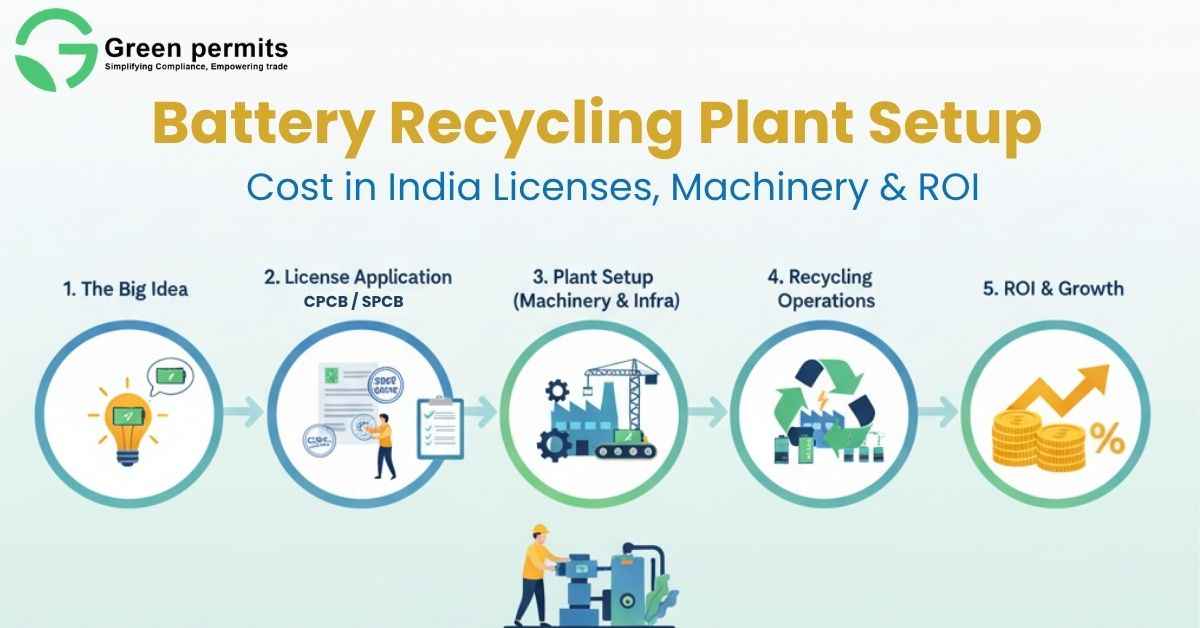
  • Growing Demand for Battery Recycling in India

    India is witnessing rapid growth in electric vehicles, renewable energy storage systems, and consumer electronics. This expansion has significantly increased the amount of battery waste generated across the country. Managing this waste responsibly has become critical because batteries contain hazardous substances along with valuable metals.

    Battery recycling enables the recovery of important materials such as lithium, cobalt, nickel, copper, and lead, which can be reused in new manufacturing processes. This reduces the dependency on mining raw materials and supports India's transition toward a circular economy. As sustainability becomes a national priority, battery recycling is emerging as a high-potential industry for entrepreneurs and investors.

    Regulations and Compliance for Battery Recycling Plants
    Setting up a battery recycling plant in India requires compliance with environmental regulations issued by the government. Businesses must follow the Battery Waste Management Rules and register under the Extended Producer Responsibility (EPR) framework on the CPCB portal.

    Entities involved in battery manufacturing, importing, recycling, or refurbishing must ensure proper collection, recycling, and reporting of battery waste. Approvals from the State Pollution Control Board (SPCB) along with environmental authorizations and pollution control systems are required before starting operations.

    Following these regulatory requirements ensures environmentally sound recycling practices and protects both public health and the environment.

    Investment and Machinery Required for a Recycling Plant
    A battery recycling plant requires investment in land, infrastructure, and specialized recycling technology. Facilities typically include equipment for battery dismantling, material separation, chemical processing, and recovery of reusable metals.

    The total investment depends on the plant capacity, battery chemistry handled (such as lithium-ion or lead-acid), and the level of automation used in the recycling process. Businesses must also allocate budget for environmental compliance systems, safety infrastructure, and trained technical manpower.

    With proper planning and technology, recovered metals and recycled materials can create strong revenue streams, making battery recycling a sustainable and profitable business opportunity.

    Learn the Complete Cost, Licenses & ROI
    If you are planning to start a recycling facility, understanding the plant setup cost, required licenses, machinery, and expected return on investment is essential before launching the project.

    Read the complete guide here:

    https://www.greenpermits.in/battery-recycling-plant-cost-in-india-licenses-machinery-roi/

    Start Your Battery Recycling Project with Expert Guidance
    If you need assistance with battery recycling plant setup, CPCB registration, EPR compliance, or environmental approvals, the experts at Green Permits Consulting can guide you through the entire process.

    Website: https://www.greenpermits.in

    Phone: +91 78350 06182

    Email: wecare@greenpermits.in

    Book a Consultation with Green Permits today and start your recycling business with complete regulatory compliance.
    Growing Demand for Battery Recycling in India India is witnessing rapid growth in electric vehicles, renewable energy storage systems, and consumer electronics. This expansion has significantly increased the amount of battery waste generated across the country. Managing this waste responsibly has become critical because batteries contain hazardous substances along with valuable metals. Battery recycling enables the recovery of important materials such as lithium, cobalt, nickel, copper, and lead, which can be reused in new manufacturing processes. This reduces the dependency on mining raw materials and supports India's transition toward a circular economy. As sustainability becomes a national priority, battery recycling is emerging as a high-potential industry for entrepreneurs and investors. Regulations and Compliance for Battery Recycling Plants Setting up a battery recycling plant in India requires compliance with environmental regulations issued by the government. Businesses must follow the Battery Waste Management Rules and register under the Extended Producer Responsibility (EPR) framework on the CPCB portal. Entities involved in battery manufacturing, importing, recycling, or refurbishing must ensure proper collection, recycling, and reporting of battery waste. Approvals from the State Pollution Control Board (SPCB) along with environmental authorizations and pollution control systems are required before starting operations. Following these regulatory requirements ensures environmentally sound recycling practices and protects both public health and the environment. Investment and Machinery Required for a Recycling Plant A battery recycling plant requires investment in land, infrastructure, and specialized recycling technology. Facilities typically include equipment for battery dismantling, material separation, chemical processing, and recovery of reusable metals. The total investment depends on the plant capacity, battery chemistry handled (such as lithium-ion or lead-acid), and the level of automation used in the recycling process. Businesses must also allocate budget for environmental compliance systems, safety infrastructure, and trained technical manpower. With proper planning and technology, recovered metals and recycled materials can create strong revenue streams, making battery recycling a sustainable and profitable business opportunity. Learn the Complete Cost, Licenses & ROI If you are planning to start a recycling facility, understanding the plant setup cost, required licenses, machinery, and expected return on investment is essential before launching the project. Read the complete guide here: 👉 https://www.greenpermits.in/battery-recycling-plant-cost-in-india-licenses-machinery-roi/ 📞 Start Your Battery Recycling Project with Expert Guidance If you need assistance with battery recycling plant setup, CPCB registration, EPR compliance, or environmental approvals, the experts at Green Permits Consulting can guide you through the entire process. 🌐 Website: https://www.greenpermits.in 📞 Phone: +91 78350 06182 📧 Email: wecare@greenpermits.in Book a Consultation with Green Permits today and start your recycling business with complete regulatory compliance.
    WWW.GREENPERMITS.IN
    Battery Recycling Plant Setup Cost in India (2025): Licenses, Machinery & ROI - Green Permits
    Understand licenses, machinery, government incentives, and real setup costs for a battery recycling plant in India. Plan your 2025 project with Green Permits.
    0 Commentaires 0 Parts 3KB Vue 0 Aperçu
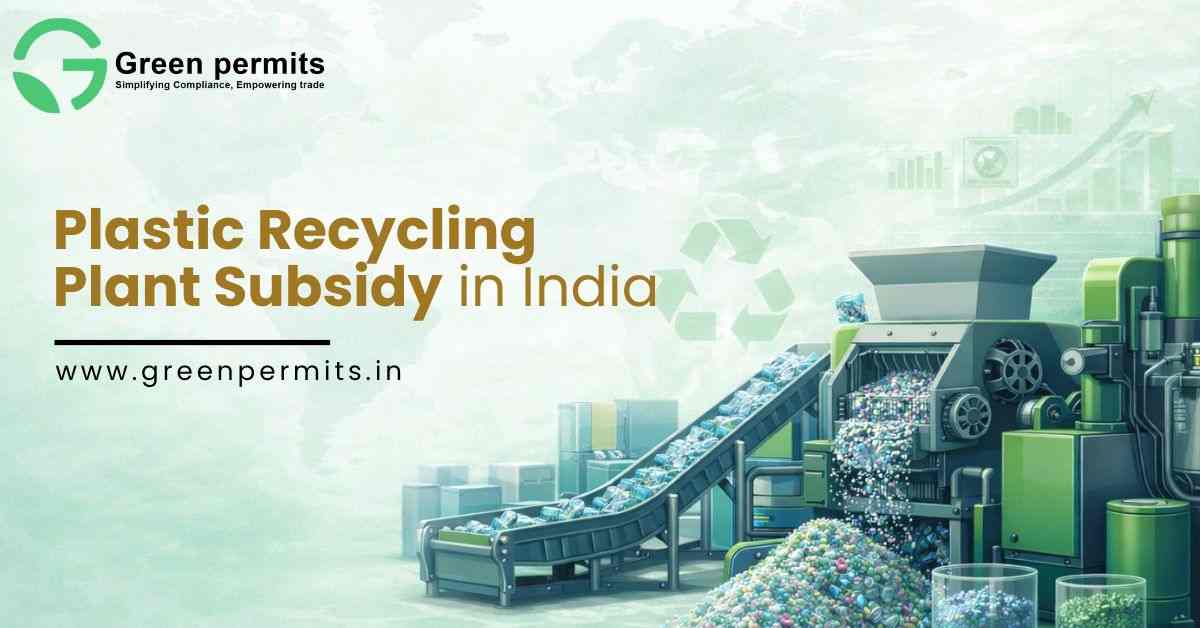
  • Plastic Recycling Plant Subsidy in India: Complete Guide 2026
    Green permits
    With India strengthening its circular economy goals, plastic recycling businesses are receiving increasing policy and financial support. In 2026, entrepreneurs and MSMEs setting up plastic recycling plants can explore various government subsidies, incentives, and funding schemes designed to reduce capital burden and encourage sustainable waste management.

    Available Subsidies & Government Schemes
    Plastic recycling units may be eligible for MSME subsidies, state industrial policy incentives, capital investment subsidies, interest subvention schemes, and benefits under Startup India initiatives. Some states also provide power tariff concessions, land rebates, and stamp duty exemptions for recycling projects.

    Eligibility & Compliance Requirements
    To avail subsidies, businesses must ensure proper Pollution Control Board approvals, registration under Plastic Waste Management Rules, and EPR compliance on the CPCB portal. A well-prepared DPR (Detailed Project Report), financial planning, and accurate documentation are essential for successful approval of subsidy applications.

    Importance of Expert Guidance for Maximum Benefits
    Identifying the right scheme and preparing compliant applications can be complex. Professional advisory support helps recycling businesses structure projects correctly, secure approvals faster, and maximize financial incentives.

    Green Permits Consulting LLC offers end-to-end support for plastic recycling plant setup, subsidy identification, EPR registration, and regulatory compliance across India.

    For a detailed 2026 guide on plastic recycling plant subsidies in India, visit:

    https://www.greenpermits.in/02/plastic-recycling-plant-subsidy-in-india-complete-guide-2026/

    Website: https://www.greenpermits.in/

    Call: +91 78350 06182

    Email: wecare@greenpermits.in

    Book a Consultation with Green Permits and build a compliant, well-funded, and future-ready plastic recycling business in India.
    Plastic Recycling Plant Subsidy in India: Complete Guide 2026 Green permits With India strengthening its circular economy goals, plastic recycling businesses are receiving increasing policy and financial support. In 2026, entrepreneurs and MSMEs setting up plastic recycling plants can explore various government subsidies, incentives, and funding schemes designed to reduce capital burden and encourage sustainable waste management. Available Subsidies & Government Schemes Plastic recycling units may be eligible for MSME subsidies, state industrial policy incentives, capital investment subsidies, interest subvention schemes, and benefits under Startup India initiatives. Some states also provide power tariff concessions, land rebates, and stamp duty exemptions for recycling projects. Eligibility & Compliance Requirements To avail subsidies, businesses must ensure proper Pollution Control Board approvals, registration under Plastic Waste Management Rules, and EPR compliance on the CPCB portal. A well-prepared DPR (Detailed Project Report), financial planning, and accurate documentation are essential for successful approval of subsidy applications. Importance of Expert Guidance for Maximum Benefits Identifying the right scheme and preparing compliant applications can be complex. Professional advisory support helps recycling businesses structure projects correctly, secure approvals faster, and maximize financial incentives. Green Permits Consulting LLC offers end-to-end support for plastic recycling plant setup, subsidy identification, EPR registration, and regulatory compliance across India. For a detailed 2026 guide on plastic recycling plant subsidies in India, visit: 👉 https://www.greenpermits.in/02/plastic-recycling-plant-subsidy-in-india-complete-guide-2026/ 🌐 Website: https://www.greenpermits.in/ 📞 Call: +91 78350 06182 📧 Email: wecare@greenpermits.in Book a Consultation with Green Permits and build a compliant, well-funded, and future-ready plastic recycling business in India.
    WWW.GREENPERMITS.IN
    Plastic Recycling Plant Subsidy in India - Green Permits
    Plastic recycling plant subsidy in India explained with MSME benefits, state incentives & compliance steps. Call Green Permits today.
    0 Commentaires 0 Parts 2KB Vue 0 Aperçu
  • Plastic Waste Recycling Plant Setup Under PWM Rules in India
    Green permits
    With stricter enforcement of the Plastic Waste Management (PWM) Rules, setting up a plastic waste recycling plant in India requires proper planning, approvals, and compliance. The PWM framework ensures responsible collection, processing, and recycling of plastic waste, making authorized recycling units a key part of India’s circular economy.

    Understanding PWM Rules & Compliance Requirements
    Under the PWM Rules, recyclers must obtain authorization from the Pollution Control Board and register as a Plastic Waste Processor (PWP) on the CPCB EPR portal. Compliance includes proper waste handling, record maintenance, reporting, and adherence to environmental standards.

    Investment, Infrastructure & Operational Planning
    Setting up a plastic waste recycling plant involves investment in land, washing and shredding units, extruders, pollution control systems, and skilled manpower. Proper plant layout and effluent management are essential to meet PWM norms and avoid operational disruptions.

    Role of Expert Regulatory Support
    Navigating approvals, EPR registration, and ongoing compliance can be complex without regulatory expertise. Professional support ensures faster approvals, accurate documentation, and smooth project execution.

    Green Permits Consulting LLC provides end-to-end assistance for plastic waste recycling plant setup under PWM Rules, including Pollution Control Board approvals, EPR registration, and compliance advisory.

    For a detailed guide on plastic waste recycling plant setup under PWM Rules, visit:

    https://www.greenpermits.in/plastic-waste-recycling-plant-setup-under-pwm-rules/

    Website: https://www.greenpermits.in/

    Call: +91 78350 06182

    Email: wecare@greenpermits.in

    Book a Consultation with Green Permits and build a compliant, profitable, and future-ready plastic recycling business in India.
    Plastic Waste Recycling Plant Setup Under PWM Rules in India Green permits With stricter enforcement of the Plastic Waste Management (PWM) Rules, setting up a plastic waste recycling plant in India requires proper planning, approvals, and compliance. The PWM framework ensures responsible collection, processing, and recycling of plastic waste, making authorized recycling units a key part of India’s circular economy. Understanding PWM Rules & Compliance Requirements Under the PWM Rules, recyclers must obtain authorization from the Pollution Control Board and register as a Plastic Waste Processor (PWP) on the CPCB EPR portal. Compliance includes proper waste handling, record maintenance, reporting, and adherence to environmental standards. Investment, Infrastructure & Operational Planning Setting up a plastic waste recycling plant involves investment in land, washing and shredding units, extruders, pollution control systems, and skilled manpower. Proper plant layout and effluent management are essential to meet PWM norms and avoid operational disruptions. Role of Expert Regulatory Support Navigating approvals, EPR registration, and ongoing compliance can be complex without regulatory expertise. Professional support ensures faster approvals, accurate documentation, and smooth project execution. Green Permits Consulting LLC provides end-to-end assistance for plastic waste recycling plant setup under PWM Rules, including Pollution Control Board approvals, EPR registration, and compliance advisory. For a detailed guide on plastic waste recycling plant setup under PWM Rules, visit: 👉 https://www.greenpermits.in/plastic-waste-recycling-plant-setup-under-pwm-rules/ 🌐 Website: https://www.greenpermits.in/ 📞 Call: +91 78350 06182 📧 Email: wecare@greenpermits.in Book a Consultation with Green Permits and build a compliant, profitable, and future-ready plastic recycling business in India.
    WWW.GREENPERMITS.IN
    Plastic Waste Recycling Plant Setup: Compliance Under PWM Rules - Green Permits
    Plastic Waste Recycling Plant Setup guide under PWM Rules. Learn CPCB registration, SPCB approvals, EPR compliance & cost details. Consult Green Permits.
    0 Commentaires 0 Parts 910 Vue 0 Aperçu
Plus de résultats
MyLiveRoom https://myliveroom.com