
• Growing Demand for Battery Recycling in India

    India is witnessing rapid growth in electric vehicles, renewable energy storage systems, and consumer electronics. This expansion has significantly increased the amount of battery waste generated across the country. Managing this waste responsibly has become critical because batteries contain hazardous substances along with valuable metals.

    Battery recycling enables the recovery of important materials such as lithium, cobalt, nickel, copper, and lead, which can be reused in new manufacturing processes. This reduces the dependency on mining raw materials and supports India's transition toward a circular economy. As sustainability becomes a national priority, battery recycling is emerging as a high-potential industry for entrepreneurs and investors.

    Regulations and Compliance for Battery Recycling Plants
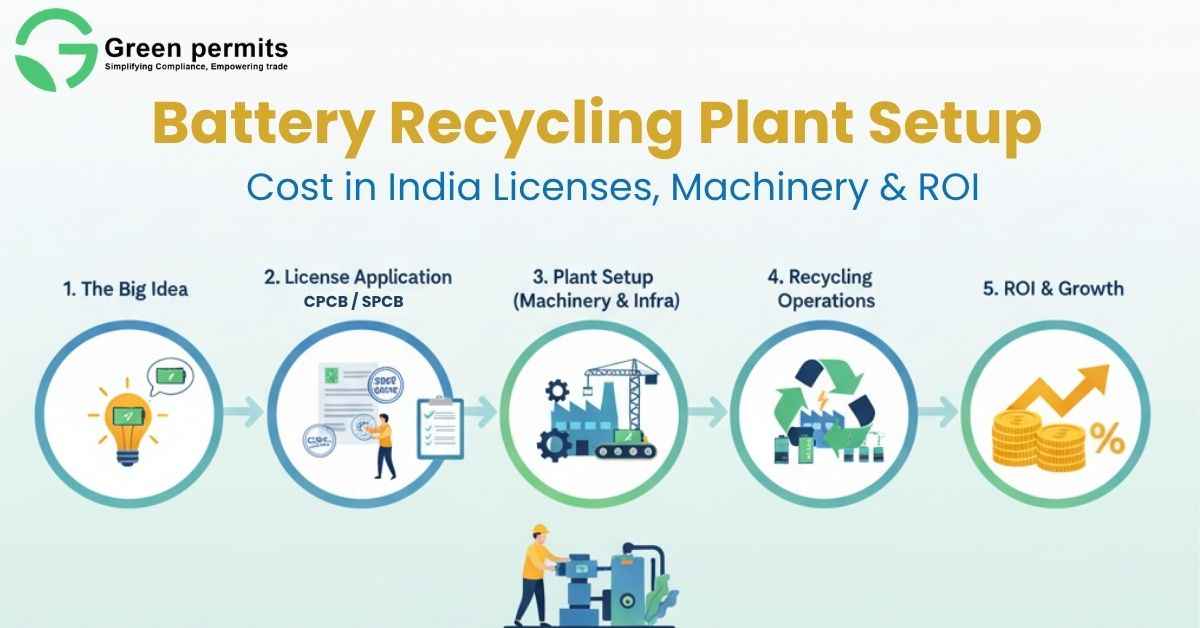
    Setting up a battery recycling plant in India requires compliance with environmental regulations issued by the government. Businesses must follow the Battery Waste Management Rules and register under the Extended Producer Responsibility (EPR) framework on the CPCB portal.

    Entities involved in battery manufacturing, importing, recycling, or refurbishing must ensure proper collection, recycling, and reporting of battery waste. Approvals from the State Pollution Control Board (SPCB) along with environmental authorizations and pollution control systems are required before starting operations.

    Following these regulatory requirements ensures environmentally sound recycling practices and protects both public health and the environment.

    Investment and Machinery Required for a Recycling Plant
    A battery recycling plant requires investment in land, infrastructure, and specialized recycling technology. Facilities typically include equipment for battery dismantling, material separation, chemical processing, and recovery of reusable metals.

    The total investment depends on the plant capacity, battery chemistry handled (such as lithium-ion or lead-acid), and the level of automation used in the recycling process. Businesses must also allocate budget for environmental compliance systems, safety infrastructure, and trained technical manpower.

    With proper planning and technology, recovered metals and recycled materials can create strong revenue streams, making battery recycling a sustainable and profitable business opportunity.

    Learn the Complete Cost, Licenses & ROI
    If you are planning to start a recycling facility, understanding the plant setup cost, required licenses, machinery, and expected return on investment is essential before launching the project.

    Read the complete guide here:

    https://www.greenpermits.in/battery-recycling-plant-cost-in-india-licenses-machinery-roi/

    Start Your Battery Recycling Project with Expert Guidance
    If you need assistance with battery recycling plant setup, CPCB registration, EPR compliance, or environmental approvals, the experts at Green Permits Consulting can guide you through the entire process.

    Website: https://www.greenpermits.in

    Phone: +91 78350 06182

    Email: wecare@greenpermits.in

    Book a Consultation with Green Permits today and start your recycling business with complete regulatory compliance.
    Growing Demand for Battery Recycling in India India is witnessing rapid growth in electric vehicles, renewable energy storage systems, and consumer electronics. This expansion has significantly increased the amount of battery waste generated across the country. Managing this waste responsibly has become critical because batteries contain hazardous substances along with valuable metals. Battery recycling enables the recovery of important materials such as lithium, cobalt, nickel, copper, and lead, which can be reused in new manufacturing processes. This reduces the dependency on mining raw materials and supports India's transition toward a circular economy. As sustainability becomes a national priority, battery recycling is emerging as a high-potential industry for entrepreneurs and investors. Regulations and Compliance for Battery Recycling Plants Setting up a battery recycling plant in India requires compliance with environmental regulations issued by the government. Businesses must follow the Battery Waste Management Rules and register under the Extended Producer Responsibility (EPR) framework on the CPCB portal. Entities involved in battery manufacturing, importing, recycling, or refurbishing must ensure proper collection, recycling, and reporting of battery waste. Approvals from the State Pollution Control Board (SPCB) along with environmental authorizations and pollution control systems are required before starting operations. Following these regulatory requirements ensures environmentally sound recycling practices and protects both public health and the environment. Investment and Machinery Required for a Recycling Plant A battery recycling plant requires investment in land, infrastructure, and specialized recycling technology. Facilities typically include equipment for battery dismantling, material separation, chemical processing, and recovery of reusable metals. The total investment depends on the plant capacity, battery chemistry handled (such as lithium-ion or lead-acid), and the level of automation used in the recycling process. Businesses must also allocate budget for environmental compliance systems, safety infrastructure, and trained technical manpower. With proper planning and technology, recovered metals and recycled materials can create strong revenue streams, making battery recycling a sustainable and profitable business opportunity. Learn the Complete Cost, Licenses & ROI If you are planning to start a recycling facility, understanding the plant setup cost, required licenses, machinery, and expected return on investment is essential before launching the project. Read the complete guide here: 👉 https://www.greenpermits.in/battery-recycling-plant-cost-in-india-licenses-machinery-roi/ 📞 Start Your Battery Recycling Project with Expert Guidance If you need assistance with battery recycling plant setup, CPCB registration, EPR compliance, or environmental approvals, the experts at Green Permits Consulting can guide you through the entire process. 🌐 Website: https://www.greenpermits.in 📞 Phone: +91 78350 06182 📧 Email: wecare@greenpermits.in Book a Consultation with Green Permits today and start your recycling business with complete regulatory compliance.
    WWW.GREENPERMITS.IN
    Battery Recycling Plant Setup Cost in India (2025): Licenses, Machinery & ROI - Green Permits
    Understand licenses, machinery, government incentives, and real setup costs for a battery recycling plant in India. Plan your 2025 project with Green Permits.
    0 Commentarios 0 Acciones 3K Views 0 Vista previa
  • PESO Certificate in India: Requirement, Process & Compliance
    Green Permits
    The PESO Certificate is a mandatory approval for businesses dealing with petroleum products, compressed gases, explosives, pressure vessels, and other hazardous substances in India. Issued by the Petroleum and Explosives Safety Organization (PESO), this certification ensures that storage, handling, and operations meet strict safety standards.

    Who Requires a PESO Certificate
    Industries such as oil & gas, chemicals, LPG storage, battery manufacturing, fireworks, and hazardous material handling units require PESO approval. Any facility involved in the manufacture, storage, transport, or use of notified hazardous materials must obtain this certification before commencing operations.

    Importance of PESO Compliance
    Holding a valid PESO certificate helps businesses operate legally, prevent accidents, and avoid heavy penalties or shutdowns. It also improves safety credibility with regulators, insurers, and financial institutions, making PESO compliance a critical operational requirement.

    Role of Expert Support in PESO Approvals
    PESO approvals involve technical drawings, safety documentation, site inspections, and coordination with authorities. Expert guidance ensures accurate submissions, faster approvals, and smooth compliance management.

    Green Permits Consulting LLC offers end-to-end support for PESO certification in India, including documentation, liaison, and regulatory advisory.

    For a detailed guide on PESO certification requirements and process, visit:

    https://www.greenpermits.in/peso-certificate/

    Website: https://www.greenpermits.in/

    Call: +91 78350 06182

    Email: wecare@greenpermits.in

    Book a Consultation with Green Permits and secure PESO approval smoothly, safely, and without delays.

    PESO Certificate in India: Requirement, Process & Compliance Green Permits The PESO Certificate is a mandatory approval for businesses dealing with petroleum products, compressed gases, explosives, pressure vessels, and other hazardous substances in India. Issued by the Petroleum and Explosives Safety Organization (PESO), this certification ensures that storage, handling, and operations meet strict safety standards. Who Requires a PESO Certificate Industries such as oil & gas, chemicals, LPG storage, battery manufacturing, fireworks, and hazardous material handling units require PESO approval. Any facility involved in the manufacture, storage, transport, or use of notified hazardous materials must obtain this certification before commencing operations. Importance of PESO Compliance Holding a valid PESO certificate helps businesses operate legally, prevent accidents, and avoid heavy penalties or shutdowns. It also improves safety credibility with regulators, insurers, and financial institutions, making PESO compliance a critical operational requirement. Role of Expert Support in PESO Approvals PESO approvals involve technical drawings, safety documentation, site inspections, and coordination with authorities. Expert guidance ensures accurate submissions, faster approvals, and smooth compliance management. Green Permits Consulting LLC offers end-to-end support for PESO certification in India, including documentation, liaison, and regulatory advisory. For a detailed guide on PESO certification requirements and process, visit: 👉 https://www.greenpermits.in/peso-certificate/ 🌐 Website: https://www.greenpermits.in/ 📞 Call: +91 78350 06182 📧 Email: wecare@greenpermits.in Book a Consultation with Green Permits and secure PESO approval smoothly, safely, and without delays.
    WWW.GREENPERMITS.IN
    PESO Certificate - Green Permits
    Learn about PESO Certificate in India: process, fees (2025), documents, penalties, renewal timelines, and why businesses need PESO approval.
    0 Commentarios 0 Acciones 2K Views 0 Vista previa
  • Lithium Battery Plant Setup in India: Requirements, Cost & Market Potential
    Green Permits
    With the rapid growth of electric vehicles, renewable energy storage, and clean mobility initiatives, lithium batteries have become a critical component of India’s energy transition. As a result, setting up a lithium battery manufacturing or processing plant in India presents a high-growth industrial opportunity backed by strong policy support.

    Key Setup Requirements & Infrastructure
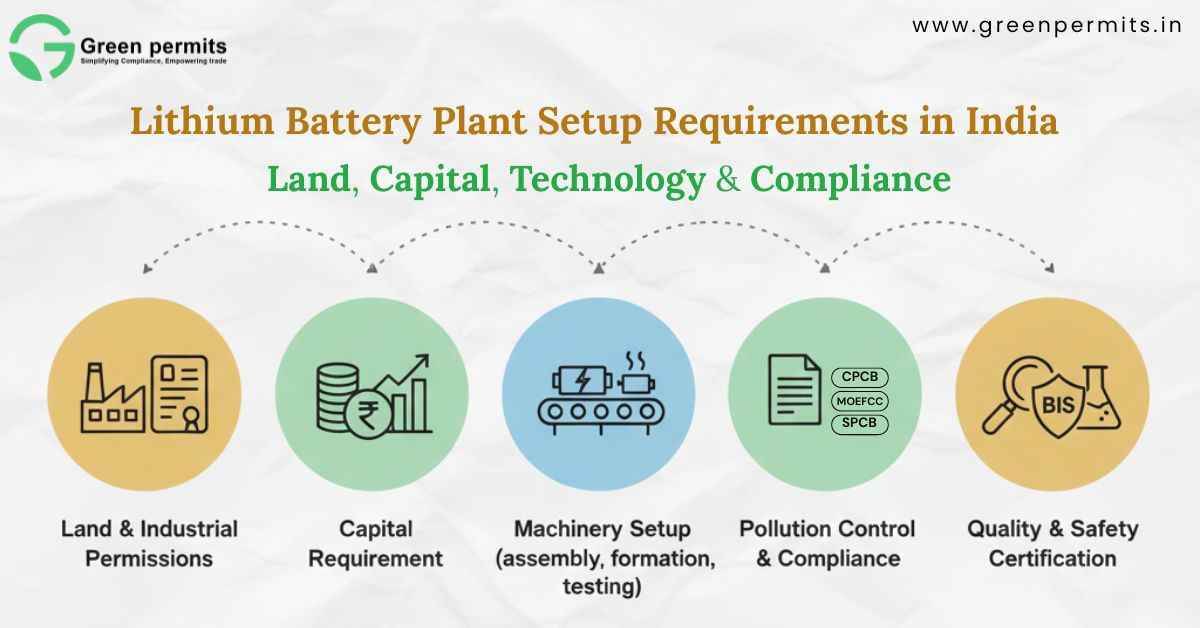
    Lithium battery plant setup requires careful planning of land, plant layout, advanced machinery, safety systems, and skilled manpower. Facilities must meet strict standards related to fire safety, hazardous material handling, and environmental protection. Proper infrastructure planning is essential to ensure operational efficiency and regulatory compliance.

    Regulatory Approvals & Environmental Compliance
    Lithium battery plants must obtain multiple approvals, including Pollution Control Board consents, authorization under Battery Waste Management Rules, factory license, fire safety NOC, and power and water permissions. Compliance with environmental and safety regulations is mandatory to avoid penalties and ensure uninterrupted operations.

    Role of Expert Support in Project Execution
    Given the technical complexity and evolving regulatory framework, expert guidance helps businesses manage approvals, ensure EPR compliance, and streamline project execution from planning to commissioning.

    Green Permits Consulting LLC provides end-to-end support for lithium battery plant setup in India, covering regulatory approvals, compliance strategy, and ongoing advisory.

    For a detailed overview of lithium battery plant setup requirements in India, visit:

    https://www.greenpermits.in/lithium-battery-plant-setup-requirements-in-india/

    Website: https://www.greenpermits.in/

    Call: +91 78350 06182

    Email: wecare@greenpermits.in

    Book a Consultation with Green Permits and build a compliant, scalable, and future-ready lithium battery project in India.

    Lithium Battery Plant Setup in India: Requirements, Cost & Market Potential Green Permits With the rapid growth of electric vehicles, renewable energy storage, and clean mobility initiatives, lithium batteries have become a critical component of India’s energy transition. As a result, setting up a lithium battery manufacturing or processing plant in India presents a high-growth industrial opportunity backed by strong policy support. Key Setup Requirements & Infrastructure Lithium battery plant setup requires careful planning of land, plant layout, advanced machinery, safety systems, and skilled manpower. Facilities must meet strict standards related to fire safety, hazardous material handling, and environmental protection. Proper infrastructure planning is essential to ensure operational efficiency and regulatory compliance. Regulatory Approvals & Environmental Compliance Lithium battery plants must obtain multiple approvals, including Pollution Control Board consents, authorization under Battery Waste Management Rules, factory license, fire safety NOC, and power and water permissions. Compliance with environmental and safety regulations is mandatory to avoid penalties and ensure uninterrupted operations. Role of Expert Support in Project Execution Given the technical complexity and evolving regulatory framework, expert guidance helps businesses manage approvals, ensure EPR compliance, and streamline project execution from planning to commissioning. Green Permits Consulting LLC provides end-to-end support for lithium battery plant setup in India, covering regulatory approvals, compliance strategy, and ongoing advisory. For a detailed overview of lithium battery plant setup requirements in India, visit: 👉 https://www.greenpermits.in/lithium-battery-plant-setup-requirements-in-india/ 🌐 Website: https://www.greenpermits.in/ 📞 Call: +91 78350 06182 📧 Email: wecare@greenpermits.in Book a Consultation with Green Permits and build a compliant, scalable, and future-ready lithium battery project in India.
    WWW.GREENPERMITS.IN
    Lithium Battery Plant Setup Requirements in India: Land, Capital, Technology & Compliance - Green Permits
    Land, capital, technology & compliance checklist for lithium battery plant setup in India. Learn approvals, BIS, and EPR rules. Consult Green Permits today.
    0 Commentarios 0 Acciones 2K Views 0 Vista previa
  • Lithium Battery Plant Setup in India: Requirements, Cost & Market Potential
    Green Permits
    With the rapid growth of electric vehicles, renewable energy storage, and clean mobility initiatives, lithium batteries have become a critical component of India’s energy transition. As a result, setting up a lithium battery manufacturing or processing plant in India presents a high-growth industrial opportunity backed by strong policy support.

    Key Setup Requirements & Infrastructure
    Lithium battery plant setup requires careful planning of land, plant layout, advanced machinery, safety systems, and skilled manpower. Facilities must meet strict standards related to fire safety, hazardous material handling, and environmental protection. Proper infrastructure planning is essential to ensure operational efficiency and regulatory compliance.

    Regulatory Approvals & Environmental Compliance
    Lithium battery plants must obtain multiple approvals, including Pollution Control Board consents, authorization under Battery Waste Management Rules, factory license, fire safety NOC, and power and water permissions. Compliance with environmental and safety regulations is mandatory to avoid penalties and ensure uninterrupted operations.

    Role of Expert Support in Project Execution
    Given the technical complexity and evolving regulatory framework, expert guidance helps businesses manage approvals, ensure EPR compliance, and streamline project execution from planning to commissioning.

    Green Permits Consulting LLC provides end-to-end support for lithium battery plant setup in India, covering regulatory approvals, compliance strategy, and ongoing advisory.

    For a detailed overview of lithium battery plant setup requirements in India, visit:

    https://www.greenpermits.in/lithium-battery-plant-setup-requirements-in-india/

    Website: https://www.greenpermits.in/

    Call: +91 78350 06182

    Email: wecare@greenpermits.in

    Book a Consultation with Green Permits and build a compliant, scalable, and future-ready lithium battery project in India.
    Lithium Battery Plant Setup in India: Requirements, Cost & Market Potential Green Permits With the rapid growth of electric vehicles, renewable energy storage, and clean mobility initiatives, lithium batteries have become a critical component of India’s energy transition. As a result, setting up a lithium battery manufacturing or processing plant in India presents a high-growth industrial opportunity backed by strong policy support. Key Setup Requirements & Infrastructure Lithium battery plant setup requires careful planning of land, plant layout, advanced machinery, safety systems, and skilled manpower. Facilities must meet strict standards related to fire safety, hazardous material handling, and environmental protection. Proper infrastructure planning is essential to ensure operational efficiency and regulatory compliance. Regulatory Approvals & Environmental Compliance Lithium battery plants must obtain multiple approvals, including Pollution Control Board consents, authorization under Battery Waste Management Rules, factory license, fire safety NOC, and power and water permissions. Compliance with environmental and safety regulations is mandatory to avoid penalties and ensure uninterrupted operations. Role of Expert Support in Project Execution Given the technical complexity and evolving regulatory framework, expert guidance helps businesses manage approvals, ensure EPR compliance, and streamline project execution from planning to commissioning. Green Permits Consulting LLC provides end-to-end support for lithium battery plant setup in India, covering regulatory approvals, compliance strategy, and ongoing advisory. For a detailed overview of lithium battery plant setup requirements in India, visit: 👉 https://www.greenpermits.in/lithium-battery-plant-setup-requirements-in-india/ 🌐 Website: https://www.greenpermits.in/ 📞 Call: +91 78350 06182 📧 Email: wecare@greenpermits.in Book a Consultation with Green Permits and build a compliant, scalable, and future-ready lithium battery project in India.
    WWW.GREENPERMITS.IN
    Lithium Battery Plant Setup Requirements in India: Land, Capital, Technology & Compliance - Green Permits
    Land, capital, technology & compliance checklist for lithium battery plant setup in India. Learn approvals, BIS, and EPR rules. Consult Green Permits today.
    0 Commentarios 0 Acciones 2K Views 0 Vista previa
  • United States CMC Binder Market Expands with EV and Energy Storage Boom

    The United States CMC Binder market is experiencing significant growth, with a global market valued at USD 472.8 million in 2024 and projected to reach USD 826.9 million by 2032, at a CAGR of 6.4%. Within the U.S., this growth is propelled by surging demand for lithium-ion batteries in electric vehicles and grid-scale energy storage systems, making Carboxymethyl Cellulose (CMC) a critical material for battery electrode manufacturing.

    Download FREE Sample Report: https://www.24chemicalresearch.com/download-sample/190077/united-states-cmc-binder-market

    Market Overview & Geographic Focus

    The Southern United States is the dominant production and consumption hub for CMC binders. This leadership is driven by a massive influx of investment in battery gigafactories across states like Texas, Georgia, and Tennessee. The region's established chemical industry provides a robust supply chain for raw materials, while favorable state policies and lower operational costs create an ideal environment for binder manufacturers serving the booming EV and energy storage sectors. The concentration of research institutions also fosters innovation in next-generation binder formulations.

    The Midwest remains a significant and stable market, leveraging its deep industrial and automotive manufacturing heritage. As the traditional automotive corridor pivots toward electric vehicle production, the region's existing chemical processing infrastructure and skilled workforce support a steady demand for CMC binders. Its central location offers strategic distribution advantages for supplying binder materials to manufacturing sites nationwide.

    Key Growth Catalysts and Industry Prospects

    The explosive growth of domestic electric vehicle manufacturing and energy storage deployments is the primary driver for CMC binder demand. Stringent environmental regulations and a strong shift toward sustainable, water-based processing are accelerating the adoption of CMC over traditional solvent-based binders. Furthermore, technological advancements in CMC formulations for next-generation batteries (e.g., silicon anodes, sodium-ion) and the strategic reshoring of battery supply chains to the U.S. present substantial long-term growth and innovation opportunities.

    Market Advantages

    • Water-Soluble & Eco-Friendly: Offers a sustainable alternative to solvent-based binders, aligning with environmental regulations and reducing processing hazards.
    • Excellent Binding & Stability: Provides strong adhesion for electrode materials, ensuring structural integrity and long cycle life in batteries.
    • Cost-Effectiveness: Generally more economical than many synthetic binder alternatives, contributing to lower overall battery production costs.
    • Proven Performance: A well-established material with a deep understanding of its properties and processing in lithium-ion battery manufacturing.

    Market Disadvantages

    • Performance Limitations in Advanced Chemistries: May face challenges with extreme volume expansion (e.g., in silicon-dominant anodes) or compatibility with next-gen solid-state electrolytes.
    • Raw Material Volatility: Susceptible to price fluctuations in wood pulp and other cellulose derivatives, impacting production cost stability.
    • Competition from Alternatives: Faces growing competition from high-performance synthetic binders (e.g., polyacrylates) and emerging bio-based polymers.
    • Manufacturing & Quality Control: Requires consistent, high-purity production, and variations can affect battery performance, posing supply chain challenges.

    Market Segmentation by Type

    • Sodium Carboxymethyl Cellulose
    • Carboxymethyl Cellulose Lithium
    Market Segmentation by Application

    • Power Lithium-ion Batteries (EVs)
    • Energy Storage Lithium-ion Batteries
    • Consumer Lithium-ion Batteries

    Download FREE Sample Report: https://www.24chemicalresearch.com/download-sample/190077/united-states-cmc-binder-market

    Competitive Landscape

    The U.S. market features leading global specialty chemical companies.
    • Nouryon
    • Ashland Inc.
    • CP Kelco
    • Daicel Corporation
    • Lamberti S.p.A.
    To explore more companies, download the FREE Sample Report.
    Report Scope

    This analysis provides comprehensive coverage of the United States CMC Binder market through 2032, including market forecasts, segmentation analysis, regional insights, and competitive assessment.
    Get Full Report Here: https://www.24chemicalresearch.com/reports/190077/united-states-cmc-binder-market


    International: +1(332) 2424 294 | Asia: +91 9169162030
    Website: https://www.24chemicalresearch.com/
    Follow us on LinkedIn: https://www.linkedin.com/company/24chemicalresearch

    United States CMC Binder Market Expands with EV and Energy Storage Boom The United States CMC Binder market is experiencing significant growth, with a global market valued at USD 472.8 million in 2024 and projected to reach USD 826.9 million by 2032, at a CAGR of 6.4%. Within the U.S., this growth is propelled by surging demand for lithium-ion batteries in electric vehicles and grid-scale energy storage systems, making Carboxymethyl Cellulose (CMC) a critical material for battery electrode manufacturing. Download FREE Sample Report: https://www.24chemicalresearch.com/download-sample/190077/united-states-cmc-binder-market Market Overview & Geographic Focus The Southern United States is the dominant production and consumption hub for CMC binders. This leadership is driven by a massive influx of investment in battery gigafactories across states like Texas, Georgia, and Tennessee. The region's established chemical industry provides a robust supply chain for raw materials, while favorable state policies and lower operational costs create an ideal environment for binder manufacturers serving the booming EV and energy storage sectors. The concentration of research institutions also fosters innovation in next-generation binder formulations. The Midwest remains a significant and stable market, leveraging its deep industrial and automotive manufacturing heritage. As the traditional automotive corridor pivots toward electric vehicle production, the region's existing chemical processing infrastructure and skilled workforce support a steady demand for CMC binders. Its central location offers strategic distribution advantages for supplying binder materials to manufacturing sites nationwide. Key Growth Catalysts and Industry Prospects The explosive growth of domestic electric vehicle manufacturing and energy storage deployments is the primary driver for CMC binder demand. Stringent environmental regulations and a strong shift toward sustainable, water-based processing are accelerating the adoption of CMC over traditional solvent-based binders. Furthermore, technological advancements in CMC formulations for next-generation batteries (e.g., silicon anodes, sodium-ion) and the strategic reshoring of battery supply chains to the U.S. present substantial long-term growth and innovation opportunities. Market Advantages • Water-Soluble & Eco-Friendly: Offers a sustainable alternative to solvent-based binders, aligning with environmental regulations and reducing processing hazards. • Excellent Binding & Stability: Provides strong adhesion for electrode materials, ensuring structural integrity and long cycle life in batteries. • Cost-Effectiveness: Generally more economical than many synthetic binder alternatives, contributing to lower overall battery production costs. • Proven Performance: A well-established material with a deep understanding of its properties and processing in lithium-ion battery manufacturing. Market Disadvantages • Performance Limitations in Advanced Chemistries: May face challenges with extreme volume expansion (e.g., in silicon-dominant anodes) or compatibility with next-gen solid-state electrolytes. • Raw Material Volatility: Susceptible to price fluctuations in wood pulp and other cellulose derivatives, impacting production cost stability. • Competition from Alternatives: Faces growing competition from high-performance synthetic binders (e.g., polyacrylates) and emerging bio-based polymers. • Manufacturing & Quality Control: Requires consistent, high-purity production, and variations can affect battery performance, posing supply chain challenges. Market Segmentation by Type • Sodium Carboxymethyl Cellulose • Carboxymethyl Cellulose Lithium Market Segmentation by Application • Power Lithium-ion Batteries (EVs) • Energy Storage Lithium-ion Batteries • Consumer Lithium-ion Batteries Download FREE Sample Report: https://www.24chemicalresearch.com/download-sample/190077/united-states-cmc-binder-market Competitive Landscape The U.S. market features leading global specialty chemical companies. • Nouryon • Ashland Inc. • CP Kelco • Daicel Corporation • Lamberti S.p.A. To explore more companies, download the FREE Sample Report. Report Scope This analysis provides comprehensive coverage of the United States CMC Binder market through 2032, including market forecasts, segmentation analysis, regional insights, and competitive assessment. Get Full Report Here: https://www.24chemicalresearch.com/reports/190077/united-states-cmc-binder-market International: +1(332) 2424 294 | Asia: +91 9169162030 Website: https://www.24chemicalresearch.com/ Follow us on LinkedIn: https://www.linkedin.com/company/24chemicalresearch
    Sample Report: United States CMC Binder Market Research Report 2025
    Download Sample Report PDF : The United States CMC Binder market is projected to grow from US$ billion in 2023 to US$ billion by 2032, at a Compound Annual Growth Rate (CAGR) of % during the forecast period. This report contains market size and forecasts of CMC Binder in global, including the following market information: United States ...
    0 Commentarios 0 Acciones 6K Views 0 Vista previa
MyLiveRoom https://myliveroom.com