



 Ban & Monetization Policy
 MyLiveRoom Rewards Program Rules & Eligibility
Growing Need for E-Waste Recycling in India
India is one of the fastest-growing markets for electronic devices, including smartphones, laptops, televisions, and industrial electronics. With the rapid increase in technology usage, the country is generating a significant amount of electronic waste (e-waste) every year. Improper disposal of this waste can lead to serious environmental and health hazards due to toxic materials such as lead, mercury, and cadmium present in electronic components.
E-waste recycling plays a crucial role in recovering valuable materials such as gold, silver, copper, aluminum, and rare metals from discarded electronics. Proper recycling helps reduce environmental pollution, conserve natural resources, and support India’s transition toward a sustainable circular economy.
Regulatory Framework for E-Waste Recycling Plants
Setting up an e-waste recycling plant in India requires compliance with environmental regulations notified by the government. The industry is regulated under the E-Waste Management Rules, which mandate proper collection, dismantling, recycling, and reporting of electronic waste.
Businesses involved in recycling must obtain registration from the Central Pollution Control Board (CPCB) and authorization from the State Pollution Control Board (SPCB). Companies must also comply with the Extended Producer Responsibility (EPR) framework, which requires producers to ensure responsible recycling of electronic waste generated from their products.
Following these regulations ensures environmentally sound recycling practices and prevents hazardous materials from harming the environment.
Investment and Machinery for an E-Waste Recycling Plant
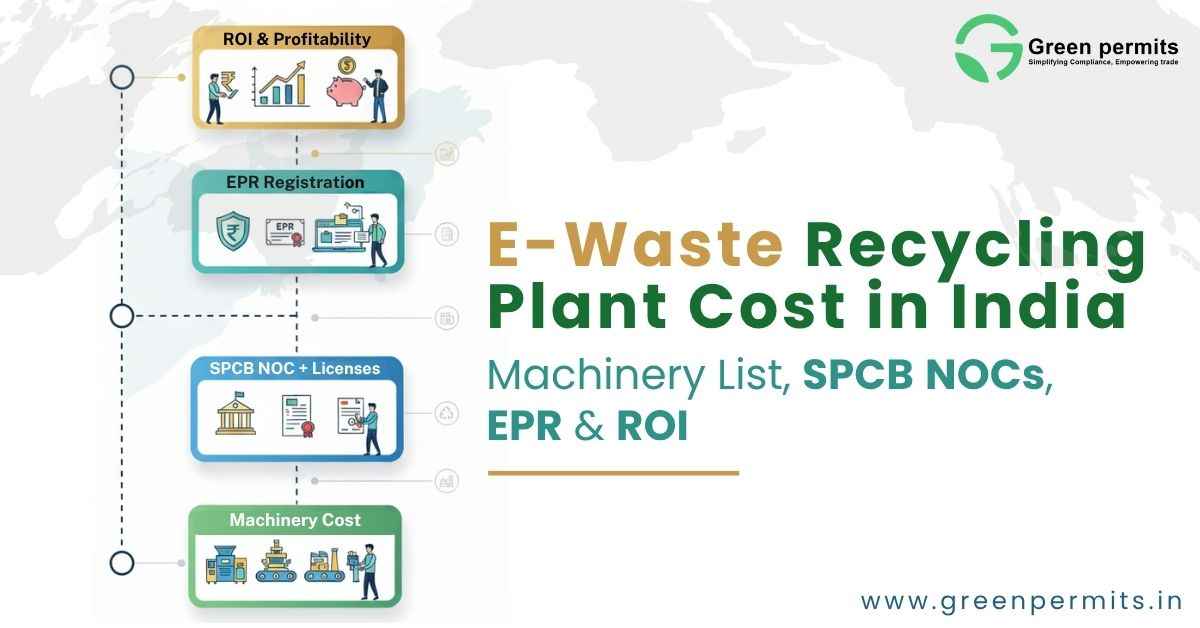
Establishing an e-waste recycling facility requires investment in infrastructure, recycling technology, and specialized machinery. The plant typically includes equipment for manual dismantling, shredding, separation, and recovery of metals and other reusable materials from electronic components.
Investment costs vary depending on plant capacity, automation level, and technology used for material recovery. Businesses must also allocate funds for pollution control systems, storage areas for hazardous waste, and skilled technical manpower.
With the growing demand for recycled metals and electronic components, e-waste recycling plants offer strong business potential for entrepreneurs looking to enter the sustainability and recycling sector.
Complete Guide to E-Waste Recycling Plant Setup
If you are planning to start an e-waste recycling facility, understanding the plant setup cost, required licenses, machinery, and expected return on investment (ROI) is essential before making an investment decision.
Read the complete guide here:
👉 https://www.greenpermits.in/e-waste-recycling-plant-cost-in-india-machinery-roi/
📞 Start Your E-Waste Recycling Project with Expert Guidance
Setting up an e-waste recycling plant requires environmental approvals, regulatory compliance, and proper plant planning. Green Permits Consulting provides end-to-end assistance for CPCB registrations, EPR compliance, and recycling plant setup across India.
🌐 Website: https://www.greenpermits.in
📞 Phone: +91 78350 06182
📧 Email: wecare@greenpermits.in
Book a Consultation with Green Permits today and launch your e-waste recycling business with complete regulatory compliance.
India is one of the fastest-growing markets for electronic devices, including smartphones, laptops, televisions, and industrial electronics. With the rapid increase in technology usage, the country is generating a significant amount of electronic waste (e-waste) every year. Improper disposal of this waste can lead to serious environmental and health hazards due to toxic materials such as lead, mercury, and cadmium present in electronic components.
E-waste recycling plays a crucial role in recovering valuable materials such as gold, silver, copper, aluminum, and rare metals from discarded electronics. Proper recycling helps reduce environmental pollution, conserve natural resources, and support India’s transition toward a sustainable circular economy.
Regulatory Framework for E-Waste Recycling Plants
Setting up an e-waste recycling plant in India requires compliance with environmental regulations notified by the government. The industry is regulated under the E-Waste Management Rules, which mandate proper collection, dismantling, recycling, and reporting of electronic waste.
Businesses involved in recycling must obtain registration from the Central Pollution Control Board (CPCB) and authorization from the State Pollution Control Board (SPCB). Companies must also comply with the Extended Producer Responsibility (EPR) framework, which requires producers to ensure responsible recycling of electronic waste generated from their products.
Following these regulations ensures environmentally sound recycling practices and prevents hazardous materials from harming the environment.
Investment and Machinery for an E-Waste Recycling Plant
Establishing an e-waste recycling facility requires investment in infrastructure, recycling technology, and specialized machinery. The plant typically includes equipment for manual dismantling, shredding, separation, and recovery of metals and other reusable materials from electronic components.
Investment costs vary depending on plant capacity, automation level, and technology used for material recovery. Businesses must also allocate funds for pollution control systems, storage areas for hazardous waste, and skilled technical manpower.
With the growing demand for recycled metals and electronic components, e-waste recycling plants offer strong business potential for entrepreneurs looking to enter the sustainability and recycling sector.
Complete Guide to E-Waste Recycling Plant Setup
If you are planning to start an e-waste recycling facility, understanding the plant setup cost, required licenses, machinery, and expected return on investment (ROI) is essential before making an investment decision.
Read the complete guide here:
👉 https://www.greenpermits.in/e-waste-recycling-plant-cost-in-india-machinery-roi/
📞 Start Your E-Waste Recycling Project with Expert Guidance
Setting up an e-waste recycling plant requires environmental approvals, regulatory compliance, and proper plant planning. Green Permits Consulting provides end-to-end assistance for CPCB registrations, EPR compliance, and recycling plant setup across India.
🌐 Website: https://www.greenpermits.in
📞 Phone: +91 78350 06182
📧 Email: wecare@greenpermits.in
Book a Consultation with Green Permits today and launch your e-waste recycling business with complete regulatory compliance.
Growing Need for E-Waste Recycling in India
India is one of the fastest-growing markets for electronic devices, including smartphones, laptops, televisions, and industrial electronics. With the rapid increase in technology usage, the country is generating a significant amount of electronic waste (e-waste) every year. Improper disposal of this waste can lead to serious environmental and health hazards due to toxic materials such as lead, mercury, and cadmium present in electronic components.
E-waste recycling plays a crucial role in recovering valuable materials such as gold, silver, copper, aluminum, and rare metals from discarded electronics. Proper recycling helps reduce environmental pollution, conserve natural resources, and support India’s transition toward a sustainable circular economy.
Regulatory Framework for E-Waste Recycling Plants
Setting up an e-waste recycling plant in India requires compliance with environmental regulations notified by the government. The industry is regulated under the E-Waste Management Rules, which mandate proper collection, dismantling, recycling, and reporting of electronic waste.
Businesses involved in recycling must obtain registration from the Central Pollution Control Board (CPCB) and authorization from the State Pollution Control Board (SPCB). Companies must also comply with the Extended Producer Responsibility (EPR) framework, which requires producers to ensure responsible recycling of electronic waste generated from their products.
Following these regulations ensures environmentally sound recycling practices and prevents hazardous materials from harming the environment.
Investment and Machinery for an E-Waste Recycling Plant
Establishing an e-waste recycling facility requires investment in infrastructure, recycling technology, and specialized machinery. The plant typically includes equipment for manual dismantling, shredding, separation, and recovery of metals and other reusable materials from electronic components.
Investment costs vary depending on plant capacity, automation level, and technology used for material recovery. Businesses must also allocate funds for pollution control systems, storage areas for hazardous waste, and skilled technical manpower.
With the growing demand for recycled metals and electronic components, e-waste recycling plants offer strong business potential for entrepreneurs looking to enter the sustainability and recycling sector.
Complete Guide to E-Waste Recycling Plant Setup
If you are planning to start an e-waste recycling facility, understanding the plant setup cost, required licenses, machinery, and expected return on investment (ROI) is essential before making an investment decision.
Read the complete guide here:
👉 https://www.greenpermits.in/e-waste-recycling-plant-cost-in-india-machinery-roi/
📞 Start Your E-Waste Recycling Project with Expert Guidance
Setting up an e-waste recycling plant requires environmental approvals, regulatory compliance, and proper plant planning. Green Permits Consulting provides end-to-end assistance for CPCB registrations, EPR compliance, and recycling plant setup across India.
🌐 Website: https://www.greenpermits.in
📞 Phone: +91 78350 06182
📧 Email: wecare@greenpermits.in
Book a Consultation with Green Permits today and launch your e-waste recycling business with complete regulatory compliance.
0 Reacties
0 aandelen
4K Views
0 voorbeeld

 English
 Arabic
 French
 Spanish
 Portuguese
 Deutsch
 Turkish
 Italiano
 Russian
 Romaian
 Portuguese (Brazil)
 Greek
Greek
