


 Ban & Monetization Policy
 MyLiveRoom Rewards Program Rules & Eligibility
Why Choose CenwanMachine as Your Box Folder Gluer Machine for Spray or Wheel Gluing on Recycled Material
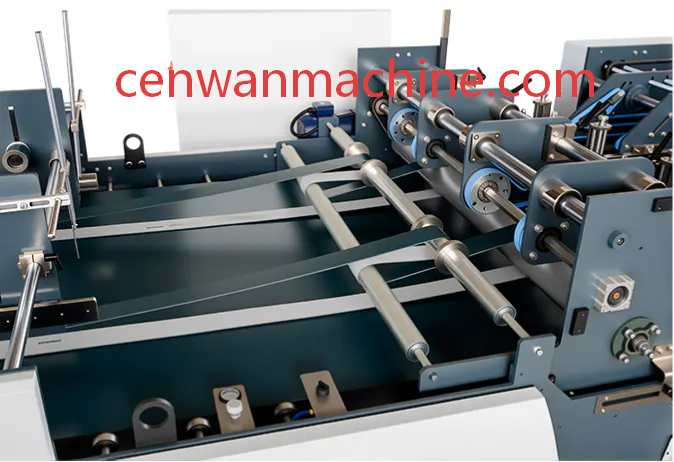
Which glue application system (wheel, spray, or extrusion) works best on a Box Folder Gluer Machine for recycled paperboard? This question challenges many packaging producers. Recycled board presents unique surface characteristics. Its porous fibers absorb adhesive unevenly. Its inconsistent coating affects bond strength. A Box Folder Gluer Machine from cenwanmachine by Chengwang addresses each variable. Cenwan Machinery operates from Wenzhou, China. The company holds CE and ISO certifications. Its factory spans over ten thousand square meters. Cenwan serves clients across forty countries worldwide. A Box Folder Gluer Machine must adapt to recycled material behavior. Without system selection, production faces open boxes and adhesive waste. Cenwanmachine provides three distinct glue systems. Each system solves a specific recycled board problem.
Wheel gluing remains a traditional choice. A rotating wheel picks up glue from a reservoir. It transfers adhesive to the board flap through direct contact. This system works well on clean, smooth recycled board with consistent thickness. The wheel applies a continuous film of glue. The film thickness adjusts through doctor blade pressure. Wheel gluing suits high-volume runs of straight-line boxes. However, recycled board with dusty surfaces or variable porosity causes issues. Dust clogs the wheel surface. Porous areas pull excess glue from the wheel. The result becomes uneven transfer and stringing. Cenwanmachine engineers recommend wheel gluing only for premium recycled board with sealed surfaces.
Spray gluing offers a non-contact solution. A nozzle sprays atomized adhesive onto the board flap. This method handles irregular surfaces well. The spray pattern adjusts from narrow lines to wide fans. Spray gluing works on recycled board with textured finishes or visible fiber bundles. The lack of physical contact prevents dust buildup on application hardware. Spray systems also reduce glue consumption compared to wheel methods. However, spray gluing requires careful ventilation. Atomized particles drift in open air. The system needs regular nozzle cleaning to prevent partial clogging. Cenwanmachine installs spray systems with enclosed heads and extraction ports. This configuration maintains shop floor cleanliness while processing recycled board.
Extrusion gluing provides the most controlled application. A precision valve releases a bead of glue directly onto the flap. The bead width and volume adjust through software settings. Extrusion works best on recycled board with deep valleys or pronounced texture. The glue bead bridges uneven surfaces. It creates a continuous bond line despite fiber gaps. Extrusion also handles high-viscosity adhesives designed for porous substrates. These adhesives penetrate slowly, allowing assembly time before initial set. The drawback involves speed. Extrusion runs slower than wheel or spray systems. Each glue bead requires accurate placement. Misalignment causes missed bond areas. Cenwanmachine integrates vision guidance with extrusion valves. Cameras locate each flap edge. The system places glue beads within half a millimeter of the target.
Recycled paperboard varies by source. Post-consumer waste contains mixed fibers. Industrial scrap includes different coatings. A single glue system rarely suits every recycled grade. Cenwanmachine solves this through modular glue stations. A single box folder gluer machine accepts interchangeable wheel, spray, or extrusion heads. Changeover takes thirty minutes. The operator selects the system based on the day’s recycled board batch. For example, a clean recycled carton stock from box plant scrap runs on the wheel station. A dusty, low-grade recycled board from municipal collection runs on the spray station. A textured, high-fiber recycled sheet runs on extrusion. This flexibility eliminates dedicated machines for each glue type.
Customer feedback confirms this approach. A packaging company in Venezuela runs Cenwan’s model 650 folder-gluer on recycled board. The production manager reports smooth adhesion without open flaps. A technician in Pakistan notes that glue waste dropped significantly after switching to Cenwan’s spray system on recycled materials. Both users credit the machine’s adjustable glue parameters. Cenwan provides a glue selection chart with each shipment. The chart lists recycled board types and recommended systems. Operators follow this guide during setup. The result becomes consistent box closure at rated machine speed.
The choice among wheel, spray, and extrusion depends on three recycled board properties: surface porosity, dust content, and fiber uniformity. Wheel gluing suits low-porosity, clean boards. Spray gluing handles dusty or textured boards. Extrusion gluing conquers uneven, high-fiber boards. Cenwanmachine equips each box folder gluer machine with two of these three systems as standard. A third system installs as an option. Buyers specify their typical recycled board source during ordering. Cenwan engineers then recommend the primary and secondary systems.
For stereo box production on recycled paperboard, Cenwan offers specialized configurations. https://www.cenwanmachine.com/product/folder-gluer-for-stereo-box/ shows a folder gluer designed for rigid three-dimensional packaging. This machine includes an extrusion head as standard because stereo boxes require strong, precise glue beads on thick recycled board. The same principle applies to standard folding cartons. Matching glue system to recycled board characteristics prevents production stops. Does your current box folder gluer machine offer interchangeable wheel, spray, and extrusion heads for different recycled grades? If not, Cenwanmachine provides the adaptability your packaging line requires.
 Portuguese (Brazil)
 English
 Arabic
 French
 Spanish
 Portuguese
 Deutsch
 Turkish
 Dutch
Dutch
 Italiano
 Russian
 Romaian
 Greek
Greek
