


 Ban & Monetization Policy
 MyLiveRoom Rewards Program Rules & Eligibility
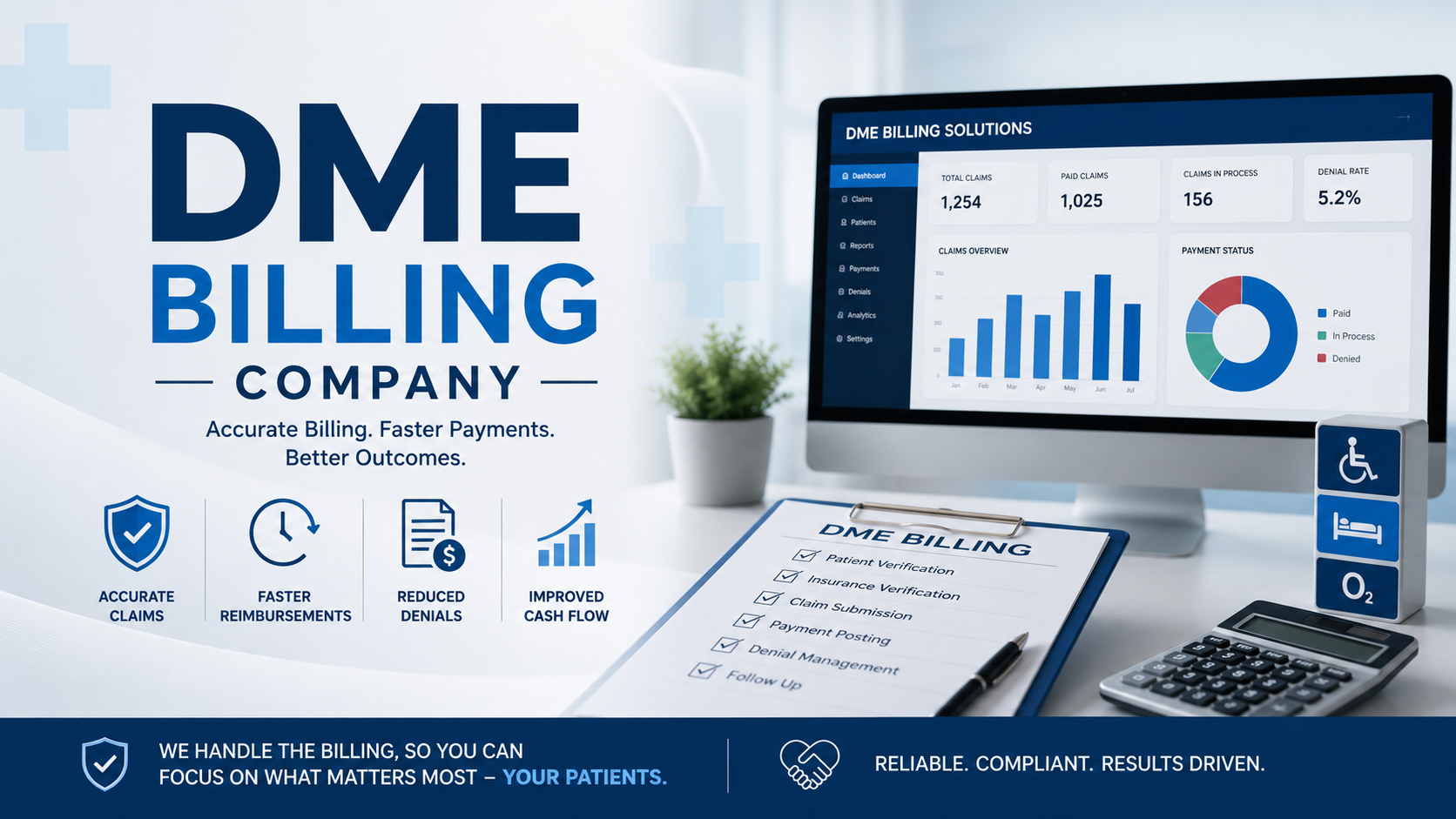
DME Billing Services: A Complete Guide for Healthcare Providers
Introduction
In today’s fast-paced healthcare industry, managing billing processes efficiently is just as important as delivering quality patient care. Among the many specialized billing areas, DME billing services play a crucial role in ensuring providers get accurate and timely reimbursements for Durable Medical Equipment (DME) claims.
DME includes essential medical equipment such as wheelchairs, oxygen supplies, hospital beds, walkers, and other devices prescribed for patient use at home. While these items significantly improve patient comfort and recovery, billing for them is highly complex due to strict payer rules, documentation requirements, and frequent policy changes.
This is where professional DME billing services become essential. They help healthcare providers, suppliers, and medical organizations streamline claim submissions, reduce denials, and maintain compliance with insurance guidelines. Without a structured billing process, providers often face delayed payments and revenue leakage.
In this blog, we will explore what DME billing services are, common challenges, benefits of outsourcing, and how the entire process works in real-time healthcare environments.
What Are DME Billing Services?
DME billing services refer to the specialized medical billing process focused on Durable Medical Equipment claims. These services ensure that every piece of equipment provided to a patient is properly documented, coded, billed, and reimbursed by insurance companies or government payers.
Unlike standard medical billing, DME billing involves additional layers of verification. Each claim must meet strict criteria such as medical necessity, prescription validity, supplier accreditation, and correct coding using HCPCS (Healthcare Common Procedure Coding System).
A typical DME billing service includes:
- Patient eligibility verification
- Insurance authorization for equipment
- Accurate coding and claim submission
- Documentation review (doctor’s prescription, medical necessity proof)
- Claims tracking and follow-up
- Denial management and resubmission
- Payment posting and reporting
The main goal of DME billing services is to ensure providers receive maximum reimbursement with minimal delays while staying compliant with payer regulations.
Since DME claims are frequently audited, accuracy is extremely important. Even a small error in documentation or coding can lead to claim rejection or payment delays.
Challenges in DME Billing Services
Handling DME billing in-house can be overwhelming for many healthcare providers due to its complex nature. Several challenges contribute to inefficiencies and revenue loss if not managed properly.
1. Strict Documentation Requirements
Insurance companies require detailed documentation before approving any DME claim. This includes physician prescriptions, proof of medical necessity, and patient history. Missing or incomplete documents often result in claim denials.
2. Frequent Policy Changes
Payers frequently update their billing rules and coverage guidelines. Keeping up with these changes manually can be difficult, leading to outdated billing practices and rejected claims.
3. Complex Coding System
DME billing uses specific HCPCS codes, modifiers, and payer-specific requirements. Incorrect coding is one of the most common reasons for claim rejection.
4. High Denial Rates
Due to strict rules and manual errors, DME claims often face higher denial rates compared to other medical billing categories. Reworking denied claims increases administrative workload and delays revenue cycles.
5. Authorization Delays
Many DME items require prior authorization before being delivered. Delays in approvals can slow down the entire billing cycle and impact cash flow.
These challenges highlight why many providers choose to rely on professional DME billing services to maintain financial stability and operational efficiency.
Benefits of Outsourcing DME Billing Services
Outsourcing DME billing services has become a strategic move for healthcare providers looking to optimize revenue and reduce administrative burden. Here are some key benefits:
Improved Revenue Cycle Management
Professional billing teams ensure claims are submitted correctly the first time, reducing rejections and improving cash flow. This leads to faster reimbursements and a more stable revenue cycle.
Reduced Administrative Workload
By outsourcing billing tasks, healthcare staff can focus more on patient care instead of spending time on paperwork, coding, and claim follow-ups.
Higher Accuracy in Claims
Experienced billing professionals are well-versed in coding standards and payer requirements. This reduces errors and ensures cleaner claim submissions.
Faster Claim Processing
Dedicated DME billing teams use advanced billing software and workflows to process claims quickly and efficiently, reducing turnaround time.
Compliance Assurance
Healthcare billing regulations are constantly evolving. Outsourcing ensures compliance with HIPAA, Medicare, Medicaid, and private payer guidelines.
Better Denial Management
Professional billing services actively track denied claims, identify root causes, and resubmit them efficiently to recover lost revenue.
Overall, outsourcing DME billing services helps providers achieve financial stability while reducing operational stress.
How DME Billing Services Work
Understanding the workflow of DME billing services helps providers see how each step contributes to successful reimbursement.
Step 1: Patient Registration and Eligibility Verification
The process begins with verifying patient insurance coverage and eligibility for DME benefits. This ensures that the prescribed equipment is covered under the patient’s plan.
Step 2: Prescription and Documentation Review
A valid physician’s prescription and supporting medical records are collected. These documents prove the necessity of the equipment.
Step 3: Prior Authorization
Many insurance companies require prior approval before DME items are delivered. Billing teams handle authorization requests and ensure timely approvals.
Step 4: Coding and Charge Entry
Accurate HCPCS codes and modifiers are assigned based on the equipment provided. Proper coding is critical to avoid claim rejection.
Step 5: Claim Submission
Once documentation and coding are complete, claims are submitted electronically to insurance payers.
Step 6: Payment Posting
After approval, payments are posted to the provider’s account, and any discrepancies are reviewed.
Step 7: Denial Management and Follow-up
If a claim is denied, billing specialists analyze the reason, correct errors, and resubmit the claim for reimbursement.
Step 8: Reporting and Analytics
Regular reports are generated to track revenue performance, claim status, and denial trends. This helps providers make informed business decisions.
This structured workflow ensures that DME billing services operate efficiently and deliver consistent financial results.
Frequently Asked Questions (FAQ)
1. What are DME billing services?
DME billing services involve managing insurance claims for Durable Medical Equipment such as wheelchairs, oxygen tanks, and hospital beds. These services ensure proper coding, documentation, and reimbursement.
2. Why is DME billing more complex than regular medical billing?
DME billing requires strict documentation, prior authorization, and specific coding guidelines, making it more complex than standard medical billing processes.
3. How do DME billing services help reduce claim denials?
They ensure accurate coding, complete documentation, and timely submission, which significantly reduces errors that lead to claim rejections.
4. Can small providers benefit from outsourcing DME billing services?
Yes, small clinics and suppliers benefit greatly as outsourcing reduces administrative workload and improves cash flow without requiring in-house billing staff.
5. What types of equipment are included in DME billing?
Common DME items include wheelchairs, oxygen equipment, walkers, hospital beds, nebulizers, and other home-use medical devices.
Conclusion
Efficient billing is the backbone of any successful healthcare operation, and DME billing services play a critical role in ensuring providers receive timely and accurate reimbursements for medical equipment claims. With strict documentation requirements, complex coding systems, and frequent policy updates, managing DME billing in-house can be challenging.
By outsourcing these services, healthcare providers can reduce errors, improve revenue cycle performance, and focus more on patient care rather than administrative burdens.
Whether you are a clinic, supplier, or healthcare organization, investing in professional Medical Billing Services can significantly improve your financial stability and operational efficiency while ensuring compliance with industry standards.
 Spanish
 English
 Arabic
 French
 Portuguese
 Deutsch
 Turkish
 Dutch
Dutch
 Italiano
 Russian
 Romaian
 Portuguese (Brazil)
 Greek
Greek
