


 Ban & Monetization Policy
 MyLiveRoom Rewards Program Rules & Eligibility
DME Medical Billing Companies: Why They Are Essential for Durable Medical Equipment Providers
Introduction
Durable Medical Equipment (DME) plays a critical role in modern healthcare, helping patients manage chronic conditions, recover from surgeries, and maintain independence at home. However, behind every successful DME provider lies a complex and often challenging billing process. From insurance verification to claim submission and reimbursement follow-ups, the administrative workload can quickly become overwhelming.
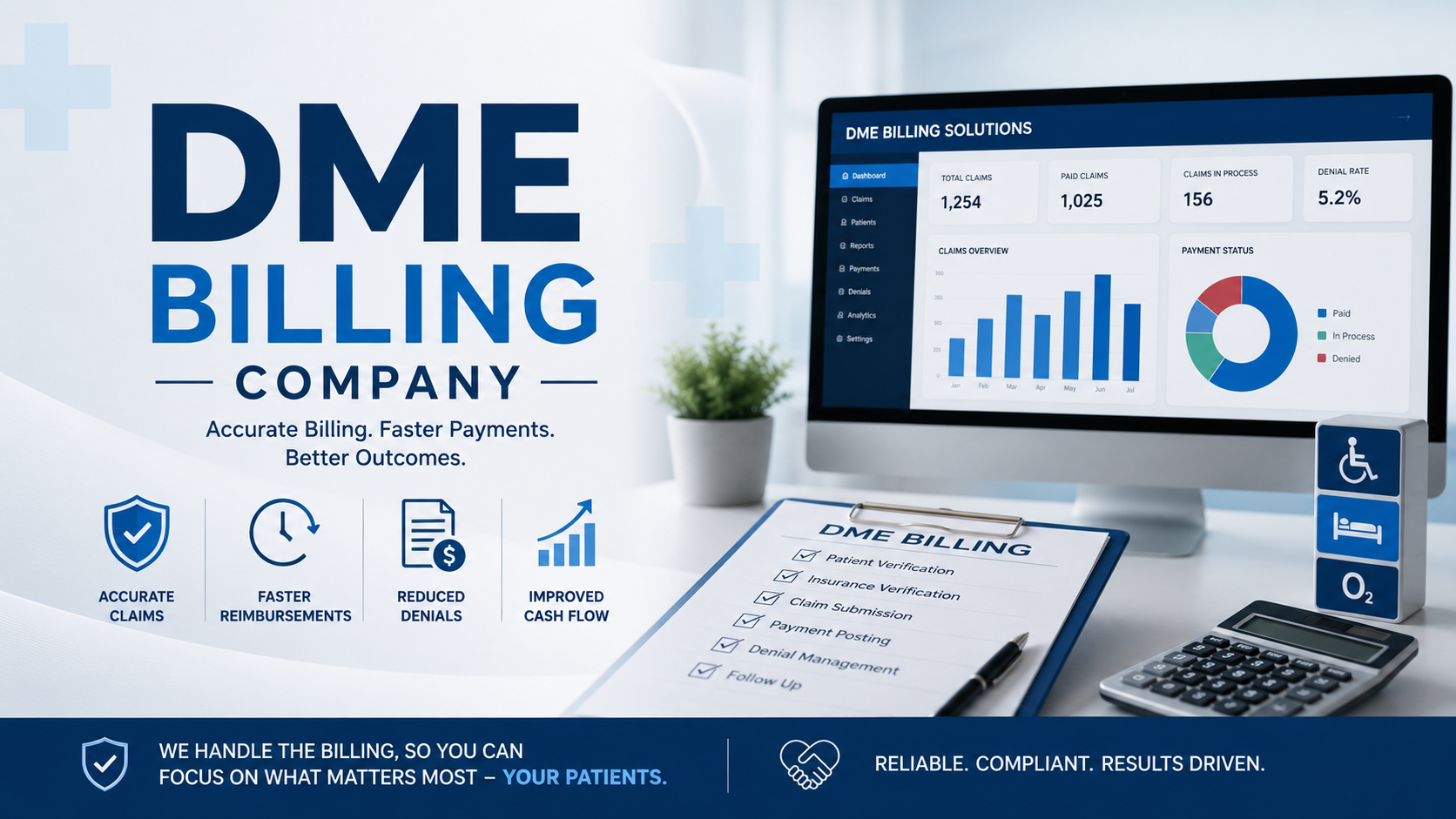
This is where DME medical billing companies become highly valuable. These specialized billing partners understand the unique requirements of DME coding, compliance regulations, and payer guidelines. They help providers reduce claim denials, speed up reimbursements, and maintain financial stability in a highly regulated industry.
In this blog, we’ll explore how DME billing companies operate, why they are important, and what benefits they bring to healthcare providers looking to streamline their revenue cycle.
Understanding the Role of DME Medical Billing Companies
DME billing is not the same as general medical billing. It involves specific coding systems, documentation requirements, and payer rules that change frequently. Even small errors in claim submission can lead to delays or denials.
DME medical billing companies specialize in handling these complexities. Their core responsibilities typically include:
- Insurance eligibility verification before equipment delivery
- Accurate coding using HCPCS Level II codes
- Preparing and submitting clean claims to insurance payers
- Managing prior authorizations for high-cost equipment
- Tracking claim status and handling denials or rejections
- Ensuring compliance with Medicare and Medicaid guidelines
- Maintaining proper documentation for audits
One of the biggest advantages of working with these companies is their deep understanding of payer-specific rules. For example, Medicare has strict guidelines for wheelchairs, oxygen equipment, CPAP machines, and other durable goods. Missing even one document can result in claim rejection. DME billing experts ensure everything is submitted correctly the first time.
By outsourcing this process, providers can focus more on patient care instead of administrative paperwork.
Key Challenges in DME Billing and How Companies Solve Them
DME providers face several challenges that can impact cash flow and operational efficiency. Let’s look at the most common issues and how professional billing companies address them.
1. Frequent Claim Denials
One of the biggest challenges in DME billing is claim denial. These denials often occur due to missing documentation, incorrect coding, or lack of medical necessity proof.
DME medical billing companies reduce denial rates by:
- Conducting pre-bill audits
- Ensuring complete documentation before submission
- Using correct and updated coding standards
- Following payer-specific guidelines strictly
2. Complex Insurance Requirements
Each insurance payer has its own set of rules for approving DME claims. Medicare, Medicaid, and private insurers all differ in their requirements.
Billing companies stay updated with these changes and ensure compliance by:
- Regular training of billing specialists
- Maintaining updated payer rule databases
- Verifying eligibility and coverage in advance
3. Delayed Reimbursements
Delayed payments can seriously affect a DME provider’s cash flow. These delays often happen due to incomplete claims or slow follow-ups.
Billing companies improve turnaround time by:
- Submitting clean claims faster
- Following up aggressively with payers
- Resubmitting corrected claims quickly
- Tracking every claim until payment is received
4. Documentation Errors
DME claims require detailed documentation such as physician prescriptions, medical necessity notes, and delivery confirmation.
Billing experts ensure:
- Proper documentation is collected upfront
- Files are organized for audits
- Missing information is requested before submission
By eliminating these common errors, DME medical billing companies significantly improve approval rates and revenue consistency.
Benefits of Outsourcing to DME Medical Billing Companies
Outsourcing billing operations has become a strategic move for many DME providers. It is not just about reducing workload—it’s about improving overall business performance.
Improved Revenue Cycle Management
One of the most important benefits is better revenue cycle control. Billing companies optimize each stage of the billing process—from patient intake to final payment collection. This results in fewer delays and higher collections.
Cost Efficiency
Hiring and training an in-house billing team can be expensive. Outsourcing eliminates costs related to:
- Staff salaries and benefits
- Training and certification
- Billing software and infrastructure
Instead, providers pay a fixed service fee while gaining access to a full team of experts.
Higher Accuracy and Fewer Errors
Billing errors can lead to revenue loss and compliance issues. Professional billing teams use advanced systems and trained coders to ensure accuracy in every claim submitted.
Regulatory Compliance
Healthcare regulations are constantly changing, especially in Medicare and Medicaid billing. DME billing companies stay updated with:
- CMS guidelines
- HIPAA compliance rules
- State-specific billing regulations
This reduces the risk of audits and penalties.
Scalability and Business Growth
As a DME business grows, so does the volume of claims. Outsourcing allows providers to scale without worrying about hiring additional staff or expanding infrastructure.
Better Focus on Patient Care
When administrative burdens are reduced, healthcare providers can focus more on delivering quality patient care. This improves patient satisfaction and business reputation.
What to Look for in DME Medical Billing Companies
Choosing the right billing partner is crucial for long-term success. Not all billing companies offer the same level of expertise or service quality.
Here are some important factors to consider:
Industry Experience
Always choose a company with proven experience in DME billing. They should understand equipment categories such as:
- Mobility aids (wheelchairs, walkers)
- Respiratory equipment (oxygen tanks, CPAP machines)
- Orthopedic supports
- Home medical supplies
Technology and Automation
Modern billing companies use advanced billing software that ensures:
- Real-time claim tracking
- Automated eligibility checks
- Error detection before submission
Transparency in Reporting
A reliable billing partner should provide regular reports such as:
- Claim status updates
- Revenue cycle reports
- Denial analysis reports
Dedicated Support Team
Customer support plays a key role in smooth operations. A dedicated account manager or billing team ensures faster communication and issue resolution.
Compliance Standards
Make sure the company follows HIPAA guidelines and maintains strict data security protocols to protect patient information.
By evaluating these factors, DME providers can choose a partner that truly supports their financial and operational goals.
The Future of DME Medical Billing
The healthcare billing industry is evolving rapidly with automation, artificial intelligence, and data-driven systems. DME billing is also becoming more efficient and technology-focused.
In the coming years, we can expect:
- Faster claim processing through AI-based tools
- Increased automation in eligibility verification
- Reduced manual errors through smart coding systems
- Improved payer communication platforms
Despite these advancements, human expertise will remain essential. Complex cases, compliance interpretation, and denial management still require skilled professionals who understand the healthcare ecosystem deeply.
This combination of technology and expertise will shape the future of DME medical billing companies, making them even more valuable to healthcare providers.
Frequently Asked Questions (FAQ)
1. What do DME medical billing companies do?
They handle the complete billing process for durable medical equipment providers, including coding, claim submission, denial management, and reimbursement tracking.
2. Why is DME billing more complex than regular medical billing?
DME billing requires strict documentation, prior authorization, and specific coding standards that vary by insurance payer, making it more detailed and error-prone.
3. How do billing companies reduce claim denials?
They ensure accurate coding, complete documentation, eligibility verification, and follow payer-specific guidelines before submitting claims.
4. Is outsourcing DME billing cost-effective?
Yes, outsourcing reduces operational costs, eliminates staffing expenses, and improves overall revenue collection efficiency.
5. Can small DME providers benefit from billing companies?
Absolutely. Small providers often gain the most because outsourcing helps them manage billing without investing in a full in-house team.
Conclusion
The healthcare industry continues to evolve, and DME providers must adapt to increasing administrative and regulatory demands. Managing billing in-house can be time-consuming, error-prone, and expensive. This is why many providers are turning to DME medical billing companies for support.
These specialized partners bring expertise, technology, and efficiency to the revenue cycle process. From reducing claim denials to improving cash flow and ensuring compliance, they play a vital role in financial success.
Ultimately, outsourcing billing is not just a cost-saving decision—it is a strategic move toward better operational efficiency and long-term growth.
For DME providers looking to streamline their revenue cycle and improve reimbursements, partnering with professional Medical Billing Services can make a significant difference in overall performance and stability.
 Spanish
 English
 Arabic
 French
 Portuguese
 Deutsch
 Turkish
 Dutch
Dutch
 Italiano
 Russian
 Romaian
 Portuguese (Brazil)
 Greek
Greek
