


 Ban & Monetization Policy
 MyLiveRoom Rewards Program Rules & Eligibility
What Affects Pantyhose Stability On Body?
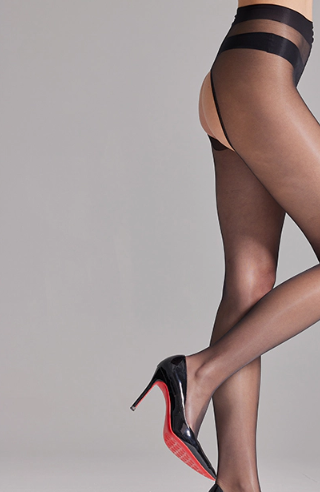
A non slip pantyhose structure depends on balanced elastic force across the waistband and hip area. During walking, sitting, and bending, the waist section experiences repeated compression and release. If tension distribution becomes uneven, certain zones begin to fold inward, which gradually leads to rolling or downward sliding. This often starts around curved body areas such as the lower stomach and hip transitions where pressure changes are more frequent.
Elastic recovery plays a major role in long-term stability. As non slip pantyhose are worn for several hours, continuous stretching causes gradual fatigue in the elastic fibers. When recovery force weakens temporarily, the waistband may lose uniform support and begin curling. This effect becomes more noticeable in tight-fitting designs or garments with narrow waist structures that concentrate stress in a smaller area.
Surface grip systems such as silicone strips can improve friction between fabric and skin, but they cannot fully control structural imbalance. In non slip pantyhose, rolling may still occur if the waistband bends repeatedly or if moisture and body heat affect adhesion performance. In some cases, excessive grip pressure can even create edge curling by concentrating force in limited contact points instead of distributing it evenly.
Fabric weight also influences stability. Heavier leg sections created by dense knitting or compression designs generate additional downward force during movement. This force transfers to the waistband, gradually increasing the likelihood of folding, especially during long periods of activity. Repeated washing further affects performance by slowly reducing elastic recovery and altering fabric response over time.
 Turkish
 English
 Arabic
 French
 Spanish
 Portuguese
 Deutsch
 Dutch
Dutch
 Italiano
 Russian
 Romaian
 Portuguese (Brazil)
 Greek
Greek
