


 Ban & Monetization Policy
 MyLiveRoom Rewards Program Rules & Eligibility
Does Your Auto Dimming Helmet Support Plasma Arc Cutting? Welding-helmet Thinks So.
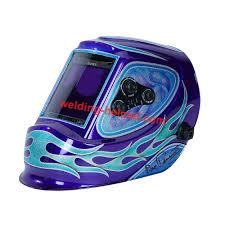
A workshop fabricator moves from a welding station to a grinding bench, then prepares a plasma cutter for metal profiling. Each task produces intense light, sparks, and airborne particles that threaten eye safety. The worker reaches for a helmet, but one question arises before the work begins. Can an auto dimming helmet provide effective protection across all these operations, or does each process demand a separate face shield? The answer lies in understanding how modern helmet designs accommodate diverse applications, and Welding-helmet, operated by Taizhou Ruiling Optoelectronics Technology Co., Ltd., offers equipment built for this versatility.
The fundamental capability of an Auto Dimming Helmet rests on its auto-darkening filter (ADF) technology. This filter contains liquid crystals that darken instantly when sensors detect the intense ultraviolet and infrared radiation from an electric arc. The reaction occurs within fractions of a second, protecting the eyes from harmful exposure. However, grinding and plasma cutting present different light characteristics than welding. Grinding produces sparks with lower light intensity, while plasma cutting generates a bright arc similar to welding but with distinct properties. The helmet's sensors and filter must respond appropriately to each condition to provide adequate protection -8.
The presence of a dedicated grinding mode distinguishes versatile Auto Dimming Helmet models from single-purpose units. This mode locks the filter in a light state, typically shade 3 or 4, which provides sufficient protection from flying particles while maintaining clear visibility of the workpiece -2-3-5. Without this feature, the helmet might darken unnecessarily during grinding, obscuring the operator's view of the material surface. Manufacturers like Welding-helmet incorporate this mode as a standard function on their versatile helmets, allowing seamless transition between welding and grinding without removing the helmet or switching to a separate face shield -1-5-9.
Plasma cutting requires specific considerations that an Auto Dimming Helmet must address. The plasma arc produces extremely bright light and intense UV radiation, demanding dark shades typically ranging from DIN 9 to 13. The helmet's filter must provide adequate shade coverage for these high-intensity operations -7-8. Additionally, plasma cutting often involves different angles and working positions than welding, requiring the helmet's sensors to maintain reliable detection across varied orientations. Quality helmets incorporate multiple sensors positioned to capture the arc from different directions, ensuring consistent darkening regardless of head position -1-9.
The optical clarity of the Auto Dimming Helmet affects its effectiveness across all applications. High-quality filters provide clear vision in the light state, enabling precise grinding and accurate material positioning. The dark state must offer consistent shading without distortion, allowing the operator to see the work area clearly during plasma cutting and welding. Helmet models with optical class ratings indicate their visual quality, with class 1 representing the highest clarity across categories -1-9. This optical performance directly impacts work quality and eye comfort during extended use.
Sensitivity adjustments on the Auto Dimming Helmet allow operators to fine-tune the filter's response to different light conditions. Grinding operations produce intermittent sparks that might trigger unwanted darkening if the sensitivity remains too high. Reducing the sensitivity prevents this false triggering, maintaining clear vision throughout the grinding process. Conversely, plasma cutting requires prompt darkening to protect against the bright arc, often demanding higher sensitivity settings. The ability to adjust sensitivity quickly without removing the helmet enables efficient task switching -8-10.
Delay time control represents another essential feature for multi-process Auto Dimming Helmet use. The delay setting determines how quickly the filter returns to the light state after the arc extinguishes. Plasma cutting and welding often benefit from a short delay to avoid missing the workpiece after each cut or weld. However, grinding requires the filter to remain in the light state continuously, which the grinding mode accomplishes by eliminating the delay entirely. These adjustable parameters give operators control over the helmet's behavior for each specific task -8-10.
The physical design and weight of the Auto Dimming Helmet influence its practicality for grinding and plasma cutting operations. Grinding often involves looking downward and moving the head frequently, requiring a lightweight helmet with comfortable headgear to prevent neck fatigue. Plasma cutting may require the operator to work in confined spaces, necessitating a compact helmet profile -3-5. The helmet's balance and fit determine whether the worker can wear it comfortably through an entire shift while moving between different workstations.
Durability considerations affect the long-term value of an Auto Dimming Helmet used across multiple applications. Grinding produces abrasive dust and sparks that can scratch the outer lens and damage the filter over time. Plasma cutting generates high heat that may affect helmet components. A well-constructed helmet with replaceable outer lenses and heat-resistant materials withstands these demanding conditions, protecting the investment in the equipment. The availability of replacement parts extends the service life and maintains protection levels -10.
Welding-helmet provides equipment designed for this multi-process versatility. The helmets incorporate grinding mode, adjustable sensitivity, and appropriate shade ranges for plasma cutting applications. The manufacturer's experience in optoelectronics ensures reliable sensor performance across varied lighting conditions. At https://www.welding-helmet.com/, visitors find detailed product specifications that inform selection for specific workshop needs. Understanding these capabilities transforms the Auto Dimming Helmet from a single-purpose welding tool into a comprehensive face protection system. The thoughtful fabricator evaluates the full range of shop tasks and selects a helmet that supports each operation effectively. After all, a versatile helmet reduces equipment costs, saves storage space, and simplifies workflow—but only if it performs reliably across every application.
 Italiano
 English
 Arabic
 French
 Spanish
 Portuguese
 Deutsch
 Turkish
 Dutch
Dutch
 Russian
 Romaian
 Portuguese (Brazil)
 Greek
Greek
