


 Ban & Monetization Policy
 MyLiveRoom Rewards Program Rules & Eligibility
Is Your Right Angle Gear Box Motor from Zpgearmotor Properly Aligned
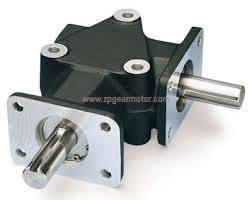
Does the input shaft alignment precision affect the long-term reliability of a Right Angle Gear Box Motor? This question confronts every maintenance engineer and equipment designer during installation planning. The input shaft serves as the critical interface between the prime mover—typically an electric motor—and the gearbox's internal gearing. Any angular or offset deviation from the ideal coaxial position transfers unwanted forces into the gear train. These forces manifest as increased gear tooth loading, uneven bearing stress, and seal distortion. Over time, even minor misalignment amplifies into measurable performance degradation, elevated operating temperatures, and premature component failure. For industrial applications where continuous operation defines productivity, understanding this relationship separates successful long-term installations from costly, recurring breakdowns. Manufacturers like Ruian Zhanpeng Machinery Co., Ltd., operating under the brand zpgearmotor, engineer their Right Angle Gear Box Motor units with precision machined housings and robust bearing supports, yet even these high-quality components cannot compensate for poor installation alignment practices.
The primary mechanical consequence of misalignment involves uneven load distribution across the gear teeth. In a right angle gear box motor, bevel or worm gears transmit torque through sliding and rolling contact. Proper alignment ensures that the gear mesh occurs across the full tooth face width, distributing the load evenly. Angular misalignment, where the input shaft centerline intersects the gearbox input bore at an angle, concentrates contact pressure on one end of the teeth. This edge loading creates localized stress concentrations that exceed the gear material's yield strength under peak torque conditions. The resulting contact pattern shift initiates micropitting, followed by progressive wear, and ultimately tooth root fatigue cracking. Helical-bevel designs, while inherently forgiving of slight misalignments, still suffer accelerated wear when angular errors exceed a few minutes of arc.
Parallel offset misalignment, where the input shaft centerline remains parallel but displaced from the gearbox bore center, introduces radial forces into the gear train. These radial loads combine with the rotational forces from torque transmission, increasing the net load on the input shaft bearings. Bearings designed for specific radial and axial load capacities now operate outside their optimal loading zone. This overload condition reduces the bearing's calculated L10 life significantly. For example, doubling the radial bearing load can reduce theoretical bearing life by a factor of eight. The bearing cage, rolling elements, and raceways experience accelerated fatigue spalling, leading to increased vibration, noise, and eventual seizure. Lubricant film thickness within the bearing also diminishes under excessive load, promoting metal-to-metal contact and rapid wear.
Seal performance suffers directly from misalignment-related shaft runout and housing distortion. The input shaft seal maintains a dynamic interface between the rotating shaft and stationary housing. Shaft misalignment causes the seal lip to follow an elliptical path, creating uneven contact pressure around the circumference. This non-uniform pressure allows lubricant leakage paths to develop on the low-pressure side while accelerating lip wear on the high-contact side. Contaminants, including dust and moisture, then enter the gearbox through compromised seals, contaminating the lubricant and introducing abrasive particles. This contamination accelerates wear on all internal components, creating a self-reinforcing cycle of degradation. Premature seal failure also necessitates costly downtime for replacement, often requiring complete gearbox disassembly.
Vibration provides the most observable symptom of developing misalignment. The gearbox transmits rotary motion through meshing gears, which inherently produces some vibration at the gear mesh frequency. Misalignment introduces additional vibration at the shaft rotational frequency and its harmonics. These vibrations propagate through the gearbox housing, connected machinery, and mounting structures. Accelerometers mounted on the housing detect increasing overall vibration amplitude and specific frequency peaks corresponding to misalignment conditions. This vibration energy represents wasted mechanical power that converts into heat. The gearbox operating temperature rises, accelerating lubricant oxidation and reducing its viscosity. High temperatures also weaken seal elastomers and cause thermal expansion of components, potentially closing critical clearances and causing internal contact.
Measurement techniques for verifying alignment precision include dial indicator methods and laser alignment systems. Dial indicators mounted on the input shaft or coupling measure radial and axial runout, providing quantitative data on existing misalignment. Laser alignment systems offer greater accuracy, measuring both angular and parallel offset simultaneously. These systems typically specify acceptable misalignment values in thousandths of an inch per inch of coupling diameter or in angular minutes. For right angle gear box motors, manufacturers like zpgearmotor provide maximum allowable misalignment figures in their installation manuals. These values account for the gearbox's specific bearing configurations, gear types, and housing stiffness. Exceeding these limits voids warranty coverage and inevitably shortens service life.
Installation practices significantly influence achieved alignment precision. The gearbox mounting surface must be machined flat and coplanar with the motor mounting base. Thermal expansion during operation requires consideration; the motor and gearbox may expand at different rates, shifting alignment during warm-up. Flexible couplings accommodate minor misalignment but possess finite tolerance limits. Operators often mistakenly assume that using a flexible coupling eliminates the need for precision alignment. While couplings absorb some misalignment, they transmit reaction forces back to the bearings when misalignment exceeds their compensation capacity. The best practice involves achieving alignment within the coupling's recommended tolerance and then verifying alignment when the equipment reaches operating temperature.
Preventive maintenance programs that include periodic alignment verification catch developing misalignment before component damage occurs. Baseline alignment measurements taken during installation provide reference values for subsequent checks. Observed shifts from baseline indicate foundation settlement, thermal growth, or mechanical loosening. Realigning the gearbox at this stage prevents progressive damage and extends equipment life. https://www.zpgearmotor.com/product/ac-gear-motors/rightangle/ provides specifications for the Right Angle Gear Box Motor units that benefit from these careful installation practices. Investing time in precise initial alignment, using proper measurement tools, and scheduling routine verification checks yields the highest return on equipment investment. Machinery longevity, production uptime, and maintenance costs all depend on this foundational installation step. Does your current alignment protocol adequately protect your gearmotor investment from premature failure?
 Russian
 English
 Arabic
 French
 Spanish
 Portuguese
 Deutsch
 Turkish
 Dutch
Dutch
 Italiano
 Romaian
 Portuguese (Brazil)
 Greek
Greek
