


 Ban & Monetization Policy
 MyLiveRoom Rewards Program Rules & Eligibility
Feasibility Study for Recycling Plant Setup in India
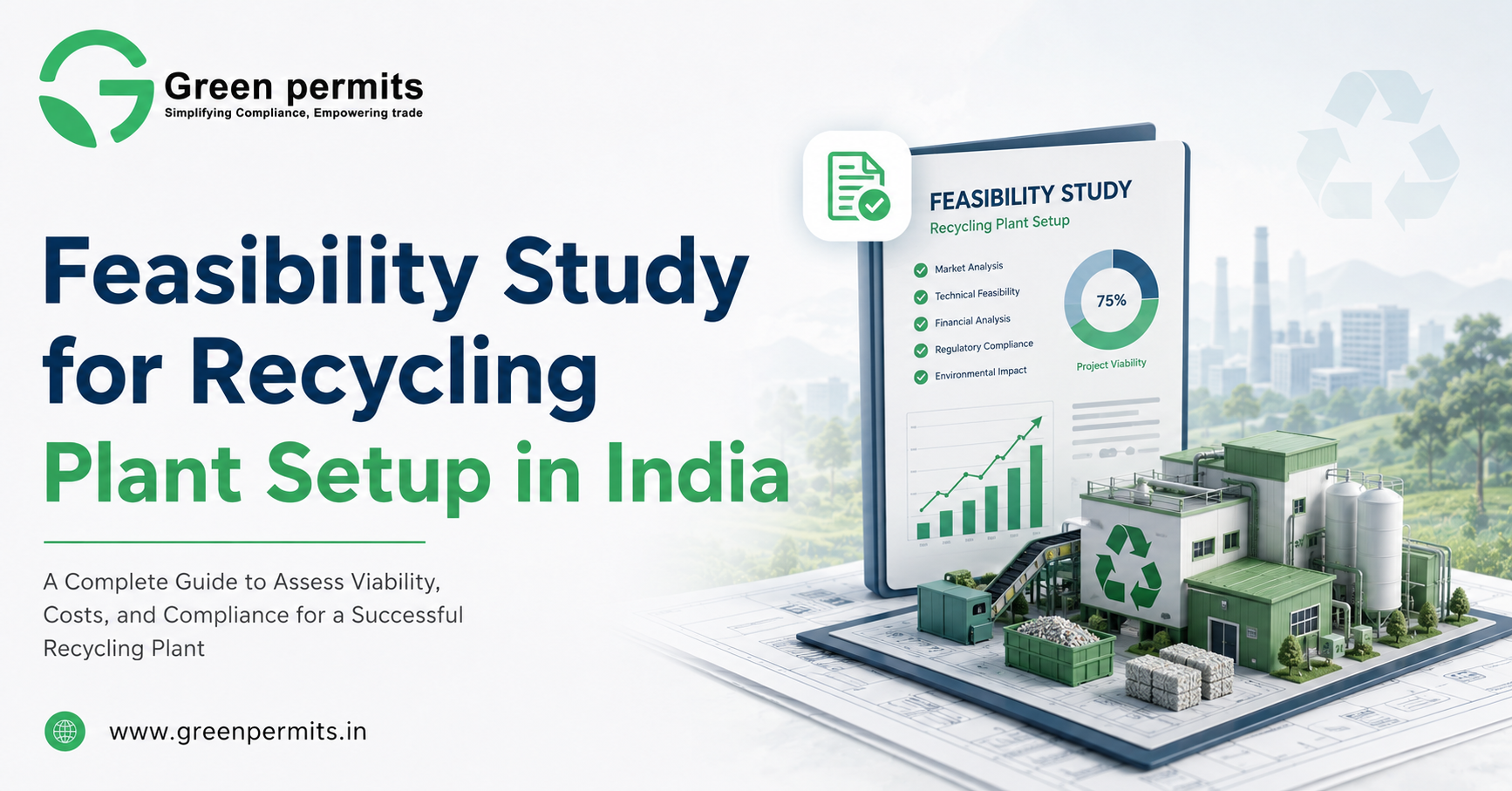
Recycling plant setup in India has become a strong business opportunity due to rising waste generation, Extended Producer Responsibility requirements, demand for recycled materials, and increasing focus on circular economy. Businesses are investing in e-waste recycling plants, plastic recycling units, battery recycling facilities, tyre recycling plants, metal recycling units, and vehicle scrapping facilities.
However, a recycling plant cannot be started only by purchasing machinery or selecting land. Every project requires proper technical, financial, regulatory, and market evaluation before investment. This is where a feasibility study becomes important.
A feasibility study helps investors understand whether the proposed recycling plant is practical, profitable, compliant, and suitable for long-term operations. It reduces investment risk and gives a clear roadmap before starting the project.
What is a Feasibility Study for Recycling Plant
A feasibility study is a detailed assessment of a proposed recycling plant before investment and execution.
It evaluates whether the project can be successfully established and operated based on market demand, raw material availability, land requirement, machinery selection, investment cost, approvals, profitability, and compliance obligations.
The study helps answer important questions such as:
- Is the recycling plant financially viable?
- Is enough waste material available?
- What machinery is required?
- What approvals are needed?
- What will be the total project cost?
- What revenue can the plant generate?
A properly prepared feasibility study helps investors make informed decisions.
Why Feasibility Study is Important
Many recycling projects face problems because investors start without proper planning.
Common issues include wrong land selection, incorrect machinery purchase, approval delays, weak raw material supply, poor financial estimates, and underestimating compliance costs.
A feasibility study helps avoid these mistakes by identifying risks before the project begins.
It also helps businesses plan investment, prepare a Detailed Project Report, apply for bank loans, approach investors, and obtain regulatory approvals.
Recycling Plants That Need Feasibility Study
A feasibility study is useful for almost every type of recycling project.
Common recycling plants include:
- E-waste recycling plant
- Plastic waste recycling plant
- Battery recycling plant
- Lithium battery recycling plant
- Tyre recycling plant
- Vehicle scrapping plant
- Metal recycling plant
- Paper recycling plant
- Hazardous waste recycling plant
Each recycling category has different machinery, approvals, land requirements, and revenue models.
Market Demand Analysis
Market analysis is one of the first parts of a feasibility study.
It evaluates demand for recycled products, availability of buyers, industry competition, pricing trends, and future growth potential.
For example, plastic recycling plants may sell granules, flakes, or pellets. E-waste recyclers may recover copper, aluminum, iron, plastic, and circuit boards. Battery recycling plants may recover lead, lithium, cobalt, nickel, copper, and black mass.
Understanding market demand helps decide whether the project can generate stable revenue.
Raw Material Availability
A recycling plant needs regular waste supply to operate efficiently.
The feasibility study evaluates availability of raw material such as plastic waste, e-waste, used batteries, scrap vehicles, tyres, metals, or industrial waste.
It also studies sourcing channels such as:
- Waste aggregators
- Producers and brand owners
- Bulk consumers
- Collection centers
- Industrial units
- Municipal sources
- Corporate clients
Without stable raw material supply, even a well-equipped recycling plant may face low capacity utilization.
Land Requirement Assessment
Land selection is a critical part of recycling plant setup.
The feasibility study checks land requirement based on plant capacity, machinery layout, storage area, pollution control systems, vehicle movement, safety zones, and future expansion.
The land should preferably be located in an industrial area with proper zoning approval, road connectivity, electricity supply, water access, and environmental suitability.
Wrong land selection can delay Pollution Control Board approvals and increase project cost.
Machinery and Technology Selection
Machinery selection directly affects plant performance, product quality, recovery rate, and profitability.
A feasibility study identifies suitable machinery based on waste type and project capacity.
For example, a plastic recycling plant may require shredders, washing lines, dryers, extruders, and pelletizers. An e-waste plant may require dismantling tables, shredders, separators, dust collectors, and material handling systems.
The study also compares manual, semi-automatic, and fully automatic technology options.
Project Cost Estimation
Cost estimation is one of the most important parts of the feasibility study.
The total project cost generally includes:
- Land and building
- Machinery and installation
- Pollution control systems
- Utilities
- Licensing and approvals
- Fire safety systems
- Manpower
- Working capital
- Transportation and logistics
A realistic cost estimate helps investors avoid budget overruns.
Regulatory Approvals and Compliance
Recycling plants require multiple approvals before starting operations.
Common approvals may include:
- Consent to Establish
- Consent to Operate
- Hazardous Waste Authorization
- E-Waste Recycler Registration
- Plastic Waste Recycler Registration
- Battery Recycler Registration
- RVSF Registration
- Factory License
- Fire NOC
The exact approvals depend on the type of recycling plant.
A feasibility study identifies all applicable compliance requirements at the planning stage.
Financial Viability Analysis
Financial analysis helps determine whether the project can generate profit.
The study generally evaluates revenue, operating cost, raw material cost, manpower cost, power cost, maintenance expenses, working capital, profit margin, break-even period, and return on investment.
This section is important for investors, banks, and business owners.
A project may look attractive on paper, but financial analysis shows whether it can actually sustain operations.
Risk Assessment
Every recycling project has risks.
Common risks include raw material shortage, price fluctuation, machinery breakdown, approval delays, high electricity cost, weak buyer network, and compliance failures.
A feasibility study identifies these risks and suggests mitigation strategies.
Proper risk planning helps improve project stability.
Role of Feasibility Study in DPR Preparation
A feasibility study is often the first step before preparing a Detailed Project Report.
The DPR uses feasibility findings to create a complete project plan with technical details, financial projections, machinery list, approval requirements, and implementation roadmap.
Banks and investors usually prefer projects backed by proper feasibility analysis and DPR.
Common Mistakes Without Feasibility Study
Many investors face losses because they start the project without proper study.
Common mistakes include:
- Buying machinery before checking waste supply
- Selecting land without compliance review
- Underestimating project cost
- Ignoring pollution control requirements
- Preparing unrealistic revenue projections
- Not planning working capital
These mistakes can delay the project and reduce profitability.
Benefits of Professional Feasibility Consulting
A professional consultant helps evaluate the project from technical, financial, regulatory, and market perspectives.
Consulting support generally includes:
- Market research
- Raw material assessment
- Land suitability review
- Machinery planning
- Project cost estimation
- Compliance mapping
- Financial feasibility
- DPR preparation support
Professional guidance helps investors reduce risk and make better investment decisions.
Learn the Complete Recycling Plant Feasibility Process
Planning to start a recycling plant in India? Understanding feasibility study, DPR preparation, land requirement, machinery selection, project cost, approvals, and compliance obligations is essential before investing.
Read the complete guide here:
👉 https://www.greenpermits.in/06/recycling-plant-feasibility-study-india/
📞 Get Expert Assistance for Recycling Plant Feasibility Study
Need assistance with recycling plant feasibility study, DPR preparation, machinery planning, project cost estimation, Pollution Control Board approvals, recycler registration, or complete plant setup support? The experts at Green Permits Consulting can guide you throughout the complete process.
🌐 Website: https://www.greenpermits.in/
📞 Phone: +91 78350 06182
📧 Email: wecare@greenpermits.in
 Dutch
Dutch
 English
 Arabic
 French
 Spanish
 Portuguese
 Deutsch
 Turkish
 Italiano
 Russian
 Romaian
 Portuguese (Brazil)
 Greek
Greek
