


 Ban & Monetization Policy
 MyLiveRoom Rewards Program Rules & Eligibility
How Fashion Designers Balance Creativity and Commercial Success
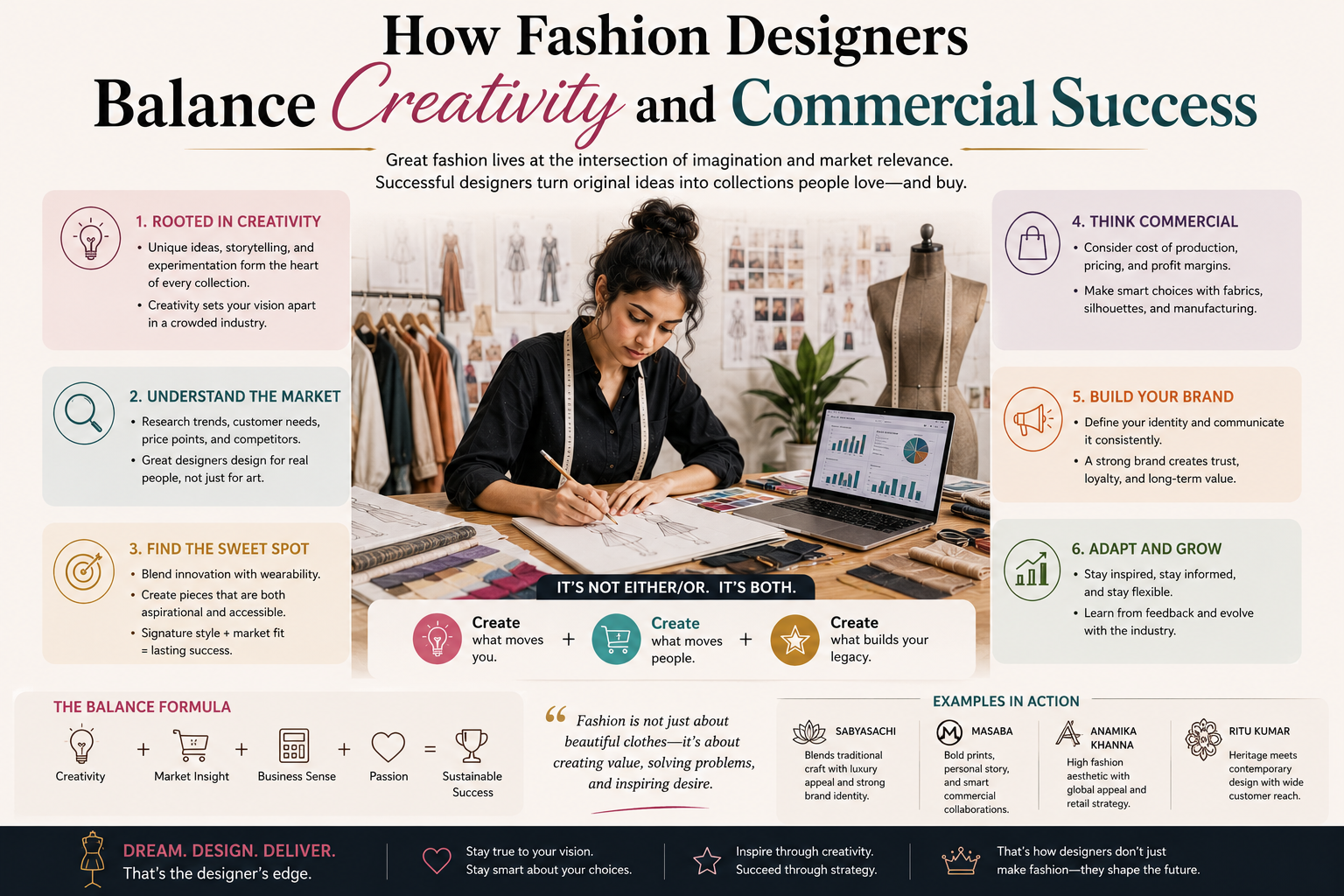
Fashion designing is often associated with creativity, artistic expression, and innovation. Designers are admired for their ability to transform ideas into visually appealing garments that influence trends and inspire consumers. However, behind every successful fashion collection lies an equally important factor: commercial viability. No matter how creative a design may be, it must connect with consumers, fit market demands, and generate revenue to succeed in the fashion industry.
This balance between creativity and commercial success is one of the greatest challenges modern fashion designers face. While creativity allows designers to express originality and establish a unique identity, commercial success ensures sustainability, brand growth, and long-term career opportunities. The most influential designers understand how to create fashion that is both innovative and marketable.
For aspiring fashion designers, learning to balance artistic vision with business realities is essential. Fashion education today increasingly focuses on consumer behavior, trend forecasting, branding, merchandising, and entrepreneurship alongside design skills. Understanding how creativity and commerce work together helps students build successful careers in a highly competitive global fashion industry.
Understanding the Relationship Between Creativity and Commercial Success
Fashion is both an art and a business.
Creativity drives innovation and originality, while commercial success ensures that designs meet consumer needs and contribute to business growth.
Why Both Are Important
| Creativity | Commercial Success |
|---|---|
| Encourages innovation | Generates revenue |
| Builds brand identity | Supports business sustainability |
| Creates unique collections | Meets market demand |
| Influences trends | Improves profitability |
| Enhances artistic expression | Expands customer reach |
Successful fashion brands recognize that both elements are necessary for long-term growth.
Why Creativity Alone Is Not Enough
Creative designs may attract attention, but they do not always translate into strong sales.
Fashion products must also consider:
- Consumer preferences
- Pricing expectations
- Production feasibility
- Market demand
- Seasonal trends
- Brand positioning
Designers who ignore these factors often struggle to achieve commercial success despite having strong creative talent.
Example
A highly artistic garment may receive appreciation on a runway but may not be practical for everyday consumers. Commercial success often requires adapting creative ideas into wearable and marketable products.
The Importance of Understanding Consumer Behavior
One of the key ways designers balance creativity with profitability is by understanding their target audience.
Questions Successful Designers Ask
- Who is the customer?
- What are their lifestyle needs?
- What fashion preferences do they have?
- What price range are they comfortable with?
- What trends influence their purchasing decisions?
Consumer insights help designers create products that resonate with real buyers while maintaining originality.
How Trend Forecasting Supports Commercial Success
Trend forecasting helps designers anticipate future consumer preferences.
Rather than simply following trends, successful designers interpret them creatively while aligning with market demand.
Benefits of Trend Forecasting
- Reduces business risk
- Improves product relevance
- Supports collection planning
- Increases customer appeal
- Enhances sales potential
Fashion brands use trend analysis to ensure their creative concepts remain commercially viable.
Designing for the Market Without Losing Originality
Many aspiring designers fear that focusing on commercial success may limit creativity.
In reality, the most successful designers use market insights as creative inspiration.
Strategies Used by Successful Designers
Adapt Trends Creatively
Instead of copying trends, designers reinterpret them through their unique design perspective.
Maintain a Signature Style
Strong designers create recognizable aesthetics while meeting consumer needs.
Balance Statement Pieces and Commercial Products
Collections often include both innovative showcase designs and commercially accessible products.
This approach helps brands maintain creativity while generating revenue.
The Role of Fashion Merchandising
Fashion merchandising bridges the gap between design and sales.
It focuses on ensuring products reach the right customers at the right time and price.
Key Functions of Fashion Merchandising
- Product planning
- Inventory management
- Consumer analysis
- Pricing strategy
- Retail planning
- Market positioning
Designers who understand merchandising gain valuable insights into commercial decision-making.
Brand Identity: The Foundation of Commercial Success
Strong fashion brands create emotional connections with consumers.
Elements of Brand Identity
- Design philosophy
- Visual aesthetics
- Brand values
- Customer experience
- Communication style
A clear brand identity helps designers maintain creative consistency while building customer loyalty.
Why Brand Identity Matters
Consumers often purchase products not only because of the design but also because they connect with the brand's story and values.
Balancing Innovation With Production Realities
Fashion designs must be manufacturable and cost-effective.
Practical Considerations
- Fabric availability
- Production costs
- Manufacturing timelines
- Quality standards
- Supply chain requirements
Creative concepts often require refinement to ensure they can be produced efficiently without losing their essence.
Commercial Design Process
| Creative Stage | Commercial Consideration |
| Concept creation | Market demand |
| Fabric selection | Cost and availability |
| Design development | Production feasibility |
| Collection planning | Sales potential |
| Product launch | Customer response |
Balancing these factors helps designers achieve both artistic and business objectives
The Role of Fashion Marketing
Fashion marketing plays a significant role in transforming creative ideas into successful products.
Marketing Strategies That Support Commercial Success
- Social media campaigns
- Influencer collaborations
- Brand storytelling
- Content marketing
- Fashion events
- Digital advertising
Effective marketing helps consumers understand and connect with a designer's creative vision.
Creativity and Entrepreneurship in Fashion
Many modern designers are also entrepreneurs.
They must manage:
- Product development
- Branding
- Marketing
- Finance
- Customer relationships
Entrepreneurial skills help designers make informed decisions that support commercial growth while protecting creative integrity.
Benefits of Entrepreneurial Thinking
- Greater control over brand direction
- Improved profitability
- Better customer engagement
- Long-term business sustainability
Fashion entrepreneurship has become a valuable career pathway for creative professionals.
Practical Learning: Preparing Students for Industry Success
Fashion education increasingly emphasizes the balance between creativity and business understanding.
Practical Learning Components
Industry Projects
Students solve real-world design challenges.
Internships
Provide exposure to commercial fashion environments.
Fashion Shows
Help students understand presentation and market response.
Brand Collaborations
Offer insights into consumer-focused design development.
These experiences prepare students for professional industry expectations.
Portfolio Development: Demonstrating Creativity and Commercial Awareness
Employers and clients seek designers who can combine originality with market understanding.
What a Strong Portfolio Should Include
- Creative concepts
- Consumer research
- Trend analysis
- Technical drawings
- Product development process
- Collection presentations
- Market-focused projects
A portfolio that demonstrates both creativity and commercial thinking stands out in competitive job markets.
Career Opportunities for Fashion Professionals
Professionals who understand both design and business enjoy broader career opportunities.
Popular Career Paths
| Career Role | Primary Focus |
| Fashion Designer | Product creation |
| Fashion Merchandiser | Product planning and sales |
| Fashion Buyer | Consumer-focused purchasing |
| Brand Manager | Brand growth and positioning |
| Fashion Marketer | Customer engagement |
| Creative Director | Brand vision and innovation |
| Fashion Entrepreneur | Business ownership |
These roles require a combination of creative and commercial expertise.
Future Trends Influencing Creativity and Commercial Fashion
The fashion industry continues to evolve rapidly.
Emerging Trends
Sustainable Fashion
Consumers increasingly support environmentally responsible brands.
AI-Powered Fashion
Artificial intelligence is helping brands analyze trends and personalize experiences.
Digital Fashion
Virtual garments and digital collections are creating new revenue opportunities.
Consumer Personalization
Customers expect products tailored to their preferences.
Data-Driven Design
Consumer insights increasingly influence creative decision-making.
Designers who understand these trends will be better positioned for future success.
Essential Skills for Balancing Creativity and Commercial Success
Creative Skills
- Fashion illustration
- Design thinking
- Concept development
- Trend interpretation
Business Skills
- Marketing
- Merchandising
- Consumer research
- Brand management
Professional Skills
- Communication
- Problem-solving
- Adaptability
- Leadership
Developing these skills helps designers navigate the intersection of creativity and business.
Key Takeaways
- Fashion design requires both creativity and commercial understanding.
- Consumer behavior and market research influence successful collections.
- Trend forecasting helps designers align innovation with demand.
- Brand identity supports long-term customer loyalty.
- Merchandising and marketing contribute to commercial success.
- Practical learning experiences help students understand industry realities.
- Future fashion careers increasingly require both creative and business expertise.
FAQs
1. Why is commercial success important in fashion designing?
Commercial success ensures that creative designs generate revenue, support brand growth, and remain sustainable in competitive markets.
2. Can fashion designers remain creative while focusing on profitability?
Yes. Successful designers use consumer insights and market research to guide creativity rather than limit it.
3. What role does consumer behavior play in fashion design?
Consumer behavior helps designers understand customer preferences, purchasing habits, and market demands.
4. How does trend forecasting support commercial fashion success?
Trend forecasting helps designers anticipate future demand and create collections that align with consumer expectations.
5. What skills help designers balance creativity and business?
Design thinking, consumer research, marketing, merchandising, communication, and entrepreneurship skills are highly valuable.
6. How do fashion designing courses prepare students for commercial success?
Courses often include industry projects, internships, merchandising, branding, marketing, and portfolio development alongside creative training.
7. What career opportunities combine creativity and business in fashion?
Career options include fashion designer, merchandiser, buyer, brand manager, creative director, fashion marketer, and entrepreneur.
Final Words
Balancing creativity and commercial success is one of the most important skills a fashion designer can develop. While creativity drives innovation and originality, commercial understanding ensures that designs connect with consumers and contribute to sustainable business growth. The most successful designers recognize that fashion is both an artistic discipline and a commercial industry.
Modern fashion professionals must understand consumer behavior, trend forecasting, branding, merchandising, and marketing while continuing to push creative boundaries. Through practical learning, industry exposure, portfolio development, and business-focused education, aspiring designers can develop the skills needed to thrive in today's fashion landscape.
If you are passionate about fashion and aspire to build a successful career, choosing a professional fashion designing course can help you gain the creative, technical, and commercial knowledge required to excel. The future belongs to designers who can transform innovative ideas into meaningful and marketable fashion experiences.
 Deutsch
 English
 Arabic
 French
 Spanish
 Portuguese
 Turkish
 Dutch
Dutch
 Italiano
 Russian
 Romaian
 Portuguese (Brazil)
 Greek
Greek
