


 Ban & Monetization Policy
 MyLiveRoom Rewards Program Rules & Eligibility
What is PACS in Software? Complete Beginner Guide (2026)
🔷 Introduction
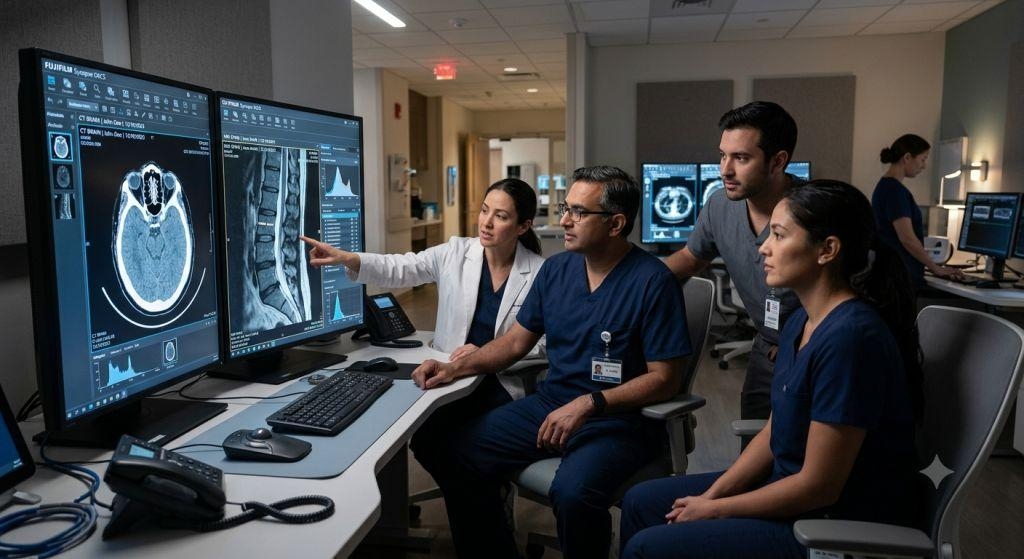
In modern healthcare, speed and accuracy in medical imaging are critical. Hospitals and diagnostic centers no longer rely on physical film storage. Instead, they use advanced digital systems called PACS (Picture Archiving and Communication System).
PACS in software is a backbone technology that enables doctors to store, retrieve, view, and share medical images instantly across networks.
In this guide, we’ll explore PACS in depth based on real-world healthcare IT understanding, including architecture, components, cost, and future trends.
🧩 What is PACS in Software?
PACS is a specialized medical imaging software system designed to handle digital images such as:
-
X-rays
-
CT scans
-
MRI scans
-
Ultrasounds
Instead of storing images in physical film archives, PACS stores everything digitally in a secure server system.
👉 This improves speed, reduces cost, and enhances diagnosis efficiency.
📘 What does PACS stand for?
PACS = Picture Archiving and Communication System
Each part plays an important role:
-
Picture → Medical imaging data
-
Archiving → Secure digital storage
-
Communication → Sharing across departments
-
System → Integrated healthcare software
🏥 Who uses PACS systems?
PACS is widely used across healthcare ecosystems:
-
Radiologists
-
Hospitals
-
Diagnostic laboratories
-
Orthopedic clinics
-
Oncology departments
-
Telemedicine platforms
-
Medical universities
Radiologists are the primary users because they analyze medical images daily.
🔗 How PACS fits in healthcare IT ecosystem
PACS is not an isolated system. It integrates with:
-
HIS (Hospital Information System)
-
RIS (Radiology Information System)
-
EMR/EHR systems
-
ERP healthcare software
👉 This creates a fully connected digital hospital ecosystem.
🧠 What is ERP software in PACS?
ERP integration in PACS helps healthcare organizations manage operations beyond imaging.
It connects:
-
Patient billing
-
Appointment scheduling
-
Resource management
-
Inventory tracking
-
Reporting systems
👉 This integration reduces manual workload and improves hospital efficiency.
⚙️ Is PACS software or hardware?
PACS is primarily software, but it depends on hardware infrastructure.
💻 Software layer:
-
Image processing tools
-
Database systems
-
Viewer applications
-
Communication protocols
🖥 Hardware layer:
-
Servers
-
Storage arrays
-
Workstations
-
Network systems
👉 So PACS is a software-driven ecosystem supported by hardware.
💰 How much does a PACS system cost?
PACS pricing depends on scale and deployment type:
🏥 Small clinics:
$5,000 – $20,000
🏨 Medium hospitals:
$20,000 – $100,000
🏢 Large hospital networks:
$100,000+
☁️ Cloud PACS:
Subscription-based ($100–$2,000/month)
👉 Cloud PACS is becoming more popular due to scalability and lower upfront cost.
💻 What computer language is used by PACS?
PACS systems are built using multiple programming technologies:
-
Java (backend systems)
-
C++ (performance-heavy imaging processing)
-
Python (AI and automation)
-
C# (.NET hospital systems)
-
JavaScript (web viewers and dashboards)
👉 Modern PACS often use hybrid architectures.
🧱 What are the 4 components of PACS?
A standard PACS system consists of:
1. Imaging Modalities
MRI, CT, X-ray machines that generate images.
2. Secure Network
Transfers images from machines to servers.
3. PACS Archive Server
Stores all medical images and records.
4. Viewing Workstations
Used by doctors to analyze images.
🗄 Is PACS a database?
PACS includes a medical image database, but it is more than just a database system.
It stores:
-
DICOM images
-
Patient records
-
Study history
-
Diagnostic reports
👉 PACS is a full imaging management platform, not just storage.
⚡ Why are PACS used?
PACS systems are used because they solve major healthcare problems:
-
Eliminates physical film storage
-
Speeds up diagnosis process
-
Enables remote access (tele-radiology)
-
Reduces operational costs
-
Improves collaboration among doctors
-
Enhances patient care quality
📊 Benefits of PACS systems
-
Faster medical decision-making
-
Easy image access anytime
-
Secure data storage
-
No physical storage requirements
-
Better hospital workflow
🔄 How PACS works (Step-by-step flow)
-
Patient undergoes imaging scan
-
Device converts scan into digital format (DICOM)
-
Image sent to PACS server
-
Stored in secure archive
-
Doctors access via workstation
-
Diagnosis and reporting completed
🔍 PACS vs Traditional Film System
| Feature | PACS | Film System |
|---|---|---|
| Storage | Digital | Physical films |
| Speed | Instant | Slow |
| Sharing | Easy | Difficult |
| Cost | Lower long-term | High maintenance |
| Accuracy | High | Moderate |
🌐 Future of PACS systems
The future of PACS is evolving rapidly with:
-
AI-powered diagnosis support
-
Cloud-based PACS systems
-
Mobile access for doctors
-
ERP + EMR integration
-
Faster real-time image processing
👉 PACS is moving toward intelligent healthcare ecosystems.
🧾 Final Conclusion
PACS is a critical technology in modern healthcare IT infrastructure. It improves diagnostic speed, reduces costs, and enables digital transformation in hospitals.
As healthcare continues to evolve, PACS will become even more intelligent, cloud-driven, and AI-powered.
 English
 Arabic
 French
 Spanish
 Portuguese
 Deutsch
 Turkish
 Dutch
Dutch
 Italiano
 Russian
 Romaian
 Portuguese (Brazil)
 Greek
Greek
