


 Ban & Monetization Policy
 MyLiveRoom Rewards Program Rules & Eligibility
Navigating the Financial Maze of Modern Walk-In Clinics: Choosing the Right Urgent Care Billing Company in the USA
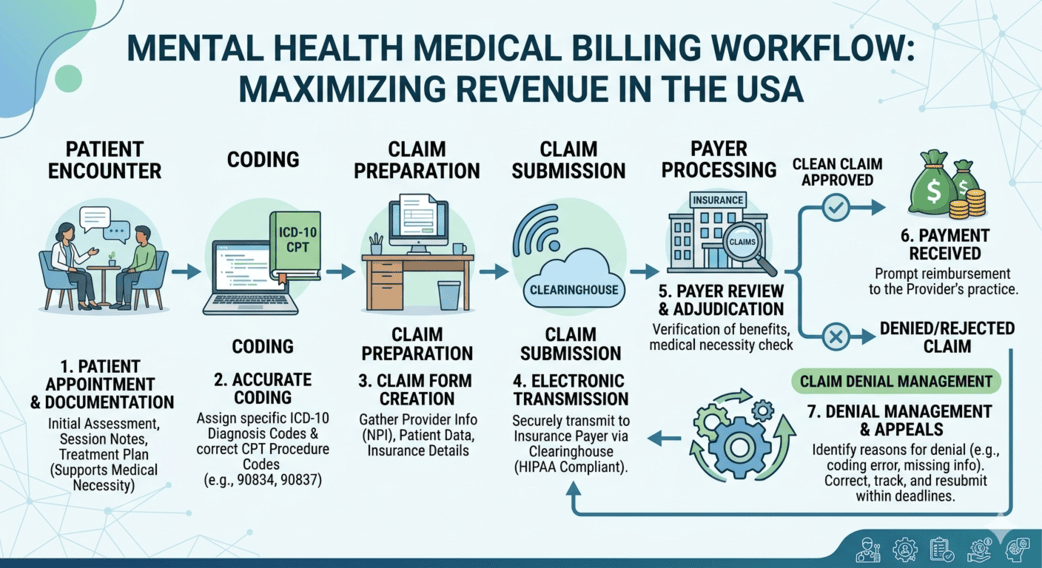
The demand for on-demand healthcare across the USA has skyrocketed over the last few years, fundamentally altering how patients interact with medical professionals. Walk-in medical centers fill a crucial gap in our healthcare system, offering a middle ground between the lengthy wait times of emergency departments and the limited availability of primary care physicians. However, the operational model that makes these clinics so popular—unscheduled visits, high patient turnover, and a diverse range of treatments—also makes their financial back-office incredibly volatile. To secure a steady stream of revenue and protect thin profit margins, clinic owners are increasingly realizing that general practice solutions are no longer sufficient. Partnering with a specialized urgent care billing company has transitioned from a luxury to an operational necessity.
Managing the revenue workflow of an immediate care facility requires a deep understanding of rapid-fire data processing. When patients arrive in a steady stream with conditions ranging from acute bronchitis to minor workplace injuries, the administrative staff must work with absolute precision. A single mistyped digit during insurance verification or a minor delay in documenting a bedside procedure can lead to an immediate claim rejection. An agency that specializes explicitly in this high-velocity environment understands how to build custom guardrails that capture every dollar earned, preventing the revenue leakage that quietly drains clinic resources.
Why Urgent Care Reimbursement Follows a Different Ruleset
Many healthcare executives mistakenly assume that a standard, multi-specialty billing setup can seamlessly manage a walk-in clinic. This assumption often leads to a slow, steady decline in collections. The financial rules governing immediate care are distinct, demanding an agile administrative approach that can adapt to different insurance rules on the fly.
The Balancing Act of Global S-Codes vs. Fee-for-Service CPTs
One of the most complex hurdles in walk-in clinic finance is the dual nature of payer contracts throughout the USA. Depending on your geographic location and your agreements with regional insurance providers, your claims may be processed under a flat-rate global fee—often designated by specific "S-codes" (such as S9088 or S9083)—or via traditional, itemized CPT coding.
If an administrative team defaults to itemizing every supply and service for a payer that requires a global code, the entire claim will be rejected. Conversely, if they submit a global code to a fee-for-service payer, the clinic loses out on separate reimbursements for expensive line items like splints, rapid lab tests, or durable medical equipment (DME). A specialized partner knows exactly how to map these distinct requirements based on individual payer profiles.
The Trap of the Place of Service (POS) Code 20
Filing a claim might seem straightforward, but selecting the proper Place of Service designation requires absolute accuracy. Urgent care centers must correctly utilize POS code 20. If an unspecialized billing team mistakenly files claims using POS code 11 (standard doctor's office) or POS code 23 (emergency department), it triggers immediate red flags. At best, it results in a drastically reduced reimbursement rate; at worst, it can spark a retroactive compliance audit from federal or commercial payers, putting the clinic’s standing at risk.
The Core Pillars of a Modern Medical Revenue Engine
To transform a chaotic billing department into a predictable financial engine, a walk-in clinic must ensure that its clinical documentation and financial tracking are perfectly synchronized. This requires a robust combination of specialized administrative tools and expert human oversight.
The Baseline: Comprehensive Medical Billing and Coding Services
The foundation of any healthy medical ledger rests upon a unified system of medical billing and coding services. In a high-volume clinical environment, these two functions cannot afford to operate in isolated silos. When a provider treats a patient for a sprained ankle, an expert coder must instantly review the encounter notes to assign the precise ICD-10 diagnosis codes and CPT procedure codes.
Simultaneously, the billing team must ensure that the patient’s demographic data and insurance eligibility match clearinghouse records flawlessly. When these services are tightly integrated, the time elapsed between a patient walking out the front door and the claim being submitted to the insurance carrier drops from weeks to less than 48 hours.
Precision Through Targeted Medical Coding Services
Inaccuracies in chart interpretation are among the leading causes of claim denials. Utilizing dedicated medical coding services ensures that certified professionals who are well-versed in the latest clinical updates handle your documentation. These coders know exactly how to document complex, multi-layered encounters.
For instance, if a physician administers an IV medication while treating an allergic reaction, the coder must accurately capture both the evaluation and management (E&M) level and the specific administration codes. Accurate coding prevents "down-coding"—where rushed providers under-report their work out of fear of audits—and maximizes the legitimate value of every patient encounter.
Speed and Collections Via Professional Medical Billing Services
Once an encounter is coded, it enters the collection pipeline. Highly optimized medical billing services focus on electronic claim scrubbing, proactive clearinghouse management, and aggressive accounts receivable (AR) follow-up.
A dedicated billing team doesn't just wait for insurance companies to respond; they actively track claims, immediately resolve clearinghouse rejections, and handle patient billing with professionalism and clarity. They ensure that copays, deductibles, and co-insurance balances are clearly communicated to patients, lowering outstanding bad debt and improving overall liquid cash flow.
Maximizing Profitability with Revenue Cycle Management Services
True operational health requires looking beyond individual claims and focusing on the entire lifespan of a practice's revenue. This comprehensive view is achieved through advanced revenue cycle management services (RCM).
An RCM strategy analyzes every operational touchpoint, looking for hidden friction points that delay payments or cause financial strain.
By utilizing data analytics to track key performance indicators (KPIs), an RCM partner can pinpoint exactly why a specific insurance carrier is delaying payments, allowing the clinic to adjust its workflows proactively.
Mitigating Risk with Expert Credentialing Services
A significant vulnerability for expanding walk-in networks in the USA is the continuous process of provider enrollment. Because these facilities experience higher provider turnover, regularly employ part-time staff, and use locum tenens physicians to maintain required staffing levels, keeping up with insurance panels is a massive administrative headache.
This is where specialized credentialing services become a critical defensive asset for your business. If a newly hired physician or nurse practitioner begins treating patients before their enrollment with a specific commercial payer is fully finalized, every single claim associated with that provider will be rejected as out-of-network. These losses cannot easily be billed to the patient and are often written off as uncollectible debt.
Professional credentialing management ensures that:
-
Payer enrollment applications are submitted months before a provider’s official start date.
-
CAQH (Council for Affordable Quality Healthcare) profiles are continuously updated and monitored.
-
State licenses, DEA registrations, and board certifications are tracked to prevent sudden, costly lapses in billing eligibility.
Elevating Your Bottom Line: 247 Medical Billing Services
Selecting the right administrative ally is one of the most critical decisions an urgent care operator can make. In a competitive market where overhead costs continue to rise, relying on fragmented internal systems or generalized billing platforms can jeopardize your long-term viability. For clinics across the USA seeking an experienced partner to stabilize and scale their financial operations, 247 Medical Billing Services offers a reliable, end-to-end solution.
By providing a deeply integrated suite of healthcare administrative solutions, they take the complex burden of revenue management entirely off your plate. Their expert teams deliver top-tier medical coding services and proactive medical billing services, blending them into a cohesive approach that optimizes your entire practice workflow. From managing intricate modifier combinations to running comprehensive revenue cycle management services, they ensure that your claims are filed accurately and paid promptly.
Furthermore, their dedicated credentialing services protect your facility from the costly pitfalls of un-enrolled providers and network lapses. Partnering with 247 Medical Billing Services gives your organization the freedom to step away from the administrative grind and focus fully on what truly matters: providing exceptional, immediate medical care to your community.
Frequently Asked Questions
1. Why does a walk-in clinic need a specialized urgent care billing company rather than a standard billing provider?
Standard billing companies are typically structured around scheduled, single-specialty practices. Urgent care clinics handle an unpredictable mix of acute care, minor procedures, occupational medicine, and laboratory testing all in a single day. A specialized urgent care billing company understands the distinct payer contracts, regional global billing codes (S-codes), and precise modifier combinations necessary to prevent widespread denials in a high-volume environment.
2. How do documentation gaps at the front desk impact the back-end revenue cycle?
Because urgent care operates on an unscheduled, walk-in basis, front-desk staff are often rushed. Simple mistakes, such as misspelling a patient’s name, mistyping an insurance policy number, or failing to verify primary versus secondary coverage, create immediate data mismatches. These errors cause front-end claim rejections, delaying your payments by weeks or months.
3. What is the financial risk of utilizing un-credentialed providers in an immediate care setting?
If a provider treats an insured patient before their individual credentialing process is finalized with that specific payer network, the insurance company will deny the claim entirely. Because urgent care centers rely on flexible staffing and quick hiring to manage seasonal volume spikes, professional credentialing services are essential to ensure every working provider is fully eligible to generate revenue.
4. What are the benefits of integrating medical billing and coding services under a single partner?
When coding and billing are handled by separate entities, communication often breaks down. If a claim is denied due to a coding nuance, a disconnected billing team may take weeks to identify and fix the issue. Integrating medical billing and coding services ensures that coders and billers work side-by-side. This allows them to instantly identify denial patterns, update system scrubbing rules, and resubmit corrected claims to payers within days.
 Russian
 English
 Arabic
 French
 Spanish
 Portuguese
 Deutsch
 Turkish
 Dutch
Dutch
 Italiano
 Romaian
 Portuguese (Brazil)
 Greek
Greek
