


 Ban & Monetization Policy
 MyLiveRoom Rewards Program Rules & Eligibility
What Controls Spring Load Accuracy?
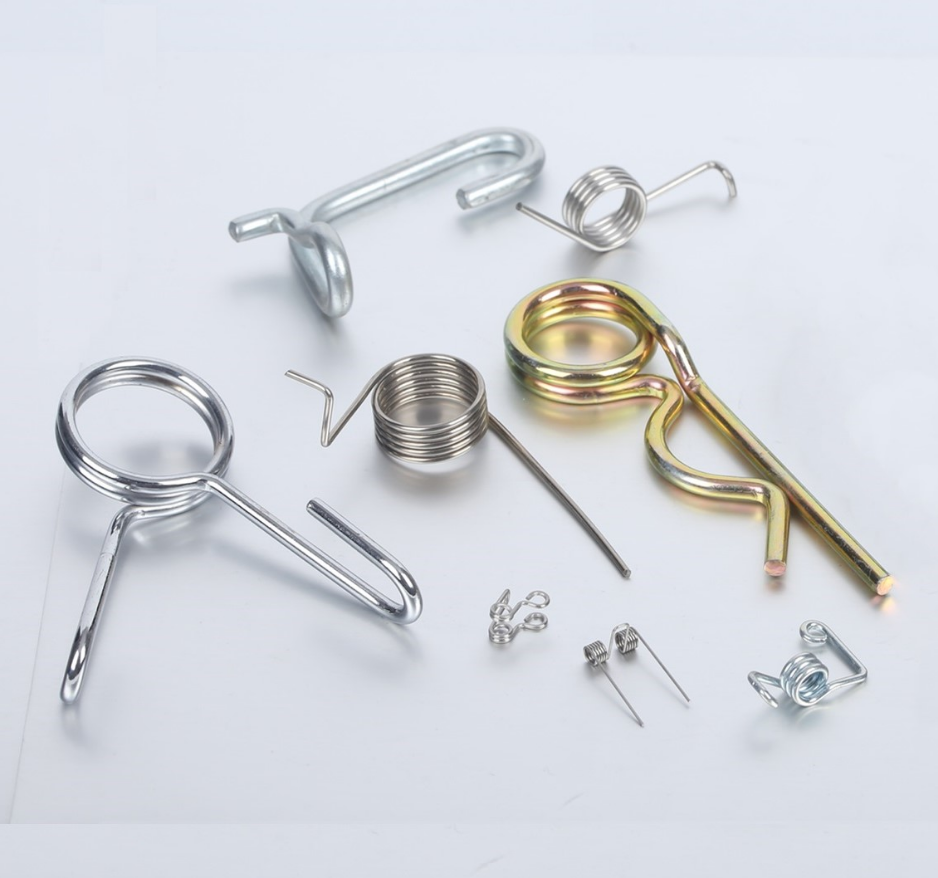
Engineering design plays a decisive role in how a mechanical system performs over time. Even a small deviation in geometry, material selection, or stress distribution can significantly influence durability and functionality. A Stainless Steel Wire Forming Spring is often used in systems that require precise positioning, controlled force, and long-term reliability, which makes careful design evaluation essential before production begins.
Unlike standard coil springs that mainly generate force through axial compression or extension, wire forming springs rely on customized geometries. These shapes allow them to combine multiple mechanical functions such as retention, guidance, locking, and elastic support within a single component. This structural flexibility creates design opportunities but also introduces additional engineering considerations.
One of the first steps in spring design is determining load requirements. Engineers typically define working load, deflection distance, and expected cycle life. These parameters directly influence wire diameter, bending radius, and overall geometry. For stainless steel wire springs, wire diameters commonly range from 0.20 mm to 8.00 mm depending on application scale. Smaller diameters are used in electronics and precision devices, while larger diameters support industrial machinery, automotive systems, and heavy equipment.
Material selection is another critical factor. Stainless spring wire is typically produced in grades such as SUS302, SUS304, SUS316, and 17-7PH, all of which are standardized under specifications like ASTM A313 for stainless steel spring wire. This specification defines chemical composition requirements and mechanical property ranges for spring applications, ensuring consistent material performance across production batches.
Each stainless steel grade provides different mechanical behavior.
SUS302 offers high tensile strength after cold drawing and is widely used in general-purpose mechanical springs. SUS304 provides balanced corrosion resistance and mechanical properties, making it suitable for environments involving moisture or regular cleaning. SUS316 improves resistance to chloride exposure, making it suitable for marine, chemical, and outdoor environments. 17-7PH stainless steel provides significantly higher strength after precipitation hardening and is often selected for demanding fatigue applications where repeated stress cycles are expected.
When designing a Stainless Steel Wire Forming Spring, stress distribution is one of the most important engineering considerations. Every bend in the wire introduces localized stress concentration. If bending radii are too tight, stress increases and fatigue life decreases. If radii are too large, installation space may become inefficient. The design process requires balancing mechanical performance with spatial constraints.
Elastic behavior is governed primarily by material modulus and geometry. For stainless steel, the modulus of elasticity typically remains close to 193 GPa for austenitic grades, which provides predictable deformation characteristics under load. However, fatigue life depends more heavily on stress amplitude and surface condition than on elastic modulus alone.
Surface quality plays a critical role in fatigue performance. Even microscopic scratches or tool marks can act as crack initiation points under cyclic loading. For this reason, manufacturers carefully control forming tool wear, wire cleanliness, lubrication, and handling processes during production.
Heat treatment is often used after forming to stabilize the final geometry. Stress relieving reduces residual internal stresses introduced during bending. For precipitation-hardened materials like 17-7PH, aging treatment is required after forming to achieve full mechanical strength. This process can significantly increase tensile strength and hardness while maintaining corrosion resistance.
Operating environment is another important design input. Stainless steel wire forming springs are commonly used in temperature ranges from approximately -40°C to 200°C for standard grades, while specialized alloys may operate at higher temperatures for limited durations. Exposure to chemicals, humidity, salt spray, or outdoor conditions must be evaluated during material selection to ensure long-term stability.
Fatigue life estimation is based on cyclic loading conditions. Springs that operate under repeated deflection must remain within their elastic range to avoid plastic deformation. Engineers typically design with safety margins to ensure that maximum stress remains below allowable limits under expected service conditions.
Common failure modes include fatigue cracking, permanent deformation, corrosion-induced weakening, and stress concentration failure. Fatigue cracking often originates at surface imperfections or sharp bends. Corrosion may accelerate crack propagation, particularly in aggressive environments where protective oxide layers are compromised.
Dimensional accuracy is another essential aspect of spring design. Typical tolerances include ±0.01 mm to ±0.03 mm for wire diameter and approximately ±0.10 mm for formed geometry. Angular tolerances are generally maintained within ±1° to ±2° depending on complexity. These tolerances ensure proper fit within automated assembly systems and reduce variation between production batches.
Modern CNC wire forming technology has significantly improved design flexibility. Engineers can create complex three-dimensional geometries without requiring multiple manufacturing steps. This capability allows consolidation of multiple parts into a single Stainless Steel Wire Forming Spring, reducing assembly complexity and improving product reliability.
Load simulation tools are often used during design validation. Finite element analysis helps predict stress distribution, deformation behavior, and potential failure regions before physical prototyping. This reduces development time and improves design accuracy.
Quality control begins at the design stage and continues through production. Manufacturers verify raw material certification, monitor forming accuracy, measure spring force, and conduct mechanical testing such as tensile, hardness, and fatigue evaluation. Some applications also require corrosion testing or long-term cycle testing to validate durability under real operating conditions.
Ultimately, the performance of a Stainless Steel Wire Forming Spring depends on the integration of material science, mechanical design, and manufacturing precision. Careful attention to geometry, stress distribution, surface quality, and operating environment ensures stable performance across long service life. When properly designed and manufactured, these components provide reliable elastic function in a wide range of modern industrial, automotive, medical, and electronic applications.
 French
 English
 Arabic
 Spanish
 Portuguese
 Deutsch
 Turkish
 Dutch
Dutch
 Italiano
 Russian
 Romaian
 Portuguese (Brazil)
 Greek
Greek
