


 Ban & Monetization Policy
 MyLiveRoom Rewards Program Rules & Eligibility
Maximizing Revenue in Fast-Paced Clinics: A Guide to Urgent Care Medical Billing Services in the USA
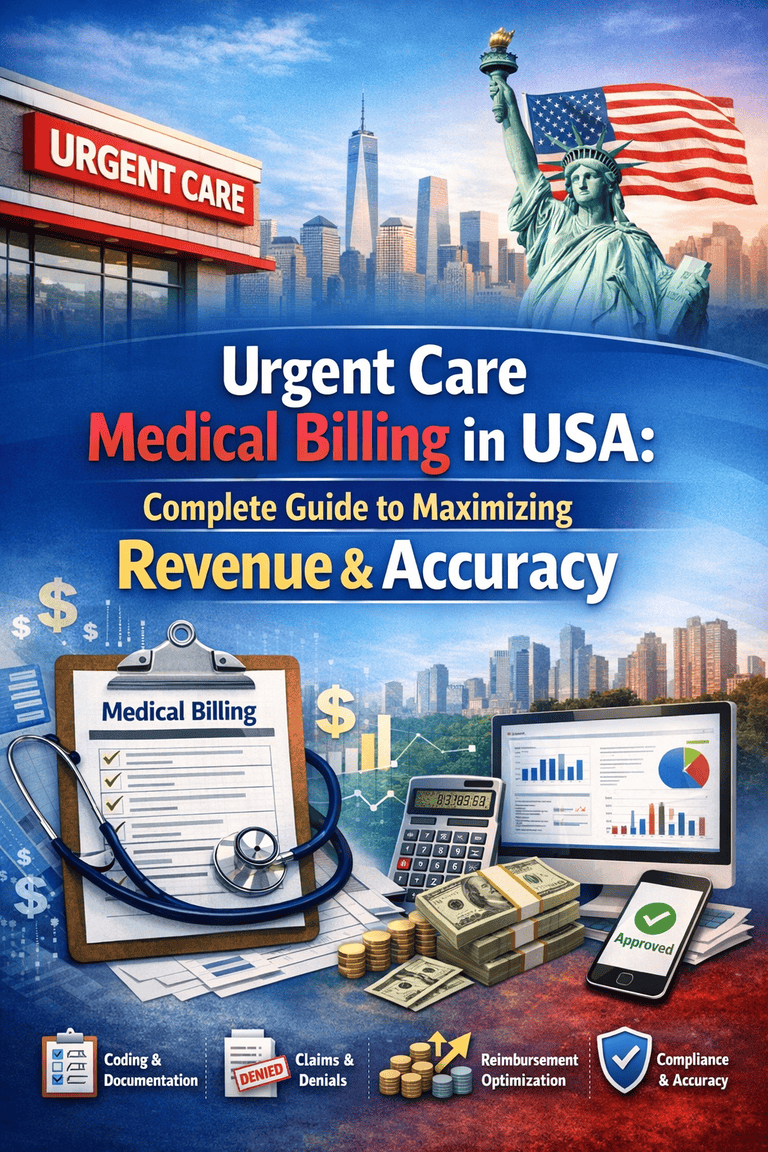
The healthcare landscape in the USA has shifted dramatically over the last decade, with urgent care centers becoming the go-to solution for patients seeking immediate, non-life-threatening medical attention. Positioned perfectly between the long wait times of emergency rooms and the scheduling constraints of primary care physicians, urgent care clinics offer unmatched convenience. However, this high-velocity environment presents a unique set of administrative challenges. Managing a high volume of walk-in patients while trying to maintain accurate documentation means that standard billing practices often fall short. To keep these vital facilities financially viable, specialized urgent care medical billing services have transitioned from a luxury to an absolute necessity.
Unlike traditional practices where patient visits are scheduled weeks in advance, urgent care centers operate on spontaneity. A single day might bring in minor fractures, acute respiratory infections, lacerations requiring stitches, and routine physicals. Each of these scenarios demands rapid, precise documentation. When front-desk staff are juggling patient check-ins, copay collections, and insurance verifications simultaneously, errors are bound to happen. Outsourcing to professional medical billing services allows clinic owners to offload this complex administrative burden, ensuring that practitioners can focus entirely on patient care while dedicated experts manage the financial backend.
The Complexity of Urgent Care Claims: Why Standard Billing Fails
Urgent care billing is notoriously intricate compared to general family medicine. The root of this complexity lies in the hybrid nature of the service. Insurance companies often classify urgent care somewhere between a traditional office visit and an emergency room encounter. Consequently, a deep understanding of specific place-of-service (POS) codes, modifier usage, and specific payer contracts is required to prevent immediate claim denials.
The Problem with CPT Codes and Modifiers
In an urgent care setting, multiple procedures are frequently performed during a single visit. For instance, a patient presenting with a sprained ankle might receive an evaluation, an X-ray, and a stabilization splint. Accurately capturing all these services requires a sophisticated understanding of CPT codes and modifiers.
Failing to apply the correct modifiers—such as Modifier 25 for a significant, separately identifiable evaluation and management (E&M) service on the same day—results in immediate rejections or underpayments. Experienced medical coding services ensure that every level of service is meticulously documented and coded to reflect the true resource intensity of the encounter.
The Fast-Track Verification Challenge
Because the vast majority of urgent care visits are unscheduled, real-time insurance eligibility verification is critical. If a patient provides outdated insurance information and the mistake isn't caught at checkout, the clinic risks chasing an uncollectible debt.
Partnering with a comprehensive medical billing and coding services provider ensures that eligibility checks are integrated into the daily workflow seamlessly, flagging coverage issues before the patient even leaves the facility.
Driving Practice Growth with Revenue Cycle Management Services
Financial sustainability in healthcare isn't just about sending out claims; it’s about managing the entire financial lifecycle of a patient encounter. This comprehensive process, known as revenue cycle management (RCM), covers everything from the initial patient registration to the final balance collection.
[Patient Intake & Verification] ➔ [Accurate Clinical Coding] ➔ [Claim Submission] ➔ [Denial Management] ➔ [Final Reimbursement]
Implementing end-to-end revenue cycle management services specifically tailored for urgent care workflows addresses several critical pain points:
-
Reduction in Days in Accounts Receivable (AR): High AR days choke cash flow. Specialized RCM teams track outstanding claims aggressively, ensuring that payers reimburse the clinic within an optimal window.
-
Proactive Denial Management: Instead of simply resubmitting denied claims and hoping for the best, a dedicated RCM approach analyzes the root cause of rejections. Whether it's a missing authorization or an incorrect demographic detail, the issue is corrected systematically to prevent future occurrences.
-
Transparent Financial Reporting: Clinic administrators gain access to granular dashboards that display key performance indicators (KPIs), such as net collection rates, clean claim ratios, and code distribution charts, enabling data-driven business decisions.
The Hidden Foundation: Credentialing Services for Urgent Care Providers
An often-overlooked aspect of maintaining a profitable urgent care clinic is provider credentialing. Because these clinics experience high patient volumes, they frequently employ a rotating roster of full-time physicians, part-time locum tenens, and nurse practitioners. If a provider renders care before they are officially paneled with an insurance network, the insurance company will completely deny those claims, leaving the clinic with a massive financial deficit.
Utilizing dedicated credentialing services ensures that every clinician on your team is fully compliant and properly registered with major commercial insurers, Medicare, and Medicaid. This process involves verifying education, licenses, board certifications, and malpractice histories.
By outsourcing this highly tedious, paperwork-heavy process, urgent care facilities avoid the administrative bottlenecks that delay new providers from generating revenue from day one.
Choosing the Right Partner for Long-Term Financial Health
Navigating the turbulent waters of modern healthcare reimbursement requires more than generic billing software. It demands a partner who understands the nuances of urgent care regulations, evolving payer policies, and the absolute necessity of a rapid billing turnaround.
When searching for an all-in-one solution that seamlessly blends medical billing and coding services, robust revenue cycle management services, and proactive credentialing services, look no further than 247 Medical Billing Services. As an industry-leading partner trusted by practices across the USA, they specialize in optimizing urgent care workflows, reducing administrative friction, and maximizing your hard-earned revenue so you can focus on what matters most: delivering exceptional, immediate patient care.
Frequently Asked Questions
1. What makes urgent care medical billing different from regular family practice billing?
Urgent care billing involves a higher volume of same-day encounters, complex modifier usages (like Modifier 25), unique Place of Service (POS) codes, and global S-codes that commercial payers require. Because visits are unscheduled, real-time eligibility verification is much more critical than in a traditional appointment-based practice.
2. How can outsourcing medical coding services reduce our clinic's denial rates?
Professional medical coding services employ certified coders (such as CPCs) who stay up-to-date with yearly ICD-10, CPT, and HCPCS code updates. Their specialized knowledge prevents common errors such as upcoding, unbundling, and incorrect modifier application, leading to a much higher clean-claim submission rate.
3. Why are credentialing services so critical for urgent care facilities?
Urgent care clinics often rely on a dynamic staff of full-time and part-time providers to cover extended hours. If a provider treats an insured patient before their credentialing paperwork is approved by that specific insurance company, the claim cannot be paid. Proactive credentialing services prevent these costly write-offs by ensuring all staff are fully paneled in a timely manner.
4. What exactly is included in comprehensive revenue cycle management services?
Revenue cycle management (RCM) covers the entire financial life of a claim. This includes front-end tasks like patient registration and insurance verification, mid-cycle tasks like clinical documentation and coding, and back-end responsibilities like claim submission, denial management, payment posting, and patient patient collections.
5. Can a specialized billing service help our clinic handle high patient copays and deductibles?
Yes. With the rise of high-deductible health plans (HDHPs), a significant portion of urgent care revenue now comes directly from patients. Advanced billing services provide front-desk training, real-time patient responsibility estimators, and clear patient statement processing to optimize point-of-service and post-visit collections.
 Greek
Greek
 English
 Arabic
 French
 Spanish
 Portuguese
 Deutsch
 Turkish
 Dutch
Dutch
 Italiano
 Russian
 Romaian
 Portuguese (Brazil)
