


 Ban & Monetization Policy
 MyLiveRoom Rewards Program Rules & Eligibility
Planning MBBS at Kazan Medical University in Russia? Here Is Everything You Need to Know First
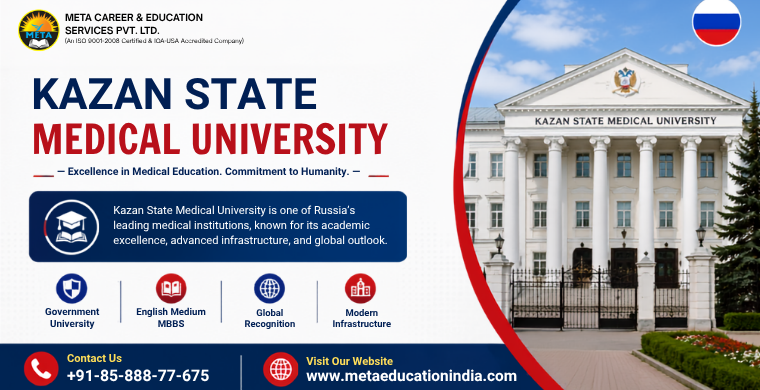
If you have been researching MBBS in Russia for any length of time, Kazan State Medical University has almost certainly come up. It is one of the most searched Russian medical universities among Indian students — and for good reason. It is government-run, NMC-recognized, English-medium, and considerably more affordable than private medical colleges in India. But popularity is not the same as the right fit. This guide gives you a clear, honest picture of what studying here actually involves so you can make a decision based on facts rather than brochure language.
A University With Over Two Centuries of History
Kazan Medical University was established in 1814—making it one of the oldest medical schools in Russia and one of the oldest in continental Europe. It is located in Kazan, the capital of the Republic of Tatarstan, a city widely referred to as the "third capital of Russia" for its size, economic importance, and cultural depth.
The university operates as a public institution under Russia's Ministry of Health. Government funding means stable infrastructure, salaried faculty, and a teaching structure that does not depend on aggressive annual fee hikes. Over more than two centuries, the campus has trained over 30,000 doctors who now practice across India, Europe, the Gulf, and North America.
Key Facts at a Glance
|
Particular |
Detail |
|
Established |
1814 |
|
Location |
Kazan, Republic of Tatarstan, Russia |
|
Type |
Government (public) medical university |
|
Affiliation |
Ministry of Health, Russian Federation |
|
Flagship Course |
General Medicine (equivalent to Indian MBBS) |
|
Duration |
6 years |
|
Medium of Instruction |
English |
|
Intake |
September |
|
Recognition |
NMC (India), WHO, listed on WDOMS |
|
Indian Students |
1,500+ currently enrolled |
|
Source Countries |
Around 50 |
|
Faculty-to-Student Ratio |
Approximately 1:10 |
What the Six-Year Program Actually Looks Like
The flagship program for international students is General Medicine — Russia's equivalent of the Indian MBBS. The degree runs for six years and is taught in English, with Russian language training built into the early semesters so students can communicate with patients during clinical rotations.
Years 1 and 2 cover the foundational sciences—anatomy, physiology, biochemistry, and histology. This is where the groundwork for everything clinical gets laid, and it demands consistent effort from Day 1.
Years 3 and 4 move into pathology, pharmacology, microbiology, and pathophysiology. The course shifts from understanding how the body works to understanding how and why it breaks down. This is also the stage where FMGE-oriented preparation should begin running parallel to Russian coursework.
Years 5 and 6 push students into affiliated teaching hospitals for rotations across general medicine, surgery, pediatrics, obstetrics and gynecology, and other core specialties. Patient interaction at this stage happens in Russian—students who ignored language classes in years 1 and 2 consistently find this phase much harder than it needs to be.
Upon graduation, you receive a Russian physician qualification that the NMC treats as MBBS-equivalent once you clear the licensing exam in India.
Eligibility — The Baseline You Must Meet
Kazan State Medical University eligibility follows NMC guidelines, so it is the same standard that applies to every recognized Russian medical university:
|
Requirement |
Criterion |
|
Academic |
Class 12 with Physics, chemistry, and Biology |
|
Minimum Marks — General |
50% aggregate in PCB |
|
Minimum Marks — Reserved |
40% aggregate in PCB |
|
Entrance Exam |
NEET qualified (valid for current year plus two prior years) |
|
Age |
Minimum 17 years by December 31 of the admission year |
One point that trips up students: NEET qualification is non-negotiable. Even with a confirmed university seat, a student without a valid NEET score cannot appear for the Indian licensing exam after graduation. The degree becomes unusable in India without that baseline. Treat NEET as the foundation of the entire plan.
Kazan State Medical University MBBS Fees — The Honest Breakdown
Kazan State Medical University MBBS fees are the primary reason Indian students look here. The numbers make a clear case when compared against private medical college fees in India.
|
Cost Head |
Indicative Figure |
|
Annual Tuition |
~636,000 RUB (approximately ₹6.50 lakh per year) |
|
Hostel |
Often included in the package fee |
|
Monthly Living Expenses |
₹30,000 – ₹40,000 per month (approx.) |
|
Capitation / Donation |
None |
|
Currency Basis |
The rupee value shifts with RUB/INR exchange rate |
Across the full six years, the realistic all-in budget, including tuition, hostel, food, and living, typically lands well below what a single year at many private Indian medical colleges now demands.
A few important warnings here. Different agents quote very different totals for the same university, and currency movement changes the rupee figure every month. Treat any figure you read online—including this one—as a reference starting point and verify the current Kazan State Medical University MBBS fees directly with a verified representative before transferring any payment. Also note that fees tend to rise slightly each year, so the Year 1 figure does not hold constant for all six years.
Step-by-Step Admission Process for 2026
The process is largely online, which removes much of the guesswork and paperwork that used to slow things down. Applications typically open in early summer for the September intake.
|
Stage |
Typical Timing |
|
Applications Open |
Early summer (May/June) |
|
Admission Letter Issued |
Usually within 2 weeks of complete application |
|
Invitation Letter and Visa Processing |
Through summer months |
|
Classes Begin |
September intake |
Step 1: Submit scanned copies of the Class 12 marksheet, passport, and NEET scorecard.
Step 2: The university reviews documents and issues an admission letter.
Step 3: An official invitation letter is sent. This document is required for your student visa application at the Russian Embassy in India.
Step 4: Apply for a Russian student visa with an invitation letter and fee payment receipt.
Step 5: Arrange travel — students from the same region often travel together.
Step 6: Arrive in Kazan, complete university registration, and begin the September intake.
Apply early rather than late. Seats for the English-medium program fill, and a rushed visa timeline is the most common reason confirmed students miss the start of the term.
Student Life in Kazan — What to Actually Expect
Kazan is widely regarded as one of the safer and more welcoming Russian cities for international students. A large, established Indian community already studies here, which eases the early transition and means you are not arriving somewhere unfamiliar alone.
The university provides hostel accommodation on a sharing basis. Indian mess and food options are available near campus, which matters significantly for vegetarian students and those adjusting to a new country.
The city itself is modern with functional public transport, markets, and a student culture that keeps daily life manageable. However, the winters are long and genuinely cold. Indian students who go unprepared for -15°C to -25°C temperatures in January and February consistently regret it. Budget for proper thermal clothing before you leave.
The FMGE and NExT Reality — Read This Before You Decide
This is the section that matters more than fees or rankings. After completing your degree at Kazan Medical University, you cannot practice medicine in India without first clearing a licensing exam.
Currently, that exam is the FMGE (Foreign Medical Graduate Examination) conducted by the National Board of Examinations. The NExT (National Exit Test) is the long-discussed replacement, but the NMC has deferred it repeatedly and is currently running a multi-year pilot. For today's applicants, planning around FMGE is the practical approach.
The national FMGE pass rate for foreign medical graduates has historically stayed low—well under half of candidates clearing on any given attempt. Kazan State Medical University's reported pass rate in recent cited years has sat in a similar range. That is not a reason to panic, but it demands clear-headed planning.
What consistently separates students who clear FMGE from those who do not is not which university they attended. It is:
-
Starting India-oriented FMGE preparation from Year 3 onwards, running parallel to Russian coursework
-
Using platforms like Marrow or PrepLadder consistently, not just in the final months
-
Taking Russian language seriously so clinical years are genuinely useful, not just observational
-
Treating the licensing exam as the real finish line from Day 1 — not an afterthought after graduation
Plan for 6 to 12 months of focused post-graduation preparation before your first FMGE attempt. Students who leave it for the flight home regularly take years to clear it.
Why Students Keep Choosing Kazan Over Other Options
When students and families weigh MBBS in Russia options, Kazan consistently ranks among the top choices for several concrete reasons.
The 1814 founding date is not just a historical footnote—it means over two centuries of curriculum refinement, faculty expertise, and hospital infrastructure that newer institutions simply cannot match. The NMC and WHO recognition is verified and stable. The English-medium teaching removes the language barrier from academics while still providing Russian language training for clinical work.
The cost structure makes a medical career accessible to middle-class families who would otherwise face either a government seat lottery or a ₹1 crore private college bill. And Kazan as a city—safe, modern, student-friendly, and with an established Indian community—makes the six-year stay genuinely liveable rather than an endurance test.
For students who go in with realistic expectations and serious intent, the combination of credibility, recognition, affordability, and clinical exposure is difficult to match at this price point.
Frequently Asked Questions
Is Kazan State Medical University recognized by NMC and WHO? Yes. It appears on the World Directory of Medical Schools and carries NMC and WHO recognition — the baseline needed for the degree to count toward Indian licensing.
How long is the MBBS course at Kazan State Medical University? Six years—foundational sciences in the early years, clinical rotations in affiliated teaching hospitals in the final years.
What are the Kazan State Medical University MBBS fees per year? Annual tuition is approximately 636,000 Russian roubles, roughly ₹6.50 lakh per year at recent exchange rates. A hostel is often included in package fees. Always confirm current figures directly before paying.
Is the course taught in English? Yes. Academic instruction is in English. The Russian language is taught additionally from early semesters and becomes necessary for patient communication during clinical years.
What is the FMGE pass rate for Kazan graduates? Reported pass rates have sat in the low thirties in percentage terms in recent cited years—broadly in line with the national average for foreign medical graduates. Strong, early, self-driven preparation is what lifts individual candidates above that figure.
Is Kazan safe for Indian students? Yes. Kazan is widely regarded as one of the safer Russian cities for international students, with 24-hour hostel security and a well-established Indian student community.
When does the academic session start? The main intake begins in September. Applications generally open in May or June — apply early to leave time for document processing and visa scheduling.
Can I practice medicine in India after graduating? Yes, after clearing the FMGE or NExT licensing exam. The degree qualifies you to sit the exam; passing it grants the license to practice.
Final Word
Kazan State Medical University offers a credible, NMC-recognized, affordable platform for a medical career. The history is real, the recognition is verified, and the cost makes sense when compared to the alternatives. What you build on that platform comes down entirely to the discipline and preparation you bring to six years of hard work.
If you are exploring all available MBBS admission in Russia options and want to compare Kazan with other NMC-approved Russian universities, fee structures, city-wise living costs, and complete 2026 admission guidance, visit Meta Education India or call +91-8588877675.

 English
 French
 Spanish
 Portuguese
 Deutsch
 Turkish
 Dutch
Dutch
 Italiano
 Russian
 Romaian
 Portuguese (Brazil)
 Greek
Greek
