


 Ban & Monetization Policy
 MyLiveRoom Rewards Program Rules & Eligibility
7 Ways Hospital Management Software Transforms Healthcare
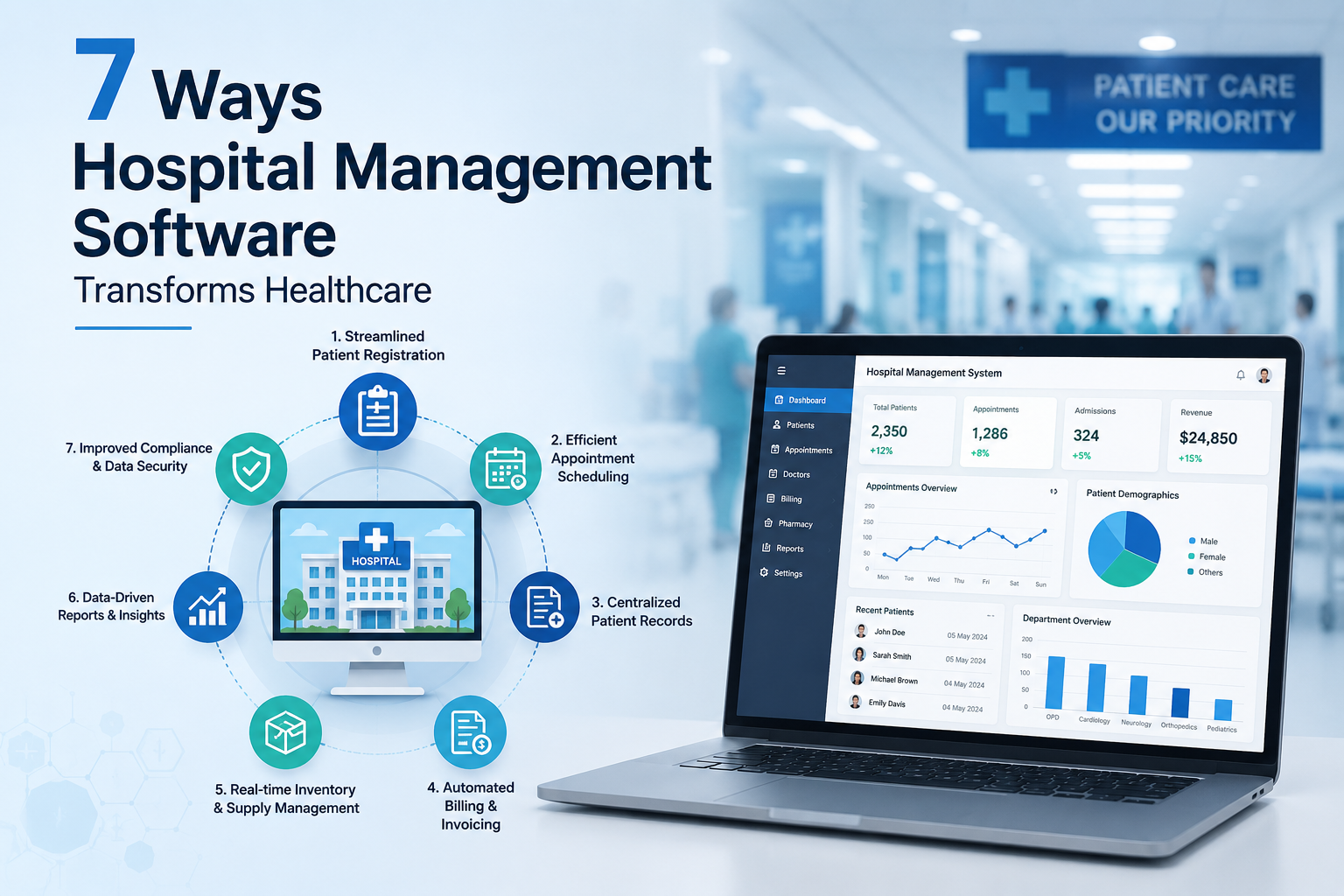
The healthcare industry is becoming increasingly complex as hospitals manage growing patient volumes, expanding medical services, regulatory requirements, and operational challenges. Traditional hospital management methods often rely on disconnected systems and manual processes that slow down workflows, increase administrative burdens, and affect patient satisfaction. To provide high-quality healthcare while maintaining operational efficiency, hospitals are rapidly embracing digital transformation.
One of the most impactful technologies driving this change is Hospital Management Software. It brings together multiple hospital operations—including patient registration, appointment scheduling, billing, pharmacy, laboratory management, electronic medical records, and reporting—into one centralized platform. This integration helps healthcare providers improve productivity while delivering better patient care.
Modern hospitals require technology that not only simplifies administration but also enhances communication between departments and provides real-time access to critical patient information. Hospital management software addresses these needs by automating routine tasks and supporting faster clinical decision-making.
1. Simplifies Patient Registration and Appointment Management
The patient experience begins long before treatment starts. Registration, appointment booking, and admission processes are often the first interactions patients have with a healthcare organization. When these processes are slow or inefficient, patient satisfaction immediately declines. Modern hospitals need systems that make patient onboarding quick, organized, and error-free.
Faster Registration Process
Traditional registration involves multiple paper forms, repetitive information entry, and manual verification. These activities increase waiting times and create unnecessary administrative work. With, patient information is captured digitally, reducing paperwork while improving accuracy. Staff can retrieve existing records instantly, allowing returning patients to complete registration within minutes.
Smart Appointment Scheduling
Modern software allows patients to book appointments online while enabling hospitals to manage doctor availability, consultation schedules, and appointment reminders from one dashboard. Automated reminders reduce missed appointments, optimize physician schedules, and improve overall operational efficiency. Patients also appreciate the convenience of rescheduling appointments without lengthy phone calls.
2. Centralizes Patient Medical Records
Healthcare providers rely on complete and accurate patient information to make informed treatment decisions. Paper records or disconnected systems often delay access to critical information. Centralized digital records eliminate these challenges and improve care coordination.
Instant Access to Patient Information
Doctors, nurses, and specialists can securely access patient histories, prescriptions, allergies, laboratory reports, imaging results, and treatment plans whenever needed. This immediate access reduces delays during consultations and improves clinical decision-making.
Better Continuity of Care
Since all authorized departments access the same patient records, care becomes more coordinated. Whether patients visit different specialists or require emergency care, Hospital Management Software ensures healthcare professionals work with consistent and updated medical information.
3. Improves Billing, Insurance, and Financial Management
Hospital billing is often one of the most time-consuming administrative tasks. Managing consultation charges, pharmacy bills, insurance claims, diagnostics, and payment collections manually increases the possibility of errors and revenue leakage.
Automated Billing System
Hospital management software automatically generates invoices based on services provided. It integrates consultation fees, laboratory charges, pharmacy purchases, and inpatient services into a single billing workflow. Automation reduces human errors while speeding up payment processing.
Better Revenue Cycle Management
Advanced Hospital Management Software also helps hospitals manage insurance claims, payment tracking, outstanding balances, and financial reporting. Administrators gain better visibility into hospital revenue while reducing billing disputes and claim processing delays.
4. Enhances Communication and Collaboration Across Departments
Hospitals operate through multiple interconnected departments, including emergency care, radiology, laboratories, pharmacy, billing, nursing, and administration. When communication between these departments is slow or disconnected, patient care can suffer due to delays, duplicate work, or missing information. A centralized digital system helps eliminate these barriers and creates a more coordinated healthcare environment.
Real-Time Information Sharing
One of the biggest advantages of Hospital Management Software is its ability to provide real-time access to patient records and operational data. Doctors can instantly review laboratory reports, pharmacists can verify prescriptions electronically, and nurses can update patient progress without waiting for physical files. This seamless flow of information improves response times and reduces unnecessary delays.
Better Team Collaboration
Healthcare professionals often work together to deliver comprehensive patient care. A centralized hospital management platform ensures every authorized team member has access to updated patient information whenever needed. This improves collaboration between departments, reduces communication errors, and helps medical teams make faster and more informed treatment decisions.
5. Optimizes Pharmacy and Inventory Management
Hospitals depend on a continuous supply of medicines, surgical equipment, medical devices, and consumables. Manual inventory tracking can result in stock shortages, expired medications, or unnecessary purchases that increase operational costs. Digital inventory management helps hospitals maintain better control over their resources.
Smart Inventory Tracking
Modern hospital systems continuously monitor inventory levels and automatically update stock information whenever medicines or supplies are issued. Administrators receive alerts when inventory reaches minimum levels, allowing timely procurement before shortages affect patient care.
Efficient Pharmacy Operations
Advanced Hospital Management Software also improves pharmacy management by digitizing prescriptions, monitoring medicine availability, and maintaining dispensing records. Pharmacists can verify prescriptions electronically, reducing medication errors while improving patient safety. Automated inventory reports also help healthcare facilities reduce waste and manage pharmaceutical expenses more effectively.
6. Improves Data Security and Regulatory Compliance
Healthcare organizations handle highly confidential patient information every day. Protecting this data is essential not only for maintaining patient trust but also for complying with healthcare regulations. Paper records and outdated systems increase the risk of unauthorized access and data loss.
Protecting Sensitive Healthcare Information
Modern hospital management systems use multiple layers of security, including encryption, secure login authentication, role-based access permissions, and regular data backups. These security measures ensure that only authorized personnel can access sensitive medical information.
Supporting Regulatory Compliance
Professional Hospital Management Software helps hospitals maintain complete audit trails, electronic documentation, and standardized reporting that supports compliance with healthcare regulations. Automated record management reduces human error while simplifying inspections, accreditation processes, and regulatory reporting requirements.
7. Supports Better Decision-Making Through Analytics
Hospital administrators require accurate information to make strategic decisions regarding staffing, patient care, operational efficiency, and financial performance. Manual reporting often provides outdated or incomplete information that limits effective planning.
Modern hospital management software transforms operational data into valuable business insights.
Real-Time Reporting and Dashboards
Hospital management platforms provide dashboards that display key performance indicators such as patient admissions, bed occupancy, revenue, inventory usage, appointment schedules, and staff productivity. These reports enable administrators to identify trends and respond quickly to operational challenges.
Data-Driven Hospital Management
Advanced Hospital Management Software includes business intelligence and analytics tools that help healthcare organizations forecast patient demand, optimize staffing levels, improve financial planning, and monitor clinical performance. Better access to operational insights supports continuous improvement and long-term organizational growth.
Conclusion
Healthcare organizations are under increasing pressure to deliver exceptional patient care while managing rising operational costs and growing administrative responsibilities. Traditional management methods often struggle to keep pace with the demands of today's healthcare environment. Digital transformation has become essential for hospitals that want to improve efficiency, enhance patient experiences, and remain competitive.
Hospital Management Software provides an integrated platform that simplifies patient registration, appointment scheduling, medical record management, billing, pharmacy operations, inventory tracking, communication, reporting, and compliance. By automating routine processes and connecting hospital departments, it enables healthcare providers to focus more on delivering quality care and less on administrative tasks.
 Portuguese
 English
 Arabic
 French
 Spanish
 Deutsch
 Turkish
 Dutch
Dutch
 Italiano
 Russian
 Romaian
 Portuguese (Brazil)
 Greek
Greek
