


 Ban & Monetization Policy
 MyLiveRoom Rewards Program Rules & Eligibility
Designing Cloud-Based Bioinformatics Pipelines for Clinical Use
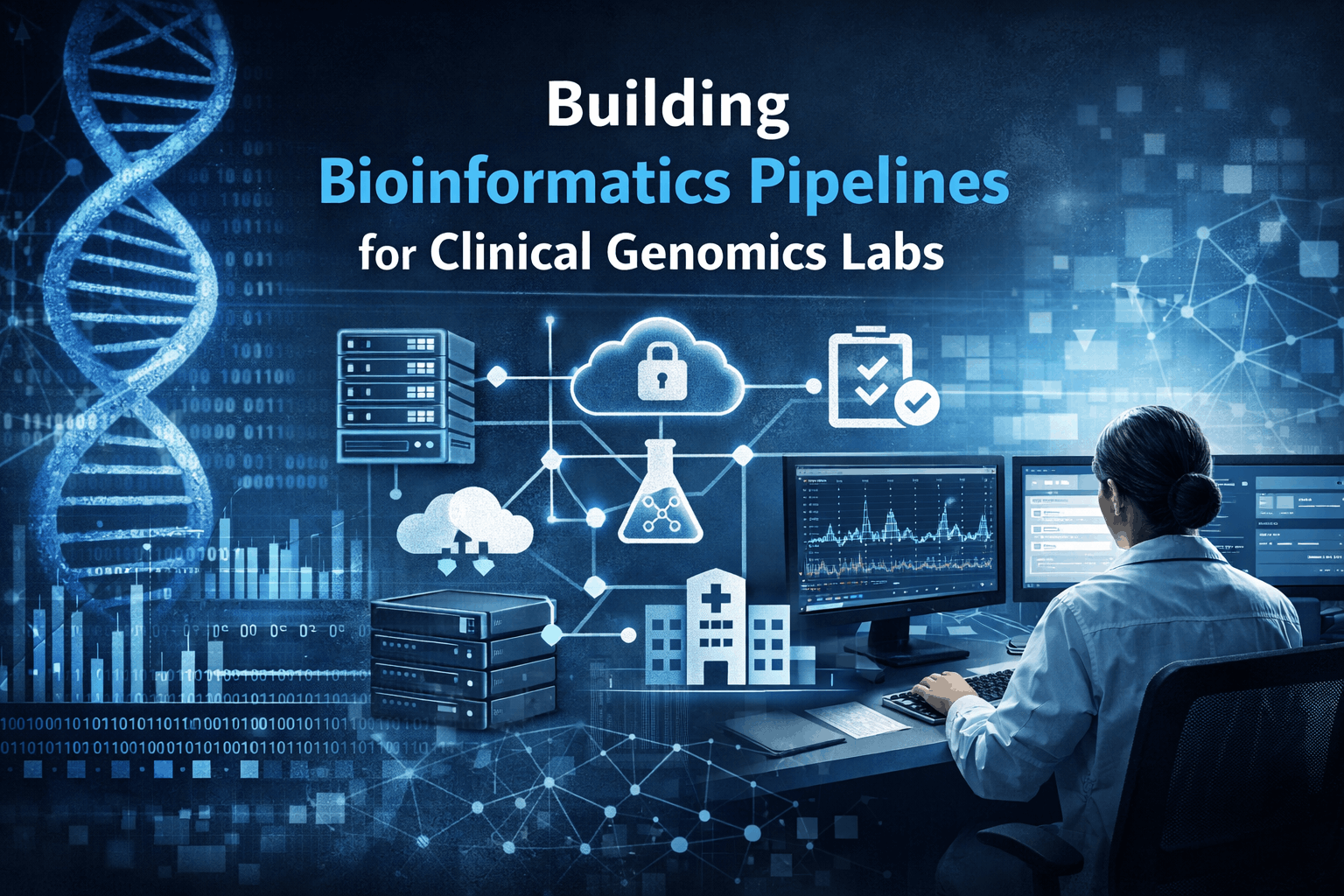
Building a bioinformatics pipeline for research is one thing. Building one that reliably processes thousands of patient samples in a clinical environment is something entirely different.
Many genomics teams begin with research-grade workflows that perform well during early development but struggle once they move into production. As sample volumes increase, pipelines become slower, integrations become harder to maintain, and regulatory requirements expose gaps that were never considered during development.
This is why production-ready bioinformatics software development focuses on more than just analysis. It combines scalable infrastructure, reproducibility, automation, security, and compliance into a system that can support clinical operations for years.
Why Research Pipelines Often Fail in Clinical Labs
Research pipelines are designed for flexibility and experimentation. Clinical genomics pipelines are built for consistency and traceability.
Common challenges include:
- Inconsistent results caused by changing software versions or reference genomes
- Limited scalability as sequencing volumes increase
- Poor integration with LIMS, EHRs, and reporting systems
- Missing audit logs required for CLIA and CAP compliance
- Manual processes that increase turnaround time
Without addressing these issues, even a technically accurate pipeline can become difficult to maintain in production.
What Makes a Clinical Bioinformatics Pipeline Production Ready?
Reproducible Workflows
Every pipeline run should generate identical results using the same input data. Containerized workflows with tools like Docker and workflow managers such as Nextflow or Snakemake help maintain reproducibility across different environments.
Scalable Cloud Infrastructure
Modern genomics pipelines often rely on cloud-native platforms that automatically scale computing resources based on workload. This allows laboratories to process growing sequencing volumes without rebuilding infrastructure.
Integrated Clinical Systems
A production pipeline should connect seamlessly with:
- Laboratory Information Management Systems (LIMS)
- Electronic Health Records (EHR)
- Variant annotation databases
- Clinical reporting platforms
Strong integrations reduce manual work while improving data accuracy.
Complete Audit Trails
Clinical laboratories require detailed records for every analysis.
This includes:
- Software versions
- Reference genome versions
- Pipeline parameters
- Processing timestamps
- Input and output validation
These records support regulatory compliance and simplify future audits.
Designing for Long-Term Growth
As sequencing technologies evolve, pipelines must adapt without major redesign.
An experienced genomics platform engineering partner focuses on modular architecture, automated deployments, workflow monitoring, and infrastructure that supports future expansion.
This approach helps organizations scale from hundreds to thousands of samples while maintaining reliability and performance.
Build the Right Foundation Before Development Starts
The biggest challenges in clinical genomics rarely come from variant calling alone. They usually appear later during infrastructure scaling, validation, regulatory reviews, or system integration.
Before building a production pipeline, ask:
- Can the workflow scale as sequencing volume grows?
- Is the infrastructure designed for cloud deployment?
- Are compliance requirements built into the architecture?
- Will the pipeline integrate smoothly with clinical systems?
Answering these questions early reduces technical debt and avoids costly redevelopment.
Final Thoughts
Designing a production bioinformatics pipeline requires more than scientific expertise. It demands software engineering practices that support scalability, reproducibility, compliance, and long-term maintenance.
Whether you're building a new clinical genomics platform or modernizing an existing workflow, investing in robust bioinformatics software development and working with an experienced genomics platform engineering partner can help deliver reliable, production-ready systems that meet the needs of modern clinical laboratories.
 Russian
 English
 Arabic
 French
 Spanish
 Portuguese
 Deutsch
 Turkish
 Dutch
Dutch
 Italiano
 Romaian
 Portuguese (Brazil)
 Greek
Greek
