


 Ban & Monetization Policy
 MyLiveRoom Rewards Program Rules & Eligibility
Air Gauging vs. Contact Gauging: Which Measurement Method Fits Your Production Line?
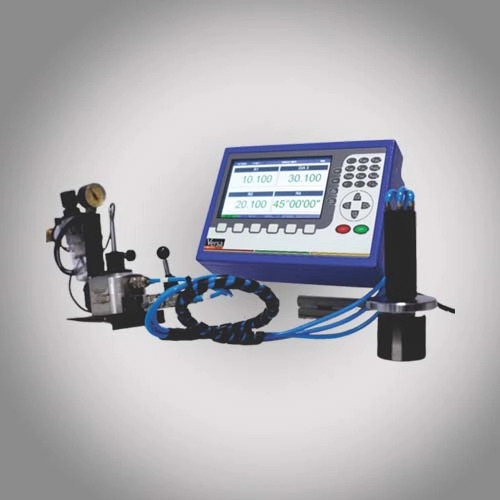
Every manufacturer working with tight tolerances eventually faces the same question: is contact-based measurement good enough, or does the process demand something more precise? For high-volume production of bores, IDs, and cylindrical parts, that question usually comes down to one comparison — air gauging vs. contact gauging.
What Makes Air Gauging Different
Traditional contact gauges — micrometers, bore gauges, dial indicators — physically touch the part to take a reading. That works fine for many applications, but contact introduces variables: operator technique, tool wear, and the risk of scratching or deforming delicate or soft-material surfaces.
Air gauges take a different approach. A controlled stream of air is passed through a precision nozzle or plug, and the back-pressure or flow rate created by the gap between the tool and the part surface is converted into a highly accurate dimensional reading — often down to sub-micron levels. Because there's no physical contact, there's no wear on the gauge and no damage to the part.
Where Air Gauging Wins
1. Repeatability at high volume. In production environments running thousands of parts a shift, consistency matters more than a single accurate reading. Air gauging removes operator-dependent variation almost entirely, which makes it a natural fit for automotive, hydraulics, and pneumatic component manufacturing.
2. Measuring soft or delicate materials. Aluminum bores, plastic components, and thin-walled parts can deform under contact pressure, throwing off readings. Air gauging measures without touching, so the part's true dimension is captured every time.
3. Speed on the line. Air gauging systems are built for in-process or post-process checks that take seconds, not minutes — useful when 100% inspection is the goal rather than sampling.
4. Complex internal geometries. Measuring ID diameters, taper, ovality, and roundness inside a bore is far easier with an air plug than with a mechanical bore gauge, especially when the bore is deep or has limited access.
Where Contact Gauging Still Makes Sense
Contact gauging isn't obsolete — it's simply better suited to different jobs. For one-off measurements, prototype checks, low-volume runs, or measuring external features where mechanical tools like calipers and micrometers are faster to set up, contact methods remain the practical choice. The upfront cost of contact tools is also lower, which matters for smaller shops or applications where sub-micron precision isn't required.
Making the Call
The decision usually comes down to three questions:
-
How many parts are you measuring, and how often?
-
Does the tolerance require sub-micron accuracy?
-
Can the material or geometry tolerate physical contact?
If the answer points toward high volume, tight tolerance, or delicate/complex geometry, air gauging is worth the investment. If you're measuring occasionally, or working with simpler external dimensions, contact tools will usually get the job done without added cost.
Manufacturers looking to understand air gauging in more depth — including unit types and how ID measurement setups are typically configured for production lines — can find a detailed breakdown of air gauging solutions for modern manufacturing from Versa Controls, a precision gauging equipment provider.
Final Thought
Neither method is universally "better" — they solve different problems. The manufacturers who get the most value from their quality control budget are the ones who match the measurement method to the part, the volume, and the tolerance, rather than defaulting to whatever's already on the shop floor.
 English
 Arabic
 French
 Spanish
 Portuguese
 Deutsch
 Turkish
 Dutch
Dutch
 Italiano
 Russian
 Romaian
 Portuguese (Brazil)
 Greek
Greek
