


 Ban & Monetization Policy
 MyLiveRoom Rewards Program Rules & Eligibility
How Autonomous Forklifts Are Reshaping North American Warehouses
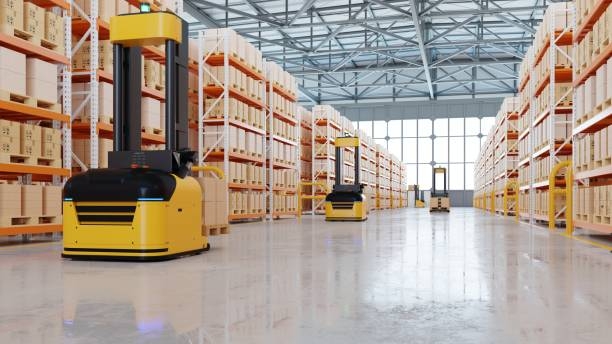
Warehouse operations across North America are undergoing a significant transformation as businesses seek smarter ways to improve productivity, workplace safety, and supply chain resilience. Autonomous forklifts have emerged as an important component of modern material handling by automating repetitive transportation tasks within warehouses, manufacturing facilities, and distribution centers. As companies continue to modernize their logistics infrastructure, automated forklift solutions are becoming increasingly relevant for improving operational efficiency while reducing dependence on manual processes.
The growing adoption of automated warehouse material handling solutions reflects the broader shift toward intelligent logistics systems. Industry assessments published by MarkNtel Advisors highlight the increasing interest in automation technologies that enable organizations to streamline inventory movement, optimize warehouse layouts, and support continuous operations without compromising safety or productivity.
Unlike conventional forklifts that require continuous operator involvement, autonomous forklifts leverage technologies such as sensors, cameras, artificial intelligence, laser navigation, and advanced software to move materials with minimal human intervention. These machines can safely navigate warehouse environments, identify obstacles, transport pallets, and coordinate with warehouse management systems, making them valuable assets for organizations pursuing digital transformation.
Why Warehouse Automation Is Accelerating
Supply chain disruptions, labor shortages, and rising customer expectations have encouraged businesses to rethink warehouse operations. Faster order fulfillment, greater inventory accuracy, and consistent operational performance have become essential competitive advantages. Autonomous forklifts support these objectives by automating repetitive transportation activities while allowing employees to focus on higher-value responsibilities.
Modern distribution centers also operate around the clock, making automation increasingly attractive. Autonomous equipment can perform routine material handling tasks continuously, helping organizations improve workflow consistency and reduce operational interruptions. According to the MHI, warehouse automation continues to expand as companies invest in technologies that improve supply chain performance and operational flexibility.
Technologies Powering Autonomous Forklifts
Today's autonomous forklifts integrate multiple advanced technologies to ensure accurate navigation and safe operation. Artificial intelligence enables machines to interpret their surroundings, while LiDAR, cameras, ultrasonic sensors, and simultaneous localization and mapping (SLAM) technologies help vehicles understand warehouse environments in real time. These systems work together to identify obstacles, optimize routes, and safely transport goods.
Cloud connectivity further enhances operational visibility by allowing fleet managers to monitor vehicle performance, schedule maintenance, and analyze productivity metrics remotely. Integration with warehouse management systems enables autonomous forklifts to receive task assignments automatically, ensuring seamless coordination across warehouse operations. The National Institute of Standards and Technology (NIST) continues to support research that advances intelligent manufacturing and automation technologies.
Benefits Beyond Productivity
Although efficiency is often the primary motivation for automation, autonomous forklifts provide several additional operational benefits. They contribute to improved workplace safety by minimizing the likelihood of collisions and reducing employee exposure to hazardous material handling tasks. Consistent driving behavior also helps lower the risk of product damage and equipment wear.
Organizations can also benefit from greater inventory accuracy since autonomous systems follow predefined routes and standardized operating procedures. This consistency helps reduce human error while improving inventory tracking and warehouse organization. Predictable operations also simplify workforce planning and enhance overall supply chain reliability.
Industries Driving Adoption
Several industries across North America are embracing autonomous forklift technology to support increasingly complex logistics operations. Manufacturing facilities use automated forklifts to transport raw materials between production lines, while e-commerce fulfillment centers rely on them to move inventory quickly during peak demand periods.
The food and beverage sector benefits from automation in temperature-controlled warehouses where repetitive transportation tasks are common. Similarly, automotive manufacturers, pharmaceutical companies, retail distribution centers, and third-party logistics providers continue exploring autonomous material handling solutions to improve operational consistency and warehouse scalability.
Challenges That Businesses Must Address
Despite their advantages, autonomous forklifts require thoughtful implementation strategies. Warehouse infrastructure may need modifications to accommodate autonomous navigation, and organizations must ensure compatibility with existing warehouse management systems. Employee training also remains important, as workers must understand how to safely collaborate with automated equipment.
Cybersecurity, system maintenance, and ongoing software updates are additional considerations as connected warehouse technologies become more prevalent. Organizations typically achieve the best outcomes when automation projects are introduced gradually through pilot deployments before expanding across larger facilities.
The Road Ahead for Intelligent Material Handling
As digital transformation continues to influence warehouse operations, autonomous forklifts are expected to become increasingly integrated with robotics, artificial intelligence, predictive analytics, and Industrial Internet of Things (IIoT) platforms. Future warehouse ecosystems will likely feature coordinated fleets of autonomous equipment working alongside human employees to optimize operational efficiency and adaptability.
Rather than replacing human expertise, autonomous forklifts are redefining how warehouses operate by automating repetitive activities and supporting more informed operational decision-making. As North American businesses continue investing in resilient and technology-enabled supply chains, intelligent material handling solutions are expected to play an increasingly important role in shaping the future of warehouse operations.
 Italiano
 English
 Arabic
 French
 Spanish
 Portuguese
 Deutsch
 Turkish
 Dutch
Dutch
 Russian
 Romaian
 Portuguese (Brazil)
 Greek
Greek
