


 Ban & Monetization Policy
 MyLiveRoom Rewards Program Rules & Eligibility
Why a Factory Sensor Grid Blocks Deep Space Light Channels
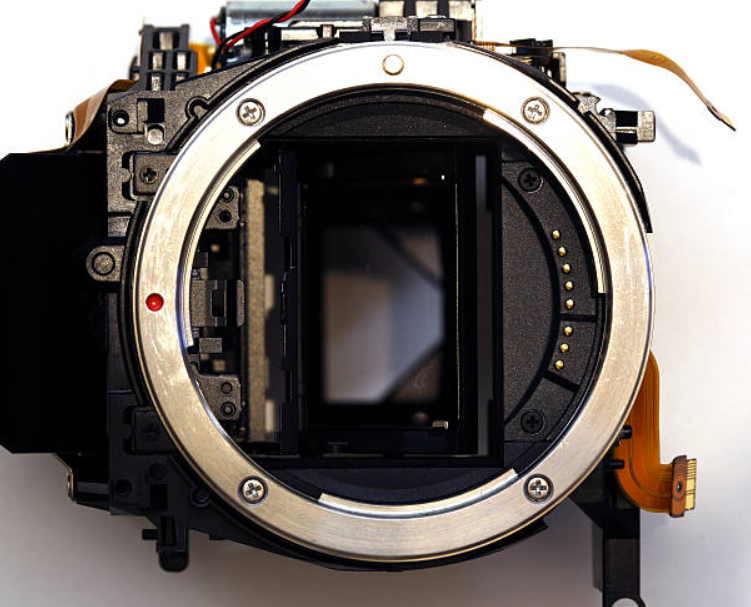
Capturing the true essence of deep space involves navigating a complex matrix of light wavelengths. Many amateur astronomers set up their expensive optical systems under dark skies only to discover that their raw images look flat, grey, and completely devoid of structural detail. You might think that purchasing a larger telescope tube or adding advanced stacking software will instantly unlock those vibrant crimson clouds seen in professional space agency galleries. However, standard commercial digital cameras are structurally limited by internal factory filters designed strictly for daytime photography. These built-in glass elements intentionally block over seventy-five percent of the critical light rays traveling from deep-space emission nebulae. When you are aiming to document ancient cosmic structures, you cannot afford to have your stock imaging sensor actively discard the very photons you are trying to collect.
Many beginner astrophotographers assume that simply extending their exposure times can override a lack of native sensor sensitivity. While longer integration runs do stack background signals, they also heavily amplify electronic sensor noise and introduce major tracking error risks on your equatorial mount. This is precisely where a professional h-alpha camera modification steps in to permanently alter how your imaging body interacts with the universe. Investing in an expert internal modification workflow replaces the restrictive stock glass with an optically optimized window that transmits deep red, ultraviolet, and infrared light bands cleanly. This hardware upgrade provides an uninhibited optical pathway that enables your mirrorless or DSLR system to capture magnificent deep-sky structures with remarkable clarity.
How Consumer Hardware Architecture Blocks Crucial Hydrogen Emissions
Commercial digital cameras are intentionally tuned to replicate human vision by reflecting high-energy infrared radiation away from the imaging grid. The primary obstacle for astronomical imaging is the internal hot mirror filter resting directly over the silicon matrix. For backyard astronomers, this protective glass layer acts as an impenetrable wall against the specific hydrogen-alpha wavelength emitted by distant stellar nurseries and ionized gas clouds. Without a direct hardware intervention on the sensor stack, these massive cosmic structures will consistently appear faint and muddy, regardless of the quality of your primary telescope optics.
Automated cleaning tools and standard camera repair shops are completely unequipped to manage the microscopic calibration needs of an astrophotography sensor. Safely opening a modern mirrorless or DSLR housing requires specialized clean-room environments to prevent microscopic dust from settling on the naked silicon surface. A single particle of debris trapped beneath the replacement glass creates large, dark artifacts on every frame that are incredibly difficult to eliminate during digital post-processing. This is why utilizing a dedicated conversion laboratory remains essential for anyone wanting to transform off-the-shelf consumer gear into a high-performance astronomical instrument.
Achieving Perfect Focal Plane Alignment with Advanced Optical Glass
Experienced laboratory technicians bring decades of dedicated engineering knowledge to your specific camera modification, ensuring all delicate internal parts align down to the millimeter. When the thick, factory-installed infrared-blocking filter is extracted from the internal housing, the overall physical distance that light travels to focus changes instantly. Professional modification workflows utilize precision-milled replacement clear glass elements to accurately maintain the camera body's native refractive index. This meticulous calibration ensures that your upgraded hardware can still achieve flawless infinity focus when paired with complex telephoto lenses or specialized tracking telescopes.
When amateurs attempt to modify delicate internal camera components using basic online guides or improper tools, they risk causing permanent electrical shorts across sensitive ribbon cables. Professional laboratories operate under strict static-shielded protocols and provide comprehensive diagnostic testing before returning your upgraded equipment. Furthermore, an expert technician carefully aligns the internal sensor housing to prevent sensor tilt, which causes stars on one side of your frame to appear blurry. Keeping the silicon plane perfectly parallel with the optical axis ensures your star fields remain perfectly round and crisp from corner to corner.
Maximizing Visual Versatility with Specialized Secondary Filter Systems
Transitioning to an optimized, wide-spectrum camera body fundamentally changes how you approach target selection and filtration strategies in the field. Because the modified sensor is now fully receptive to an expansive range of the electromagnetic spectrum, incorporating specialized clip-in or screw-on filters becomes highly effective. Utilizing premium multi-band or light-pollution rejection filters allows you to isolate targeted chemical signatures like ionized hydrogen and oxygen. This level of control empowers you to pull intricate details out of bright city skies, expanding your overall observing options significantly.
Working alongside experienced technical teams helps take the guesswork out of building a dependable, budget-conscious imaging system. Professionals provide expert guidance tailored to your specific observational goals, whether you are tracking bright solar system targets or faint, distant galaxies. They help you pair your newly modified camera body with high-grade optical instruments, accessories, and heavy-duty tracking mounts that complement your hardware. This structured approach to system configuration prevents common compatibility errors, keeping your equipment running at peak performance throughout long observing sessions.
Conclusion
Unlocking the hidden beauty of deep-space emission nebulae requires a flawless approach to hardware optimization and absolute light transmission. Leaving your camera sensor restricted by factory filters limits your capability to gather faint, ancient astronomical wavelengths. Investing in a professional wide-spectrum sensor modification is the ultimate way to ensure your digital system processes the cosmos with supreme clarity.
 Portuguese
 English
 Arabic
 French
 Spanish
 Deutsch
 Turkish
 Dutch
Dutch
 Italiano
 Russian
 Romaian
 Portuguese (Brazil)
 Greek
Greek
