


 Ban & Monetization Policy
 MyLiveRoom Rewards Program Rules & Eligibility
How Automotive Bearings Are Advancing Indian Mobility
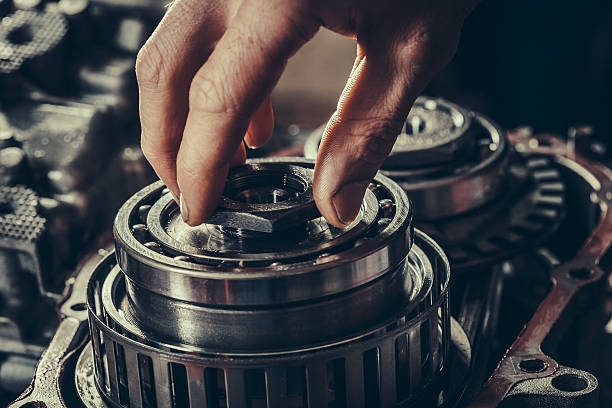
Automotive bearings are small mechanical components, yet their role in vehicle performance is substantial. They support rotating parts, manage friction, carry loads, and help critical systems operate with greater consistency. As India's mobility ecosystem evolves across passenger cars, two-wheelers, commercial vehicles, and electric platforms, bearing design is becoming increasingly connected with efficiency, durability, noise control, and modern vehicle engineering.
The transition toward technologically advanced vehicles is also changing expectations around component performance. Manufacturers are examining materials, lubrication, sealing, and precision engineering more closely to improve operational reliability. Analysis of India's vehicle bearing demand landscape indicates how expanding automotive production, replacement requirements, and electric mobility solutions are influencing the wider component ecosystem.
For bearing manufacturers, this shift is about more than supplying conventional rotating components. Vehicle architecture is becoming more complex, while expectations for lower energy loss and longer service life continue to shape engineering decisions. These factors are encouraging suppliers to develop application-specific bearing solutions suited to wheel assemblies, transmissions, electric powertrains, steering systems, and other demanding automotive environments.
Vehicle Production Is Expanding Bearing Requirements
India's automotive manufacturing base remains an important source of demand for precision components. Higher vehicle production creates requirements for bearings across engines, transmissions, wheels, steering assemblies, and auxiliary systems. According to MarkNtel Advisors, the India Automotive Bearing Market is projected to expand from USD 721 million in 2026 to nearly USD 982 million by 2032, registering a CAGR of around 5.28% during 2026–2032.
The relationship between vehicle production and bearing consumption is particularly important because a single automobile uses multiple bearing types for different operating conditions. Load capacity, rotational speed, temperature, vibration, and available installation space can influence component selection. Consequently, suppliers must align product development with changing vehicle platforms rather than relying on a single standardized bearing configuration.
Electric Mobility Is Changing Bearing Engineering
Electric vehicles are introducing distinct technical requirements for automotive bearings. Electric motors can operate at high rotational speeds, while powertrain systems place greater emphasis on low noise, energy efficiency, and durability. Bearings used in these applications may need to manage different thermal, electrical, and mechanical conditions compared with components designed primarily for conventional internal combustion engine platforms.
Electrical current leakage is one technical consideration within advanced electric powertrains. Bearing manufacturers have been developing hybrid configurations and other engineering approaches intended to improve reliability in such operating environments. SKF, for example, has discussed hybrid bearings and conductive brush technologies for addressing current leakage challenges in high-performance electric vehicle powertrains.
Noise, vibration, and harshness performance is another important consideration. Electric vehicles generally have quieter propulsion systems, making mechanical sounds more noticeable to occupants. This places additional attention on bearing geometry, surface finish, lubrication, and manufacturing tolerances. Components that support smoother rotational movement can contribute to the broader refinement objectives of electric vehicle engineering.
Lower Friction Supports Vehicle Efficiency Goals
Reducing mechanical friction remains a fundamental objective in automotive design. Bearings are specifically designed to support motion while limiting resistance between moving components. As vehicle manufacturers focus on energy efficiency, even incremental reductions in friction across multiple systems can become relevant to overall power consumption, thermal management, and component performance.
Advanced bearing designs increasingly consider optimized internal geometry, rolling element configuration, cage design, and lubrication performance. The objective is to achieve a balance between reduced resistance and sufficient load-bearing capability. This balance becomes especially important in applications where components operate continuously under changing speeds, road conditions, temperatures, and vehicle loads.
Lightweight engineering is also influencing component development. Reducing unnecessary mass can support broader vehicle efficiency objectives, particularly in electric vehicles where weight affects energy consumption and driving performance. Bearing suppliers are therefore examining materials and design optimization while maintaining the structural characteristics required for safety-critical and high-load automotive applications.
Ball Bearings Remain Important Across Applications
Ball bearings are widely used because of their ability to support rotational movement across diverse vehicle systems. Their relatively versatile design makes them suitable for applications requiring controlled friction and reliable operation. The MarkNtel Advisors study identifies ball bearings as the leading bearing type in India, reflecting their broad use across automotive assemblies and established relevance within vehicle component engineering.
However, bearing selection depends heavily on application requirements. Roller bearings may be preferred where higher radial loads are involved, while specialized configurations can be developed for wheel ends, transmissions, electric motors, or integrated sensor systems. The growing diversity of vehicle architectures is therefore creating a stronger need for engineering decisions based on specific operating conditions.
Replacement Demand Strengthens the Aftermarket Role
The automotive aftermarket represents another important part of the bearing ecosystem. Bearings experience repeated mechanical loads, vibration, heat, and exposure to challenging road conditions during vehicle operation. Over time, wear or lubrication-related issues can affect performance, making inspection and replacement relevant to vehicle maintenance and repair activities.
India's large and varied vehicle population creates different replacement cycles across passenger cars, two-wheelers, and commercial vehicles. Usage intensity, road conditions, maintenance practices, and component quality can influence bearing service life. Commercial vehicles operating for extended periods, for example, may face different mechanical stresses compared with privately used passenger vehicles.
Quality awareness in replacement components is also becoming increasingly important. Incorrect bearing selection or poor installation can affect operational reliability. As vehicle systems become more technically sophisticated, workshops and service networks may require better product identification, fitting practices, and understanding of application-specific bearing requirements.
Precision Manufacturing Will Shape Future Development
The next phase of automotive bearing development in India is likely to be closely associated with precision manufacturing, application-specific engineering, and evolving mobility technologies. Electric powertrains, integrated sensors, lightweight vehicle design, and efficiency requirements are creating new technical considerations for component suppliers and automotive manufacturers.
Bearings will remain largely invisible to vehicle users, but their engineering significance is becoming more pronounced. The ability to manage friction, speed, load, noise, and durability makes these components fundamental to modern vehicle performance. As Indian mobility platforms diversify, bearing technology will continue adapting to the mechanical and electrical requirements of a more advanced automotive ecosystem.
 French
 English
 Arabic
 Spanish
 Portuguese
 Deutsch
 Turkish
 Dutch
Dutch
 Italiano
 Russian
 Romaian
 Portuguese (Brazil)
 Greek
Greek
