


 Ban & Monetization Policy
 MyLiveRoom Rewards Program Rules & Eligibility
How Fine Jewelry Shapes Indian Consumer Choices
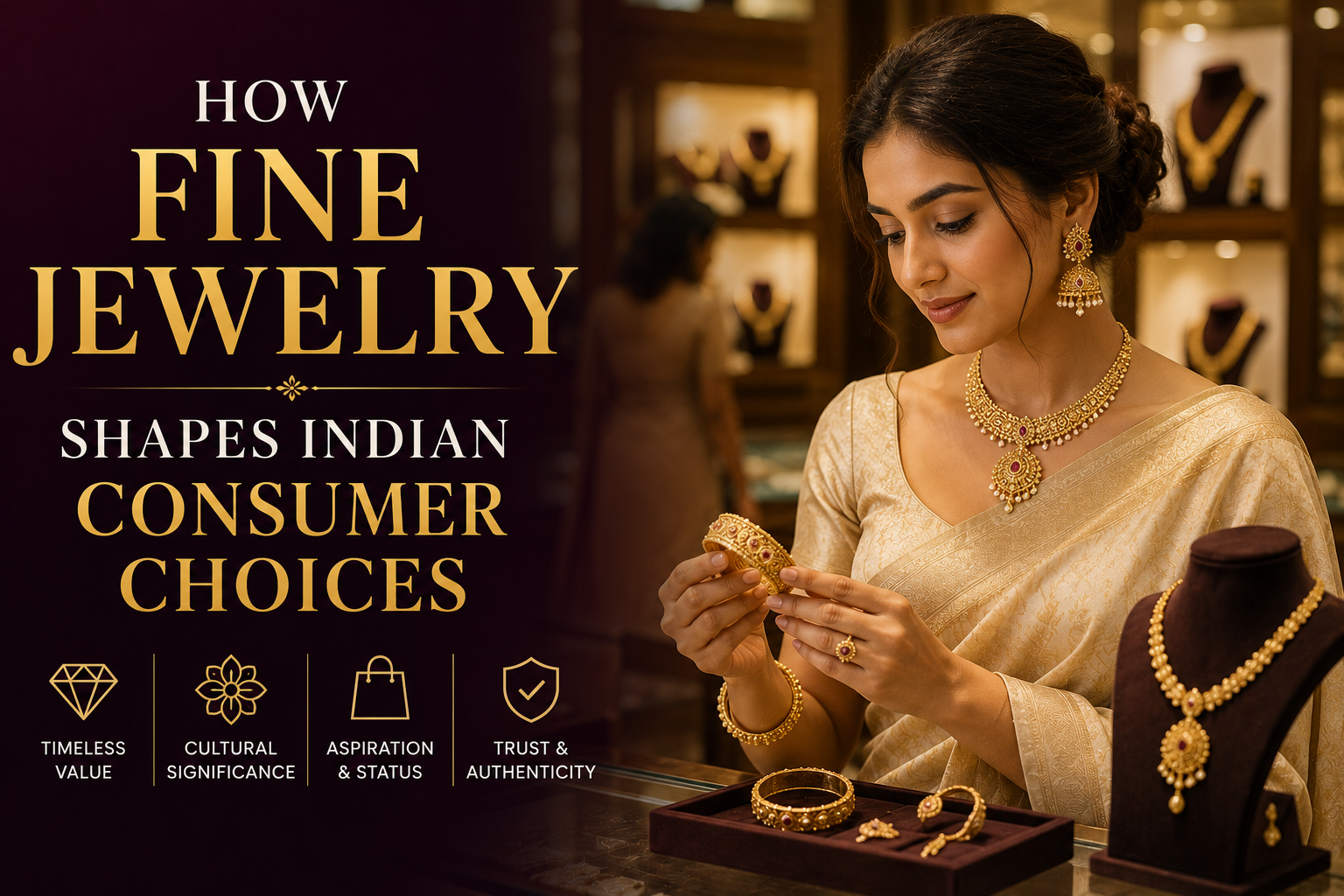
Fine jewelry holds a strong place in India because it combines culture, savings behavior, personal style, gifting, and social occasions. Gold, diamond, platinum, gemstone, silver, and crafted jewelry are purchased for weddings, festivals, family milestones, daily wear, and long-term value preservation. As consumers become more design-conscious, the sector is evolving from mainly occasion-led purchases toward branded, certified, lightweight, and everyday jewelry formats.
A recent India fine jewelry study by MarkNtel Advisors highlights demand from rings, handmade jewelry, South India, and strong wedding and festival consumption. The report values the sector at USD 85.18 billion in 2025 and projects it to grow from USD 87.19 billion in 2026 to USD 124 billion by 2032, reflecting a CAGR of around 6.05% during 2026–2032.
Cultural Demand Remains Central
Fine jewelry demand in India is closely connected with weddings, festivals, family traditions, religious occasions, and intergenerational gifting. Jewelry is often viewed not only as adornment but also as a store of value and a symbol of family security. This cultural base creates recurring demand across both urban and rural households.
The World Gold Council’s India gold demand analysis notes that gifting gold is deeply linked with marriage rituals in India and that weddings generate around half of the country’s annual gold demand. This makes bridal and festive buying a major influence on fine jewelry consumption.
Rings Lead Product Demand
Rings accounted for around 23% share in 2026, according to the shared study. Their strong position is linked with engagements, proposals, anniversaries, gifting, daily wear, and milestone purchases. Rings are also easier to personalize through metal choice, gemstone setting, size, engraving, and design style.
This category benefits from both traditional and modern buying behavior. While many consumers purchase rings for ceremonies, younger buyers may also choose them for self-expression, workwear, or casual styling. This helps rings remain relevant across age groups and purchase occasions.
Handmade Jewelry Holds Strong Importance
Handmade jewelry accounted for nearly 71% share in 2026, making it the leading manufacturing process in the report. India has a long tradition of skilled craftsmanship, including hand-setting, engraving, filigree, meenakari, kundan, temple jewelry, and region-specific designs. These techniques continue to shape consumer preference for detailed and culturally meaningful pieces.
Handmade jewelry remains important because many buyers value uniqueness, artistry, and traditional design identity. However, machine-made production is also gaining relevance where consistency, faster production, lighter designs, and cost control are important. Both approaches are likely to coexist across different price ranges and consumer segments.
Hallmarking Builds Consumer Trust
Trust is essential in fine jewelry because consumers often evaluate purity, weight, certification, design, and resale value before purchasing. Hallmarking helps improve transparency by verifying the purity of precious metal items. This is especially important as buyers shift toward organized retailers and certified products.
The Bureau of Indian Standards’ hallmarking overview explains the registration process for jewellers selling hallmarked gold and silver jewellery or artefacts. BIS hallmarking supports consumer confidence by strengthening purity assurance and reducing information gaps between sellers and buyers.
South India Shows Strong Demand
South India accounted for around 32% share in 2026, according to the report. The region’s position is supported by strong cultural affinity for gold, wedding purchases, festival demand, and long-established jewelry traditions. Tamil Nadu, Karnataka, Telangana, Kerala, and Andhra Pradesh have deep-rooted jewelry consumption patterns.
Southern demand is also supported by manufacturing and retail networks. Traditional goldsmithing, regional designs, branded stores, family-owned jewellers, and organized retail chains all contribute to the region’s strong role in India’s fine jewelry ecosystem.
Lightweight Jewelry Gains Relevance
Rising gold prices are encouraging many consumers to choose lightweight designs, lower-carat options, and design-led pieces that reduce metal weight without reducing visual appeal. This shift is especially visible among younger buyers and working consumers who want jewelry suitable for daily use rather than only heavy ceremonial wear.
Lightweight jewelry supports affordability and purchase frequency. Earrings, rings, chains, bracelets, pendants, and small diamond pieces can attract consumers who want fine jewelry within manageable budgets. Retailers are responding with collections designed for office wear, casual styling, and gifting.
Lab-Grown Diamonds Expand Choice
Lab-grown diamonds are becoming more visible in India’s fine jewelry landscape because they offer diamond jewelry at relatively accessible prices compared with many natural diamond options. They are especially relevant for younger consumers who want design, sparkle, and everyday usability at lower entry points.
This trend does not remove demand for natural diamonds, but it expands consumer choice. Lab-grown diamonds support rings, earrings, pendants, bracelets, and lightweight collections. Retailers that clearly explain certification, origin, pricing, and care instructions can help buyers make more informed decisions.
Organized Retail Is Expanding
The report notes that the top five organized players account for nearly 25% combined share, showing a fragmented structure with many regional and family-owned jewellers. However, organized retail is becoming more visible through branded showrooms, online catalogs, certification, exchange policies, and wider product variety.
Organized retailers often compete through trust, transparent pricing, design range, hallmarking, digital engagement, and store experience. Smaller jewellers continue to compete through local relationships, customization, craftsmanship, and family trust. This mix keeps the sector competitive across cities, towns, and regional markets.
Outlook for Fine Jewelry in India
India’s fine jewelry demand is being shaped by cultural consumption, rings, handmade craftsmanship, South India’s strong share, hallmarking, lightweight designs, lab-grown diamonds, and organized retail expansion. The report figures indicate steady growth through 2032 as consumers balance tradition, affordability, certification, and personal style.
The long-term direction will depend on gold prices, household income, wedding demand, retail formalization, design innovation, certification awareness, and consumer trust. As buying behavior evolves, fine jewelry in India will remain culturally rooted while becoming more diverse, branded, and suitable for everyday use.
 Greek
Greek
 English
 Arabic
 French
 Spanish
 Portuguese
 Deutsch
 Turkish
 Dutch
Dutch
 Italiano
 Russian
 Romaian
 Portuguese (Brazil)
