


 Ban & Monetization Policy
 MyLiveRoom Rewards Program Rules & Eligibility
Power Socket Works Only at Certain Angles? Common Causes Explained
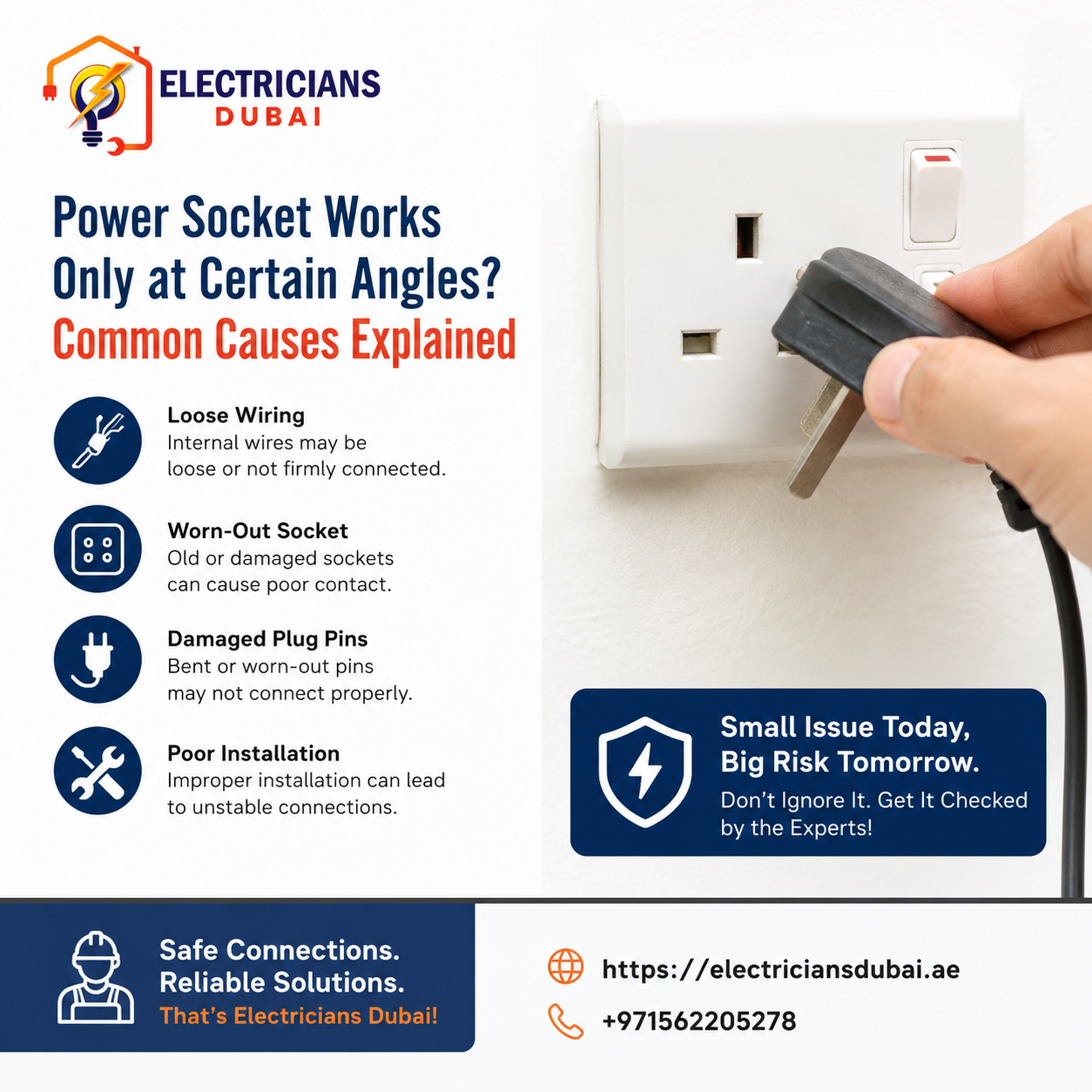
Ever caught yourself wiggling a plug just to get the kettle going? You're not alone. It's one of those small habits people just live with until one day it stops working altogether. As a trusted Electrician Dubai, we've walked into more homes than we can count where a socket "works fine, just not straight." Sounds harmless. It isn't. Behind that quirky angle-dependent plug is usually a loose connection, worn contact, or wiring fault quietly getting worse. Below, we'll walk through what's actually going on inside that wall, and when it's worth calling in proper Electrical Services In Dubai before things go from annoying to dangerous.
Why Electrician Dubai Experts Say Angle-Dependent Sockets Aren't Normal
Here's the thing. A socket that only powers something at a specific tilt isn't quirky. It's broken. The plug pins aren't sitting flush against the socket's internal contacts, and tilting just forces a temporary, unreliable connection. Works today. Might not tomorrow.
The Physics Behind the Problem
-
Plug pins need firm, even contact with internal terminals
-
Even a hair's width gap breaks the circuit
-
Tilting sometimes bridges that gap — for now
Common Causes of Angle-Dependent Power Sockets
1. Loose Internal Wiring
This one's the usual suspect. Screw terminals loosen over the years. Slammed doors, appliance vibration, foot traffic on raised flooring — it all adds up.
-
Wires that were never fully tightened at installation
-
Heat cycles that loosen copper strands bit by bit
-
A loose neutral or live wire often flickers before it dies completely
2. Worn-Out Socket Contacts
Sockets wear out. Plain and simple. Years of plugging and unplugging wear down the metal contacts inside.
-
Sockets past the 10-year mark are especially at risk
-
Weak spring tension means a looser grip on pins
-
Cheaper, uncertified sockets fail noticeably faster
3. Bent or Damaged Plug Pins
Sometimes the socket's innocent. The plug's the culprit.
-
Bent pins may only touch the contact plate at odd angles
-
Corrosion is common in humid stretches like JLT or Dubai Marina
-
Swap the plug, and often the "socket problem" disappears
4. Poor Original Installation
Not every fault develops over time. Some were baked in from day one.
-
Terminal screws tightened unevenly during fit-out
-
Wires stripped too short for a solid contact
-
Mismatched socket brands causing pin misalignment
5. Moisture or Dust Buildup
Dubai's dust doesn't stay outside. It gets in.
-
Dust inside older sockets quietly reduces conductivity
-
Kitchens and bathrooms speed up corrosion
-
Sockets near windows or balconies collect grit faster than most
Why This Problem Should Never Be Ignored
-
Angled contact creates friction, and friction creates heat
-
Repeated arcing scorches the faceplate over time
-
Older villas, especially pre-2010 builds, carry more risk
-
A socket acting up today could spark tomorrow — no exaggeration
When to Call Professional Electrical Services In Dubai
DIY fixes on wiring aren't worth the gamble. Time to call someone if:
-
The socket feels warm
-
There's a faint burning smell nearby
-
Sparks show up when plugging or unplugging
-
Multiple sockets on one circuit start acting the same way
-
Lights dim the moment the appliance goes in
How Electrician Dubai Professionals Diagnose and Fix It
-
Testing voltage and continuity with calibrated multimeters
-
Checking and tightening terminal screws, replacing where needed
-
Swapping worn sockets for certified, UAE-compliant units
-
Inspecting the consumer unit for related breaker issues
-
Recommending tamper-resistant sockets where kids are around
FAQs
1. Why does my socket only work when I tilt the plug slightly?
It usually means the internal contact points aren't fully touching the plug pins, often from loose wiring or worn terminals.
2. Is it safe to keep using a socket that only works at an angle?
Not really. The friction and heat from poor contact can lead to overheating or sparking down the line.
3. Can a bent plug pin cause this instead of the socket?
Yes, bent or corroded pins are a common cause. Try a different appliance in the same socket to narrow it down.
4. How often should sockets be inspected in a Dubai home?
Every two to three years is a good rule of thumb, though older or humid-prone homes may need more frequent checks.
5. Should this be handled DIY or by professionals?
Given the fire risk, it's always safer to bring in qualified Electrical Services In Dubai rather than attempting a fix alone.
Final Thoughts
A socket that only works at an angle isn't just a quirky household habit — it's a small warning worth listening to. Left alone, it can lead to damaged appliances, random power cuts, or worse. Whether it's one stubborn outlet in the kitchen or a pattern showing up across the home, catching it early saves money, stress, and a lot of wiggling. As dependable Electrician Dubai, our team at Electricians Dubai brings the tools, training, and local know-how to find the real cause and fix it properly. Get in touch with Electricians Dubai today, and let's get your sockets working the way they should — straight, steady, every time.
 Deutsch
 English
 Arabic
 French
 Spanish
 Portuguese
 Turkish
 Dutch
Dutch
 Italiano
 Russian
 Romaian
 Portuguese (Brazil)
 Greek
Greek
