


 Ban & Monetization Policy
 MyLiveRoom Rewards Program Rules & Eligibility
How OTR Tires Support Heavy-Duty Operations
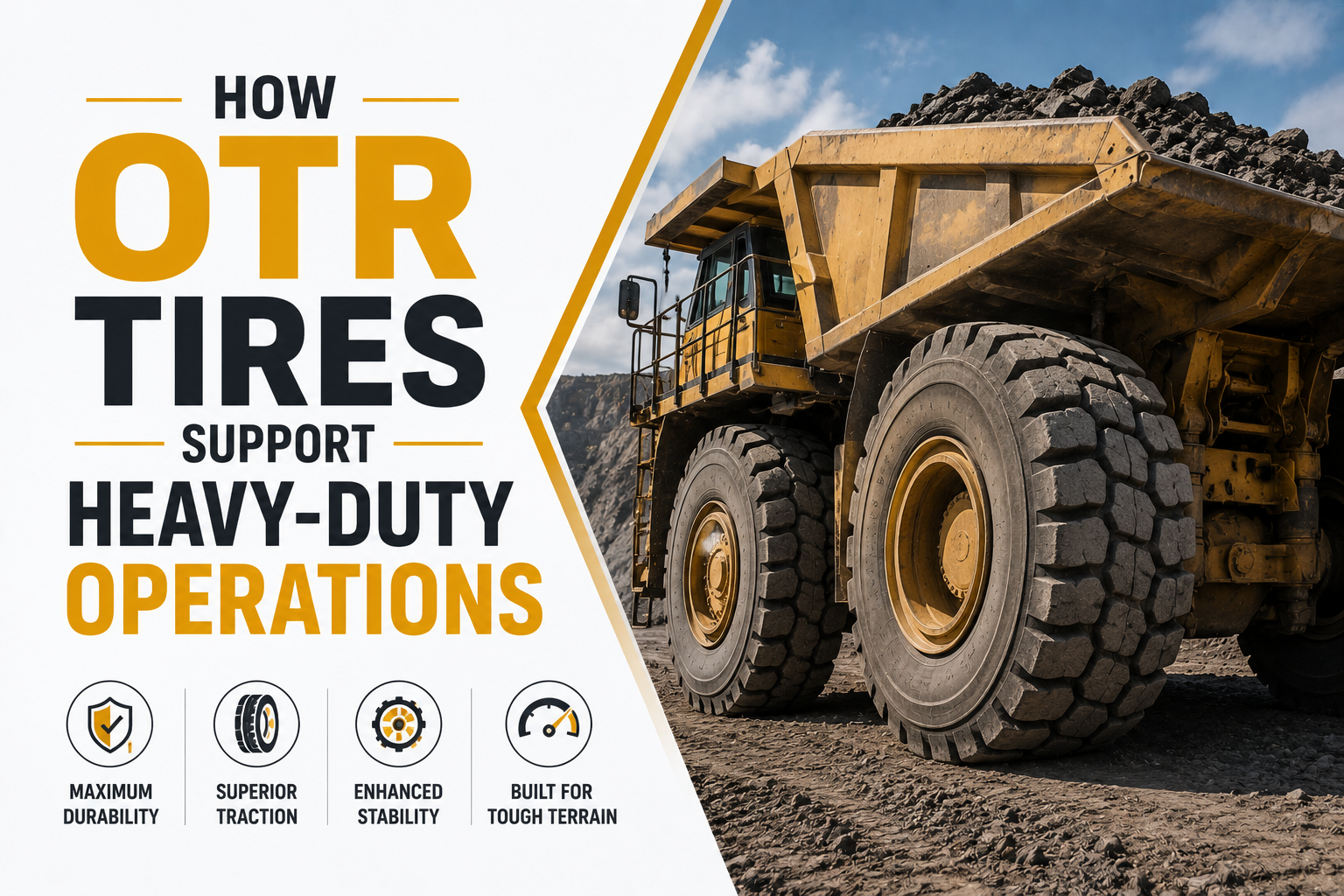
Off-the-road tires enable heavy machinery to operate across construction sites, mines, farms, ports, quarries, and industrial facilities. Unlike conventional road tires, these products are designed to carry substantial loads across loose soil, rocks, mud, sand, and uneven terrain. Their durability, traction, heat resistance, and stability directly influence equipment safety, productivity, fuel use, and operating continuity.
A recent study published by MarkNtel Advisors reports that the global off-the-road tire industry was valued at USD 26.90 billion in 2025. It is projected to grow from USD 28.20 billion in 2026 to USD 37.36 billion by 2032, recording a CAGR of around 4.79% during 2026–32. Asia-Pacific holds approximately 40% of the overall share.
Infrastructure Projects Increase Equipment Usage
Roads, railways, bridges, airports, energy facilities, industrial corridors, and urban developments require extensive use of excavators, graders, loaders, cranes, rollers, and earthmoving vehicles. Every additional hour of heavy-equipment operation contributes to tire wear, particularly when machinery carries high loads or moves across abrasive surfaces.
Construction accounts for nearly 37.18% of demand because civil engineering projects require equipment to work for prolonged periods under changing ground conditions. Tires used in these environments need strong casings, deep tread patterns, puncture resistance, and reliable grip. Fleet operators must balance tire durability with purchase costs, machine compatibility, fuel efficiency, and expected project duration.
The World Bank reported that private infrastructure investment reached USD 100.7 billion in 2024, indicating continued capital deployment across energy, transport, water, and communication projects. Such investment supports machinery utilisation and creates recurring requirements for original and replacement OTR tires.
Mining Requires Extreme Tire Performance
Mining trucks, wheel loaders, drilling equipment, and other specialised vehicles operate under some of the most demanding conditions experienced by tires. These machines carry heavy materials over rocky surfaces while facing sharp debris, steep gradients, extreme temperatures, and continuous operating cycles. A tire failure can interrupt production, create safety risks, and generate costly equipment downtime.
Mining operators therefore examine load capacity, heat dissipation, tread life, cut resistance, and terrain suitability when selecting tires. Larger haul trucks may require highly engineered products capable of supporting considerable weight without excessive heat accumulation. Tire pressure, vehicle speed, load distribution, and road maintenance also affect service life.
Demand for critical minerals is strengthening the need for efficient extraction operations. The International Energy Agency notes that clean-energy technologies are driving mineral demand, particularly for lithium, nickel, cobalt, copper, graphite, and rare earth elements. Expansion of mining activity consequently supports the use of heavy machinery and application-specific OTR tires.
Replacement Sales Dominate Demand
Replacement products account for approximately 73.27% of global demand because tires used in construction, mining, agriculture, and industrial applications experience continuous wear. Rough terrain, heavy loads, improper inflation, excessive speed, and high temperatures can shorten tire life even when the equipment itself remains operational for many years.
Fleet managers increasingly evaluate the total cost per operating hour rather than focusing only on the initial tire price. A more durable tire may reduce replacement frequency, equipment stoppages, labour requirements, and production losses. Maintenance practices such as pressure checks, rotation, alignment, tread inspections, and load monitoring can also extend service life.
Retreading provides another option for suitable tire casings. The process replaces worn tread while retaining the structural casing, helping operators reduce purchasing costs and material consumption. However, casing condition, operating application, safety requirements, and local quality standards determine whether retreading is appropriate.
Agricultural Mechanisation Sustains Tire Requirements
Tractors, harvesters, sprayers, trailers, and other agricultural machines rely on specialised tires to maintain traction while limiting soil compaction. Agricultural tires must work across soft ground, wet fields, and uneven rural terrain without causing excessive slippage or damage to cultivated land.
The Food and Agriculture Organization explains that mechanisation improves agricultural productivity by reducing labour requirements, supporting timely field operations, and improving resource efficiency. As farms adopt more motorised equipment, tire requirements expand across both original equipment and replacement channels.
Farm operators consider tread design, flotation, load capacity, fuel efficiency, and soil conditions when selecting tires. Radial products can offer a larger ground-contact area and improved ride quality, while bias tires remain relevant in applications where lower acquisition costs and strong sidewalls are priorities.
Smart Monitoring Improves Fleet Management
Digital tire-monitoring systems are becoming increasingly relevant in severe-duty operations. Sensors can track pressure, temperature, load conditions, and operating hours, allowing fleet managers to identify potential problems before a failure occurs. Early warnings can reduce unplanned downtime and support better maintenance scheduling.
Underinflated tires may create excess heat, increase fuel consumption, and accelerate casing damage. Overinflation can reduce traction and expose tires to impact damage. Real-time monitoring helps operators maintain suitable pressure levels while gathering information about equipment use across multiple sites.
Data-driven maintenance is especially valuable for mining and large construction fleets because each machine represents a significant investment. Combining tire information with telematics platforms allows managers to compare performance, identify repeated failures, and improve purchasing decisions.
Sustainability Influences Tire Development
Tire manufacturers are under growing pressure to improve material traceability, reduce waste, and lower the environmental impact of production. Natural rubber sourcing, energy use, recycling, and end-of-life disposal are receiving greater attention across supply chains.
Electric and autonomous heavy equipment is also creating new technical requirements. Battery-electric machines may carry additional weight and deliver immediate torque, increasing stress on tire structures. Manufacturers are therefore developing compounds, casings, and tread designs that support higher loads, control heat, and maintain durability.
Outlook for Off-Road Tire Demand
Global OTR tire demand is expected to remain supported by infrastructure construction, mineral extraction, agricultural mechanisation, industrial development, and port activity. Asia-Pacific will retain an important position because of its extensive construction programmes, mining operations, manufacturing capacity, and large equipment fleets.
Future progress will depend on tire durability, raw-material availability, replacement economics, digital monitoring, and sustainable manufacturing. Products that reduce downtime, support heavy loads, and deliver predictable performance will remain essential to efficient off-road operations.
 Italiano
 English
 Arabic
 French
 Spanish
 Portuguese
 Deutsch
 Turkish
 Dutch
Dutch
 Russian
 Romaian
 Portuguese (Brazil)
 Greek
Greek
