


 Ban & Monetization Policy
 MyLiveRoom Rewards Program Rules & Eligibility
Stud Bolts: Types, Uses, Dimensions, and Benefits Explained
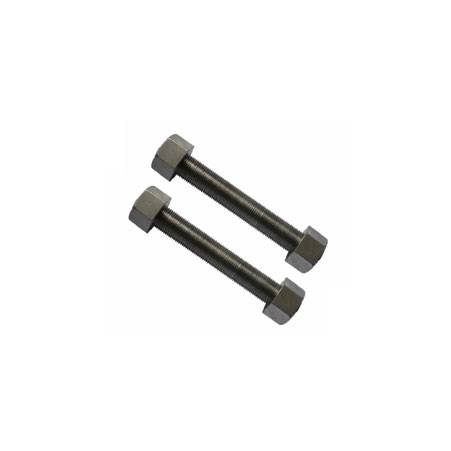
What Are Stud Bolts?
A stud bolt is a mechanical fastener that consists of a threaded rod with threads on both ends and no head. They are typically used with two nuts and are designed to join two components together—most commonly flanges in piping systems.
Unlike regular bolts, stud bolts do not have a head; instead, they are tightened using nuts on both sides. This design offers flexibility, making them ideal for high-pressure and high-temperature applications.
Types of Stud Bolts
Stud bolts come in several types depending on design and application needs:
- Full Threaded Stud Bolts
These are threaded along the entire length of the bolt. They are suitable for flange connections and applications requiring maximum clamping force. - Tap End Stud Bolts
These have threads at both ends, but the thread lengths differ. One end is screwed into a tapped hole, while the other end uses a nut for tightening. - Double End Stud Bolts
These have equal lengths of threads on both ends with an unthreaded portion in the middle. They are commonly used in machinery assembly. - Welded Stud Bolts
These bolts are welded directly onto surfaces where traditional bolting is not possible. They are used in structural and fabrication projects.
Stud Bolt Materials
Stud bolts are made from various materials based on their end-use environment. Common materials include:
- Carbon Steel Stud Bolts (ASTM A193 Grade B7) – Used in general-purpose applications and high-pressure services.
- Stainless Steel Stud Bolts (SS 304 / SS 316) – Offer corrosion resistance and strength for chemical, marine, and food industries.
- Alloy Steel Stud Bolts – Designed for extreme temperatures and pressure environments.
- Duplex & Super Duplex Stud Bolts – Provide high strength and excellent resistance to pitting and crevice corrosion.
- Inconel, Monel, and Hastelloy Stud Bolts – Used in highly corrosive and high-temperature environments.
Stud Bolt Dimensions
Stud bolt dimensions are governed by international standards like ASME B16.5, ASTM A193, and DIN standards.
Typical dimensions include:
| Nominal Size (inches) | Thread (UNC) | Length (mm) | Nut Size (mm) |
|---|---|---|---|
| 1/2″ | 13 TPI | 100 – 200 | 19 |
| 3/4″ | 10 TPI | 150 – 250 | 24 |
| 1″ | 8 TPI | 200 – 300 | 30 |
| 1-1/4″ | 7 TPI | 250 – 350 | 36 |
The length of a stud bolt depends on the flange type (raised face or ring-type joint), gasket thickness, and the number of nuts used.
Applications of Stud Bolts
Stud bolts are used in several industries due to their versatility and load-bearing strength:
- Oil & Gas Pipelines – For flange connections under high pressure.
- Petrochemical Plants – For assembling reactors and process equipment.
- Power Generation – Used in boilers, turbines, and heat exchangers.
- Shipbuilding & Marine Applications – For corrosion-resistant joints.
- Construction and Heavy Equipment – For joining load-bearing components.
Advantages of Stud Bolts
- High Strength and Durability – Can withstand heavy loads and vibrations.
- Ease of Maintenance – Flanges can be removed without disturbing the alignment.
- Cost-Effective – Reusable in many installations with minimal maintenance.
- Uniform Stress Distribution – Provides balanced tightening on both ends.
- Customizable Lengths and Grades – Available in multiple sizes and materials.
Stud Bolt Installation Tips
- Always ensure the bolt threads are clean and free from debris.
- Apply a suitable lubricant or anti-seize compound to reduce galling.
- Tighten nuts gradually and diagonally for even stress distribution.
- Use torque wrenches to achieve precise clamping force.
- Follow manufacturer guidelines for tensioning sequence and torque values.
Stud Bolts Price in India (Approx.)
| Material | Size Range | Price per Kg (INR) |
|---|---|---|
| Carbon Steel B7 | M8 to M36 | ₹150 – ₹200 |
| Stainless Steel 304 | M6 to M30 | ₹250 – ₹350 |
| Stainless Steel 316 | M6 to M30 | ₹300 – ₹450 |
| Duplex 2205 | M10 to M36 | ₹400 – ₹550 |
| Inconel 718 | Custom | ₹1500 – ₹2500 |
(Note: Prices may vary based on size, coating, and supplier.)
How to Choose the Right Stud Bolt
When selecting a stud bolt, consider the following factors:
- Material compatibility with the environment
- Temperature and pressure ratings of the system
- Thread type and length
- Standards (ASME, ASTM, ISO)
- Coating requirements (Zinc plating, PTFE, etc.)
Conclusion
Stud bolts are indispensable in mechanical and industrial assemblies where safety, strength, and reliability matter. Their ability to handle high stress and maintain consistent clamping force makes them a trusted choice for critical connections in pipelines, machinery, and structural systems.
Whether you’re working in petrochemical plants, refineries, or offshore platforms, selecting the right type and grade of stud bolt ensures long-lasting and leak-free performance.When it comes to connecting flanges, valves, or pressure vessels, stud bolts play a critical role in providing reliable and high-strength fastening. These threaded rods are essential in industries such as oil & gas, power generation, petrochemical, and marine engineering. In this blog, we’ll explore what stud bolts are, their types, materials, applications, and why they are a preferred choice for many industrial projects.
 Portuguese (Brazil)
 English
 Arabic
 French
 Spanish
 Portuguese
 Deutsch
 Turkish
 Dutch
Dutch
 Italiano
 Russian
 Romaian
 Greek
Greek
