


 Ban & Monetization Policy
 MyLiveRoom Rewards Program Rules & Eligibility
Why Label Printers Improve RFID Solution Efficiency?
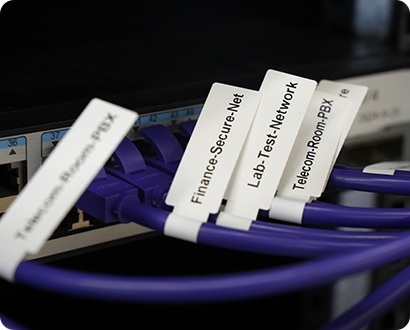
RFID solutions rely on accurate, durable tags to track assets, inventory, or products—but the process of creating and deploying these tags often becomes a bottleneck. Label printers, specifically designed for RFID tag production, address this gap by streamlining workflows, ensuring tag reliability, and adapting to diverse use cases. Below’s a breakdown of how they boost RFID solution efficiency across key stages.
1. On-Demand Printing Eliminates Tag Waste and Delays
Traditional RFID tag production often involves pre-ordering bulk tags with fixed data (e.g., pre-encoded serial numbers). This leads to two major inefficiencies: first, unused tags become waste if asset details change (e.g., a product line is updated); second, waiting for bulk orders slows down project timelines (e.g., a warehouse rush order needs immediate tagging).
Label printers solve this with on-demand printing. Users can encode and print RFID tags in real time, right when they’re needed—whether it’s 10 tags for a small batch of products or 500 for a daily warehouse restock. This eliminates waste (no more unused pre-printed tags) and cuts lead times to minutes instead of days. For example, a retail store using an RFID inventory solution can print tags for new shipments as soon as they arrive, avoiding delays in shelf stocking and inventory tracking.
2. High Accuracy Reduces RFID Tag Errors
RFID solutions fail if tags are misencoded, smudged, or mismatched to assets—errors that are common with manual tagging or low-quality printing. Label printers for RFID integrate encoding and printing in one step, ensuring each tag’s digital data (e.g., EPC codes) matches its physical label (e.g., product name, SKU).
Advanced models also include verification features: after printing, they scan the tag to confirm data accuracy before it’s deployed. This reduces error rates to less than 0.1%, compared to 5-10% with manual methods. For a logistics company using RFID to track shipments, this accuracy means no lost assets due to misencoded tags, saving hours of time spent searching for missing items.
3. Durable Labeling Ensures Long-Term RFID Functionality
RFID tags often operate in harsh environments—warehouses with dust and moisture, manufacturing floors with heat and friction, or outdoor logistics with rain and UV exposure. Poor-quality labels peel or fade, rendering RFID tags unreadable and breaking the tracking chain.
RFID label printers use durable materials (e.g., waterproof polyester, heat-resistant films) and industrial-grade inks that withstand these conditions. The labels adhere firmly to assets, keeping RFID chips protected and functional for years. For a construction company using RFID to track tools, this durability means tags stay readable even after exposure to concrete dust or rain, avoiding the need to re-tag tools repeatedly and maintaining continuous tracking efficiency.
4. Seamless Integration with RFID Workflows
Modern RFID solutions rely on connected systems (e.g., inventory management software, IoT platforms). Label printers integrate with these systems via Wi-Fi or Bluetooth, allowing for automated, end-to-end workflows. For instance, when a warehouse’s inventory software detects low stock, it can send a signal to the label printer to automatically print RFID tags for the incoming replenishment—no manual input required.
This integration cuts down on manual steps (e.g., manually entering data into the printer) and reduces human error. It also lets teams manage printing from anywhere (e.g., a manager approving tag prints remotely), keeping RFID solutions running smoothly even with distributed teams.
Conclusion
Label printers are not just accessories for RFID solutions—they are core enablers of efficiency. By eliminating waste, ensuring accuracy, enhancing durability, and integrating with workflows, they fix the bottlenecks that slow down RFID tracking. For businesses looking to get the most out of their RFID investments, a quality label printer is a critical tool to keep operations fast, reliable, and cost-effective.
© 2026 Myliveroom — Live Events & Online Communities
 Russian
Russian
 English
 Arabic
 French
 Spanish
 Portuguese
 Deutsch
 Turkish
 Dutch
Dutch
 Italiano
 Romaian
 Portuguese (Brazil)
 Greek
Greek
