


 Ban & Monetization Policy
 MyLiveRoom Rewards Program Rules & Eligibility
How Short Throw Projectors Work: The Science Behind Distance
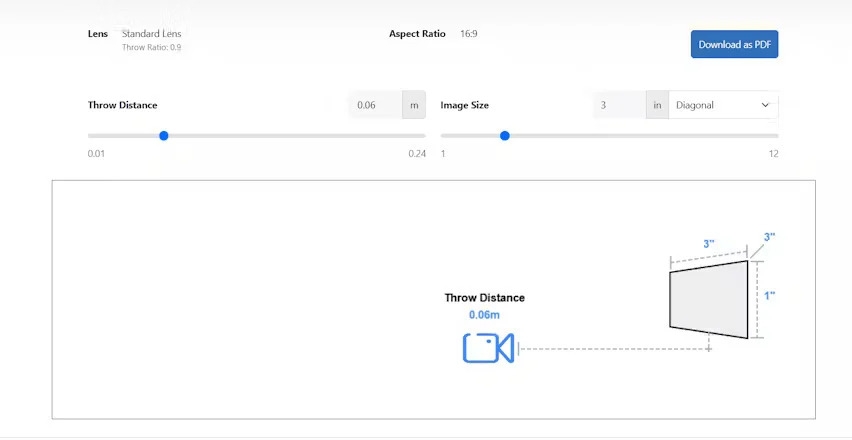
Projectors have evolved significantly over the years, and short throw projectors are among the most versatile and space-efficient solutions available today. These devices are designed to produce large, bright images from a short distance, making them ideal for classrooms, home theaters, conference rooms, and even as alternatives to ultra wide monitors. Understanding how short throw projectors work and the science behind their projection distance can help you set up your system perfectly and enjoy optimal image quality.
What Is a Short Throw Projector
A short throw projector is a type of projector that can produce a large image while being positioned close to the screen. Unlike standard projectors that require significant space between the device and the screen, short throw projectors can create a 100 inch image from just a few feet away. Ultra short throw models can project the same size image from less than 2 feet. This design makes them highly suitable for small rooms or areas where space is limited.
Short throw projector distance refers to the measurement from the projector lens to the screen. Getting this distance correct is crucial to achieve a clear and properly sized image. Incorrect placement can lead to distortion, focus issues, and loss of brightness, affecting the overall viewing experience.
The Science of Projection Throw Distance
At the core of short throw projector technology is optics. These projectors use specialized lenses that bend and direct light in a way that allows a large image to be cast from a short distance. The projection throw distance depends on the throw ratio, which is a key specification of any projector.
The throw ratio is calculated as:
Throw Ratio = Distance from Projector to Screen ÷ Screen Width
For example, if a projector has a throw ratio of 0.5, it means that for every 1 foot of screen width, the projector needs to be 0.5 feet away. To find how far the projector should be from the screen, you multiply the throw ratio by the screen width. Short throw projectors typically have ratios between 0.4 and 1.0, while ultra short throw projectors fall below 0.4.
This optical design allows the projector to sit close to the wall or screen while still producing a large, sharp image. It also reduces shadows and glare, which is particularly useful in interactive classrooms or conference rooms.
How the Optics Work
Short throw projectors use a combination of wide-angle lenses and mirrors to manipulate the light path. The wide-angle lens spreads the image over a larger area in a shorter distance, while mirrors can redirect the light to achieve the correct projection angle. This optical configuration allows the projector to sit closer to the screen without sacrificing image size or quality.
In addition to the lens system, some projectors use digital processing to adjust keystone correction and focus. This helps maintain a rectangular and properly aligned image even if the projector is slightly off-center or angled. Understanding the projection throw distance ensures that these adjustments work optimally, reducing distortion and maintaining clarity.
Applications of Short Throw Projectors
Short throw projectors are extremely versatile. They are used in:
-
Home theaters: Providing large images in small rooms without the need for long cables or extensive setup
-
Classrooms: Allowing teachers to interact with the projection without casting shadows
-
Conference rooms: Offering crisp visuals for presentations while minimizing interference with participants
-
Digital signage: Enabling bright, clear images in tight spaces for advertising or informational displays
In some cases, short throw projectors can replace an ultra wide monitor for workstations or creative studios. They provide a large display surface without taking up valuable desk space and can be easily adjusted for different projection sizes.
Calculating the Correct Distance
To determine how far the projector should be from the screen, you need to consider screen size and throw ratio. For example, if you have a 100 inch diagonal screen with a 16:9 aspect ratio (width approximately 87 inches) and a projector with a 0.5 throw ratio, the calculation would be:
Distance = Throw Ratio × Screen Width
Distance = 0.5 × 87 inches
Distance = 43.5 inches or about 3.6 feet
This calculation ensures that the image will fit perfectly on the screen, maintaining proper size, brightness, and focus.
Tips for Optimal Setup
1. Room Layout
Ensure that the projector placement does not obstruct movement or furniture. Shadows can be minimized by keeping the projector close to the screen.
2. Screen Material
Different screen materials and gains affect perceived brightness. High gain screens may allow slightly longer projection throw distance without reducing image quality.
3. Mounting Options
Whether ceiling mounted or placed on a table, short throw projectors require precise positioning. Follow manufacturer recommendations for height and angle to achieve the best results.
4. Aspect Ratio Considerations
If you are using the projector as an alternative to an ultra wide monitor, make sure the aspect ratio matches your intended content. Incorrect alignment can lead to black bars or stretched images.
Common Mistakes to Avoid
-
Placing the projector too far from the screen, leading to dim and blurry images
-
Using diagonal measurements instead of screen width for calculations
-
Ignoring throw ratio specifications or zoom ranges
-
Failing to account for furniture or room layout that may block the beam
Conclusion
Short throw projectors combine advanced optics, precise throw ratios, and digital processing to deliver large, high-quality images from a small distance. By understanding the science behind short throw projector distance and projection throw distance, you can set up your system perfectly for home theaters, classrooms, or conference rooms.
Whether you are replacing an ultra wide monitor or creating an immersive viewing experience, knowing how far the projector should be from the screen is key to achieving the best results. XTEN-AV offers tools and guidance to simplify this process, making it easy to design and optimize projector setups for any room size. With the right calculations and placement, short throw projectors provide a bright, clear, and versatile display solution.
Read more: https://ekonty.com/blogs/430867/How-Far-Should-a-Short-Throw-Projector-Be-From-the
 Russian
 English
 Arabic
 French
 Spanish
 Portuguese
 Deutsch
 Turkish
 Dutch
Dutch
 Italiano
 Romaian
 Portuguese (Brazil)
 Greek
Greek
