


 Ban & Monetization Policy
 MyLiveRoom Rewards Program Rules & Eligibility
Metal Screw Engineering for High-Duty Environments
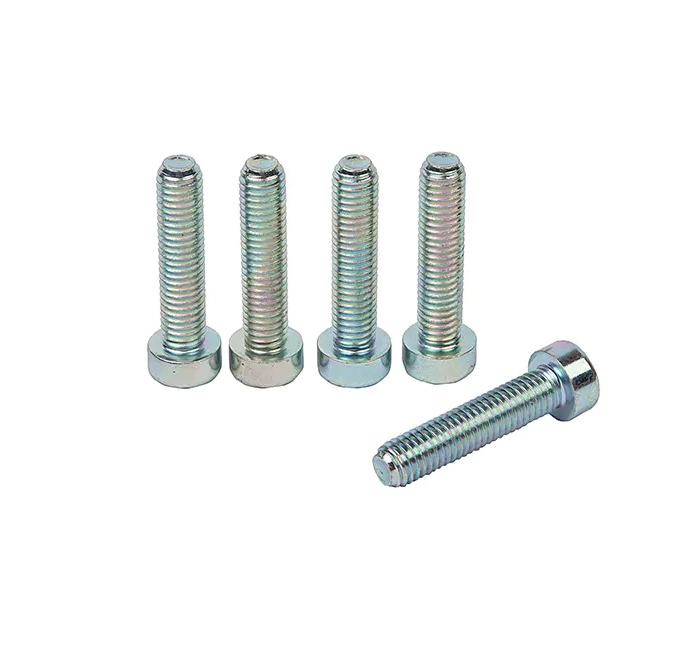
Among the essential hardware elements in industrial machinery, the metal screw stands out for its ability to deliver precise and repeatable fastening. Threads convert rotational force into linear clamping pressure, enabling controlled tightening even in tight spaces. The simple act of driving a screw engages principles of friction, torque, and tension that keep assemblies stable during operation.
Industrial environments expose screws to vibration, shock, heat, and chemical agents. For this reason, engineers pay close attention to material behavior. Alloy steel maintains dependable mechanical strength during repetitive load cycles. Stainless metals contribute resistance to corrosion from lubricants, water, or airborne particles. In applications where weight reduction improves efficiency, aluminum screws reduce mass without sacrificing ease of machining. Specialty coatings such as zinc, phosphate, or nitriding add protective layers that lengthen service intervals.
Thread geometry strongly affects mechanical reliability. Fine threads offer incremental adjustment and stronger tension control, while coarse threads resist stripping in softer materials. Self-locking thread forms decrease the likelihood of loosening under vibration. When assembling large machinery, workers depend on consistent thread engagement to ensure that torque readings accurately reflect clamping force. Calibrated tools assist in achieving repeatable results, reducing maintenance downtime.
Maintenance teams monitor screw condition because wear often begins at the thread roots, where stress concentrations form. If a screw loosens, repeated micro-movements can enlarge the hole or damage surrounding surfaces. To counter this, designers use thread-locking compounds, split washers, or mechanical locking features. Some assemblies integrate metal screws with dowel pins to align heavy components while the screw provides clamp force.
Industrial machinery also benefits from diverse screw types. Socket head screws allow high torque in compact areas. Flanged screws distribute loads across broader surfaces. Self-tapping screws create threads in sheet metal, making them ideal for modular equipment that requires fast installation. In automated production lines, screws must interact with robotic drivers, so consistency in head shape, length, and hardness is essential. Automated feeders rely on uniform dimensions to prevent jams and maintain efficiency.

 English
 French
 Spanish
 Portuguese
 Deutsch
 Turkish
 Dutch
Dutch
 Italiano
 Russian
 Romaian
 Portuguese (Brazil)
 Greek
Greek
