


 Ban & Monetization Policy
 MyLiveRoom Rewards Program Rules & Eligibility
Understanding BIS FMCS & Its Scheme for Product Compliance
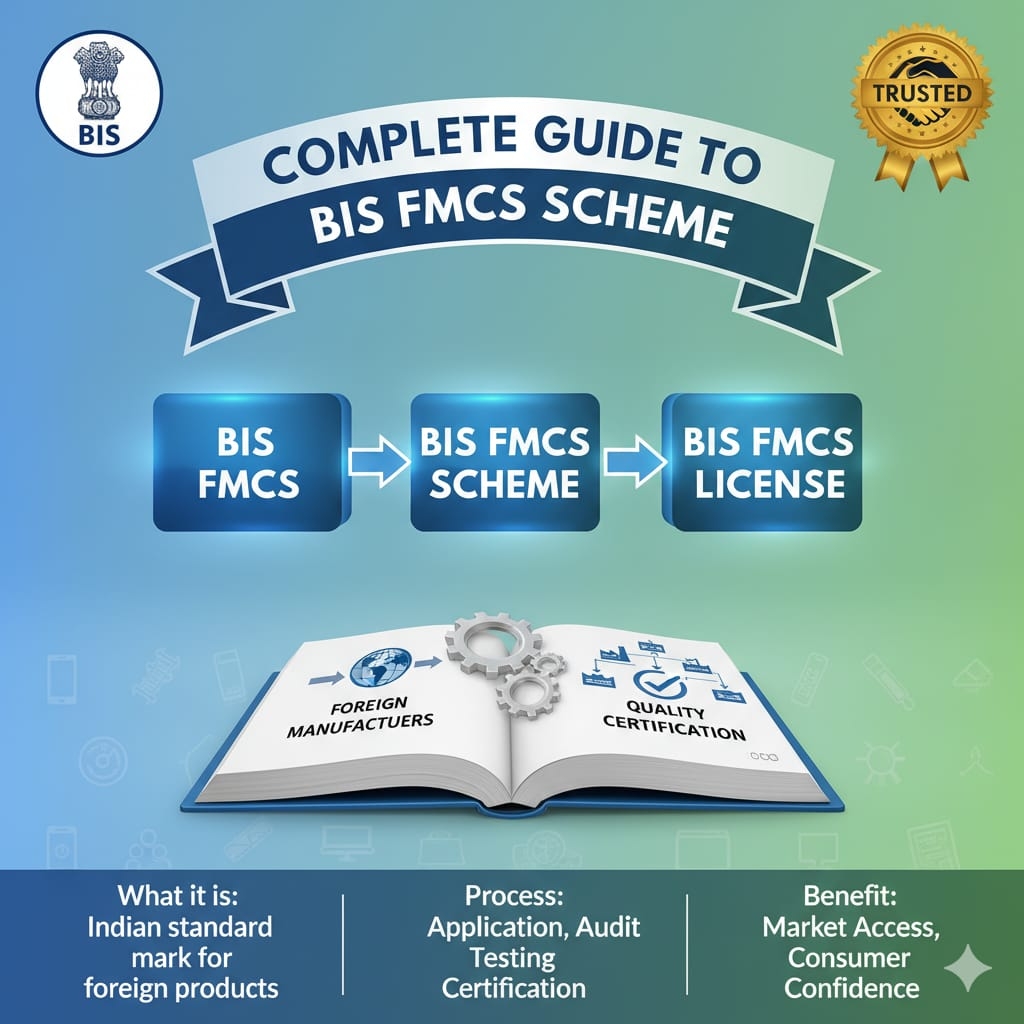
Introduction
India’s certification ecosystem prioritizes consumer safety, product quality, and regulatory compliance. One of the most significant certification pathways for manufacturers—especially those involved in large-scale production—is the Bureau of Indian Standards (BIS) FMCS, widely known as the Foreign Manufacturers Certification Scheme. The BIS FMCS Scheme ensures that products manufactured outside India meet the same quality benchmarks required for domestic manufacturers under BIS standards. In an increasingly globalized market where imported products play a major role, the BIS FMCS system serves as a strong quality filter. It ensures that overseas manufacturers do not compromise on safety, reliability, or performance while selling their products in the Indian market. This blog provides a comprehensive overview of BIS FMCS, the BIS FMCS Scheme, eligibility, process, benefits, and certification roadmap for manufacturers aiming to comply with Indian quality laws.
What is BIS FMCS?
BIS FMCS stands for Bureau of Indian Standards – Foreign Manufacturers Certification Scheme. It is a compulsory certification framework that allows overseas manufacturers to use the Standard Mark (ISI Mark) on their products after meeting all required Indian Standards (IS).
Simply put, it ensures:
-
Imported products comply with the same safety and quality benchmarks as Indian products
-
Manufacturers outside India are registered, tested, and audited under BIS guidelines
-
No substandard, unsafe, or counterfeit products enter Indian markets
-
Consumers receive high-quality and reliable goods
The FMCS certification mainly applies to industrial products, engineering goods, chemical items, and construction materials, although its scope is continuously expanding.
What is the BIS FMCS Scheme?
The BIS FMCS Scheme is the procedural framework that defines how foreign manufacturers can obtain certification. It outlines:
-
Eligibility criteria for overseas factories
-
Test requirements and laboratories involved
-
Inspection and audit guidelines
-
Sampling rules
-
Marking fees, application charges, and documentation
-
Renewal process for maintaining the ISI mark
The FMCS Scheme is governed under:
Scheme-I of Schedule II of BIS (Conformity Assessment) Regulations, 2018.
This Scheme ensures robust quality control practices are implemented on-site, at the manufacturer’s facility located outside India, before the ISI mark license is granted.
Who Needs BIS FMCS Certification?
Any foreign manufacturer producing items that fall under the mandatory BIS certification list must obtain FMCS approval before exporting goods to India.
Major product categories include:
-
Cement
-
Steel and alloy products
-
Domestic appliances
-
Chemicals
-
Industrial valves
-
Medical equipment
-
Rubber products
-
Electrical appliances
-
Batteries
-
Building materials
If your product is listed under the mandatory ISI mark category and is manufactured outside India, FMCS certification is not optional—it is compulsory.
Key Benefits of BIS FMCS Certification
1. Legal Authorization for Indian Market Entry
FMCS gives manufacturers the necessary legal approval to sell their products in India under the ISI mark.
2. Increased Market Acceptance
Products with an ISI mark stand out as reliable and safe, boosting customer trust and market share.
3. Protection Against Rejection or Seizure
Customs authorities often seize non-certified goods. FMCS certification eliminates this risk.
4. Competitive Advantage
Indian buyers—both industrial and retail—prefer certified products. FMCS strengthens your brand image in India.
5. Ensures Quality Consistency
The Scheme mandates strong quality management systems, testing, and internal controls.
Documents Required for BIS FMCS
Foreign BIS FMCS Scheme must provide:
-
Business license & legal identity proof
-
Factory layout plan
-
List of manufacturing machinery
-
Quality control manuals
-
Product test reports
-
Raw material list
-
Production process flowchart
-
Authorized Indian representative details (AIR appointment)
-
Factory location proof
-
Sample test request
Proper documentation ensures a smooth and timely approval process.
Step-by-Step Process of BIS FMCS Certification
1. Application Filing
Manufacturers begin by submitting Form VI along with supporting documents.
2. Nomination of AIR (Authorized Indian Representative)
This is mandatory when the manufacturer does not have a physical office in India.
3. Product Testing
Samples are tested in BIS-recognized laboratories as per relevant Indian Standards.
4. Factory Inspection
BIS officials visit the foreign manufacturing premises to verify:
-
Production capability
-
Quality control setup
-
Machinery and testing equipment
-
Consistency with Indian Standards
5. Evaluation of Test Reports
BIS evaluates both factory audit findings and independent lab test reports.
6. Grant of License
Once all compliance parameters are met, BIS approves the FMCS license, permitting the manufacturer to use the ISI mark.
Renewal of BIS FMCS License
FMCS licenses are typically granted for 1 year, after which renewal is required.
Renewal depends on:
-
Updated test reports
-
Continued compliance with standards
-
Successful surveillance inspections
-
Payment of marking fees
Timely renewal ensures uninterrupted export and market access.
Why BIS FMCS Compliance Is Increasingly Important
With rising imports and increasing global competition, India is taking strict measures to filter unsafe and low-quality products. BIS FMCS plays a crucial role in:
-
Ensuring imported goods meet strict safety norms
-
Eliminating counterfeit or substandard imports
-
Reinforcing consumer confidence
-
Protecting Indian industries from low-quality foreign competition
Foreign manufacturers that comply with FMCS not only gain smoother entry into India but also build long-term credibility in one of the world’s largest markets.
Conclusion
The BIS FMCS and the BIS FMCS Scheme are essential for foreign manufacturers aiming to supply certified, quality-approved products to India. With structured testing, rigorous inspection, and mandatory compliance requirements, sunconsultants.co.in. ensures that imported products uphold the highest safety and quality standards.
 Turkish
 English
 Arabic
 French
 Spanish
 Portuguese
 Deutsch
 Dutch
Dutch
 Italiano
 Russian
 Romaian
 Portuguese (Brazil)
 Greek
Greek
